Whatsapp: +86 18962304392

Email: manufacture@world-rivet.com

Are Rivets Permanent?

Table of Contents

In metal assembly and structural design, rivets are widely used in applications requiring long-term stability. However, many users ask a critical question during selection: Are rivets permanent? Are rivets truly permanent fasteners? Once installed, can they be removed? Will they impact future maintenance? This article will systematically explain the true meaning of rivet “permanence” from an engineer’s perspective, drawing on practical applications to help you determine whether rivets are suitable for your project.

Are Rivets Permanent?

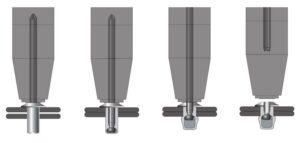
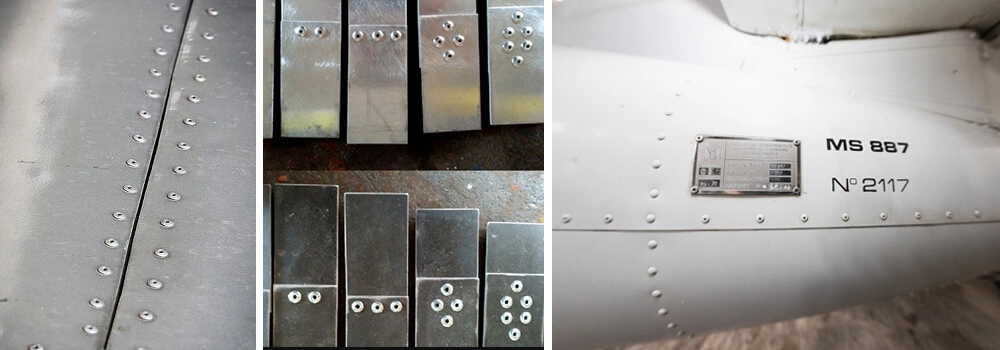
Yes, rivets are typically considered permanent fasteners. After riveting, the rivet undergoes plastic deformation. The rivet body expands and locks into place on the opposite side of the material. This process is irreversible.

Rivets cannot be unscrewed like screws. If removal is necessary, it can only be achieved through destructive methods such as drilling out the rivet. Once removed, the rivet cannot be reused.

Therefore, from an engineering perspective, “permanent” does not mean it cannot be removed forever. It means it cannot be disassembled without destroying the rivet itself. Precisely for this reason, rivets are commonly used in applications requiring anti-loosening, vibration resistance, and long-term stability. Examples include sheet metal structures, construction, transportation equipment, and industrial assemblies.

Types of Rivets

Solid Rivets

Blind Rivet vs Solid Rivet - What are Solid Rivets

Solid Rivet is widely used in applications where a strong and durable connection is required. Solid Rivets are made from a solid metal rod with a pre-formed head at one end and a second head formed by deformation during installation to make a permanent connection.

The greatest advantage of solid rivets is their high strength, durability and reliability. They can maintain stable performance in a variety of harsh environments. However, solid rivets also have the disadvantage that its installation process is more complicated and requires specific riveting tools.

Hollow Rivets
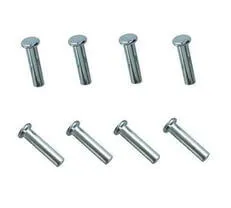
Hollow Rivet - Are Rivets Permanent?

Compared to solid rivets, hollow rivets have a hollow center in the rivet body. Hollow rivets are lightweight and easy to deform, making them suitable for lighter loads and applications where an aesthetic appearance is desired.

Hollow rivets require less force to deform, so the installation process is simpler and suitable for high volume installations. However, it has lower strength for lighter load applications and is not suitable for use in high stress or harsh environments.

Semi-Tubular Rivet
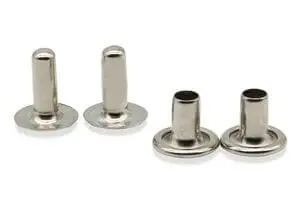
Semi-Tubular Rivet - Are Rivets Permanent?

Unlike solid and hollow rivets, Semi-Tubular Rivet’s rivet body has a hollow tail section. This design allows the Semi-Tubular Rivet to require less deformation force during installation, thereby simplifying the installation process while providing sufficient strength to meet many application requirements.

Semi-hollow rivets cost less than solid rivets, but they have limited strength, and although much higher than hollow rivets, they are only suitable for brittle or soft materials.

Blind Rivet or Pop Rivet
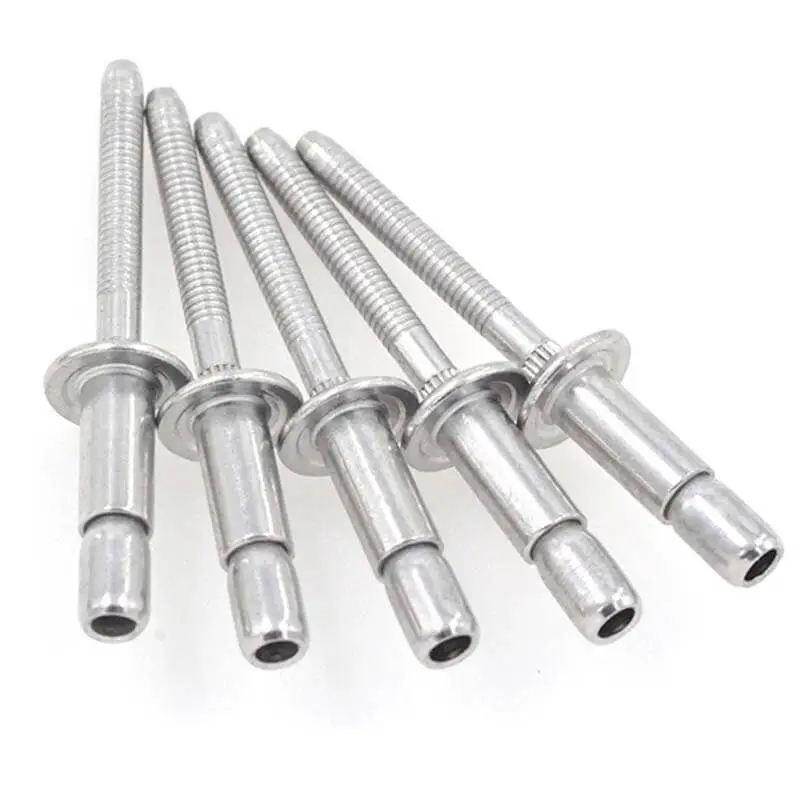
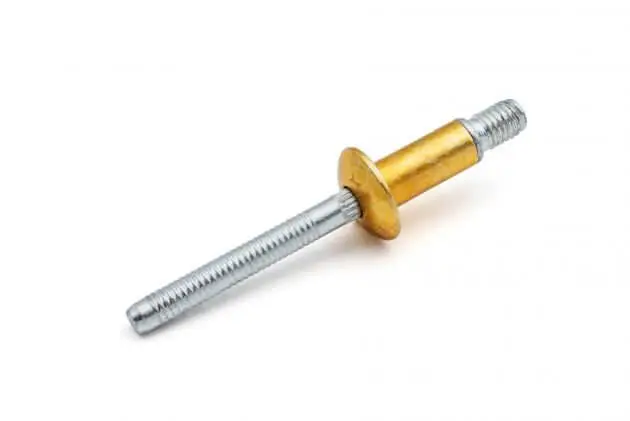
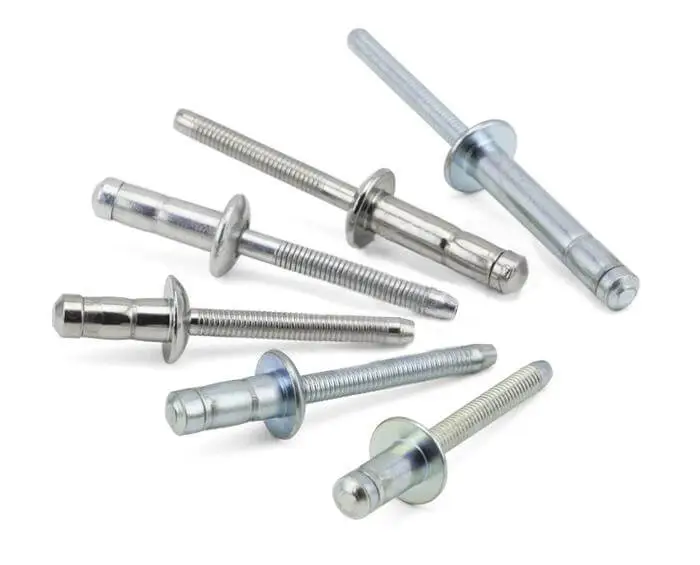
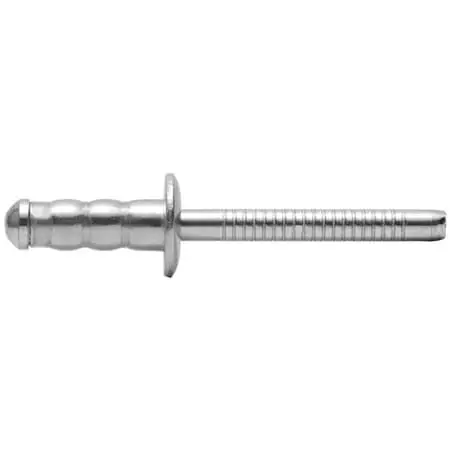
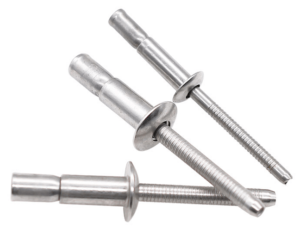
Magna Lok Rivets for Sale - Bulk Huck Magna Lok Blind Rivets Wholesale

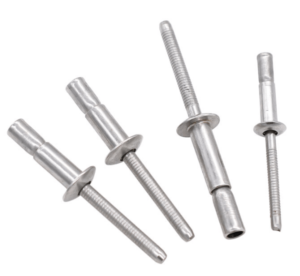
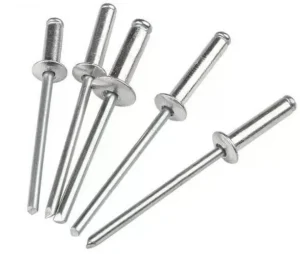
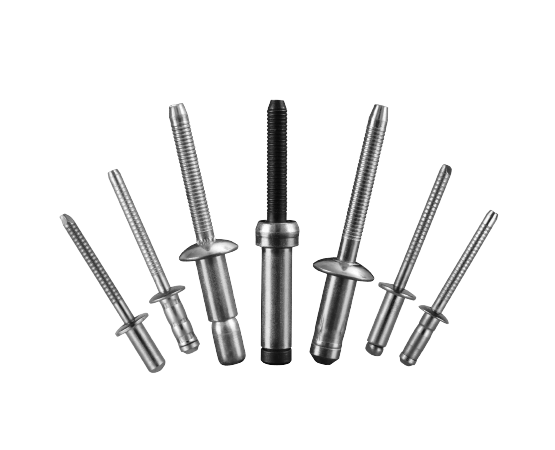
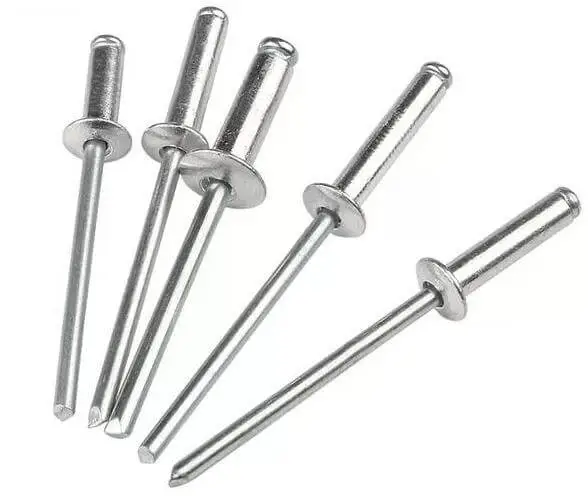
Blind Rivet is a specially designed rivet for making strong connections in applications where the backside cannot be accessed.Pop rivets are in between solid and hollow rivets in terms of strength, which can withstand more powerful strengths! They are commonly used for permanent fastening of metals, plastics and other materials.

The best thing about Pop rivets is that they are very easy and fast to install. Blind rivets can be used in a variety of joining scenarios where the backside is not accessible. Whether lightweight materials or heavy machinery, pop rivet can be used. blind rivet is now an indispensable fastening solution in industry and machine building.

Are Rivets Permanent or Semi Permanent?

Why are rivets now preferred for joining in many industrial sectors? Because rivets are designed to provide long-term, stable and high-strength mechanical connections. Typically, rivets are considered a permanent connection.

Are Rivets Permanent or Semi Permanent?

Why Are Rivets Considered a Permanent Connection?

So why are rivets considered a permanent connection? It is mainly because of the following reasons.

  1. Non-Removability: Once a rivet is in place, removing the rivet usually requires destructive methods such as drilling or cutting out the rivet. This process destroys the rivet itself, making it impossible to reuse.
  2. High Strength Connection: Rivets provide a very strong connection that is capable of withstanding high shear and pull-out forces, ensuring the stability of the connected components over the long term.
  3. Long-lasting durability: riveted connections are designed for long-term applications and are able to maintain their mechanical properties in harsh environments, resisting corrosion and fatigue.

Rivets As Semi-Permanent Connections

Although rivets are usually considered to be permanent connections, in some special cases they can be considered semi-permanent by special methods. These methods usually involve the destructive removal of the rivet:

  1. Drilling Out The Rivet: A drill bit is used to drill off the head of the rivet and then remove the body from the connecting material. This method is often used for repair and replacement of parts, but can damage the rivet.
  2. Cutting The Rivet: A cutting tool is used to cut the head or body of the rivet and then remove the rivet. This method can also damage the rivet.
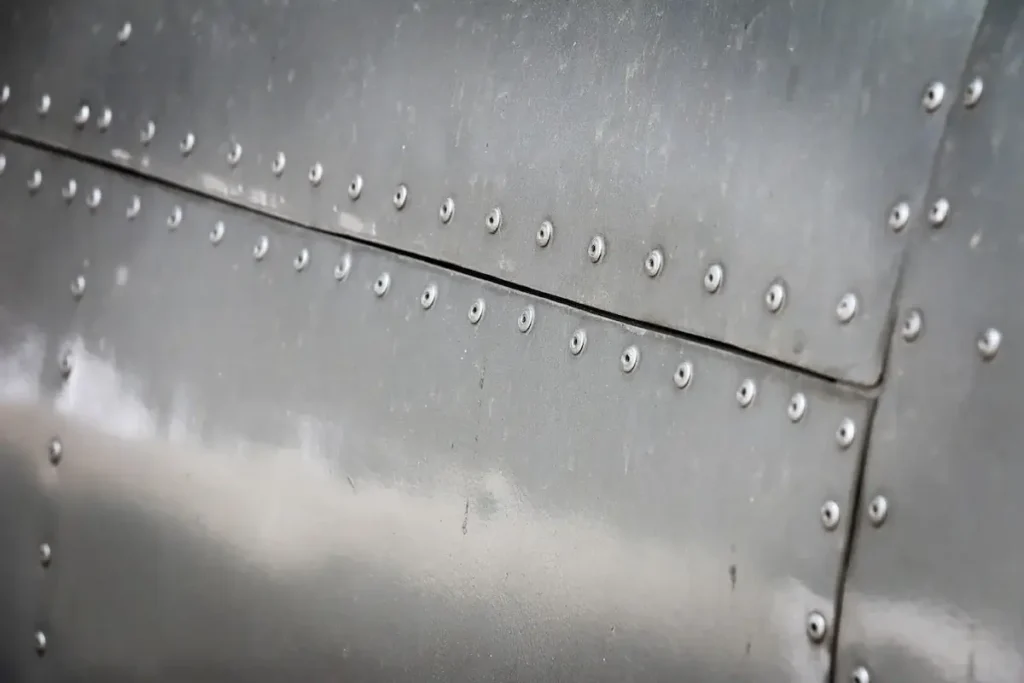
Aircraft Blind Rivets - How to Choose Blind Rivets for Aircraft? - Material Compatibility

Do Rivets Loosen Over Time?

The rivet acts as a permanent connection and does not usually loosen over time under normal conditions of use. This is because rivets provide a strong and stable connection through a mechanical locking structure formed by plastic deformation.

However, like all fasteners, the performance of rivets can be affected by the environment and conditions of use. The following are some of the factors that may affect the stability of a rivet connection:

Vibration and Shock
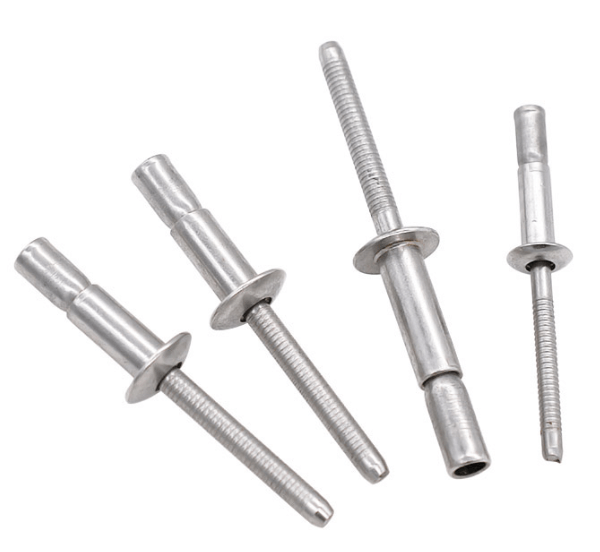
Rivmate Monobolt Rivet - Mono-Lock Blind Rivet
Self Piercing Rivets for Automotive Structural Connections

In actual pop rivet use, there may be applications of constant vibration and shock. This has the potential to cause the rivet connection to loosen, especially in high stress applications.Not so

So what should be done to avoid this? You can use rivets that are designed to resist vibration, such as structural blind rivets. Or you can increase the number of fasteners.

Environmental Corrosion

If your project is in a corrosive environment, then it is also possible to cause the rivets to loosen their connection. Corrosion can weaken both the rivet and the material being joined, resulting in a loose or failed connection.

This is when you need to use corrosion-resistant materials (such as stainless steel or galvanized rivets) and also perform regular maintenance checks.

Thermal Cycling

Repeated changes in temperature can cause materials to expand and contract, which may also cause the rivet connection to loosen.

You simply need to select rivet materials that are compatible with ambient temperature changes and ensure proper preload during installation.

Improper Installation

Incorrect installation methods (such as applying insufficient deformation force or excessive deformation) can result in a weak connection.

Install rivets using the correct tools and methods to ensure adequate and uniform deformation of each rivet.

How Durable Are Rivets?

The durability and performance of Pop rivet can change due to a number of factors. This includes materials, environmental conditions and application scenarios.

The durability of Pop rivet includes the following:

  • Strength and corrosion resistance of the material
  • Draw length and shear strength
  • Environmental durability

Strength and Corrosion Resistance of the Material

  • Aluminum rivets: light weight, good corrosion resistance, but lower strength. Suitable for light load and non-structural connections.
  • Steel rivets: high strength, suitable for heavy loads and structural connections, but prone to rust, need to rust treatment.
  • Stainless steel rivets: high strength and excellent corrosion resistance, suitable for high strength and corrosive environments such as marine and chemical applications.
  • Copper rivets: good corrosion resistance and conductivity, suitable for electrical connections and decorative applications.

Draw Length and Shear Strength

The performance of rivets of different materials and sizes in terms of pull-out strength and shear strength is as follows:

Rivet MaterialRivet DiameterTensile Strength(N)Shear Strength(N)
Aluminum3.2 mm600900
Steel3.2 mm15002500
Stainless Steel3.2 mm18003000
Copper3.2 mm10001500

Environmental Durability

  • Aluminum rivets: can last up to 20 years or more in moderately corrosive environments (e.g., indoor and urban environments).
  • Steel rivets: may corrode rapidly in wet environments without rust protection, but can last 10-20 years in moderately corrosive environments after galvanization.
  • Stainless steel rivets: can last more than 30 years in marine and chemical environments, showing extremely high corrosion resistance.
  • Copper rivets: have a service life of up to 50 years in normal environments, but may require regular maintenance in certain corrosive environments.

Why Industries Prefer Permanent Riveted Connections?

In demanding engineering fields, the choice of “permanent” is never an emotional decision—it stems from considerations of safety, standards, and accountability.

a. Aerospace

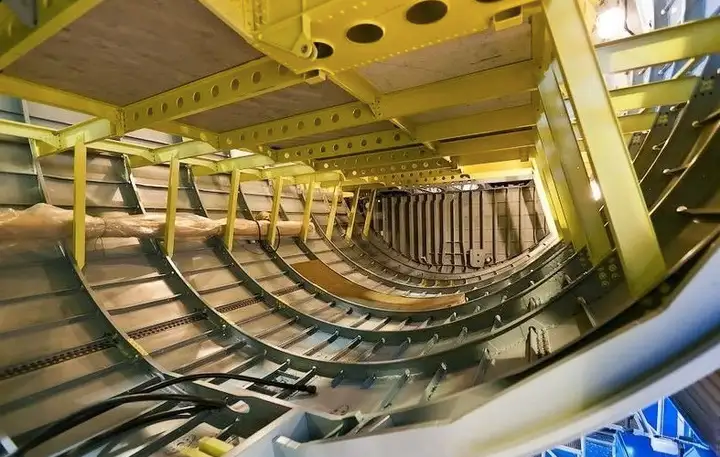
Aircraft structures endure prolonged exposure to high-frequency vibrations and alternating loads. The plastic locking formed by rivets does not loosen over time. This significantly reduces fatigue cracking risks. Permanent connections also meet aviation airworthiness certification requirements for “non-disassemblable” components.

b. Automotive Body Structures

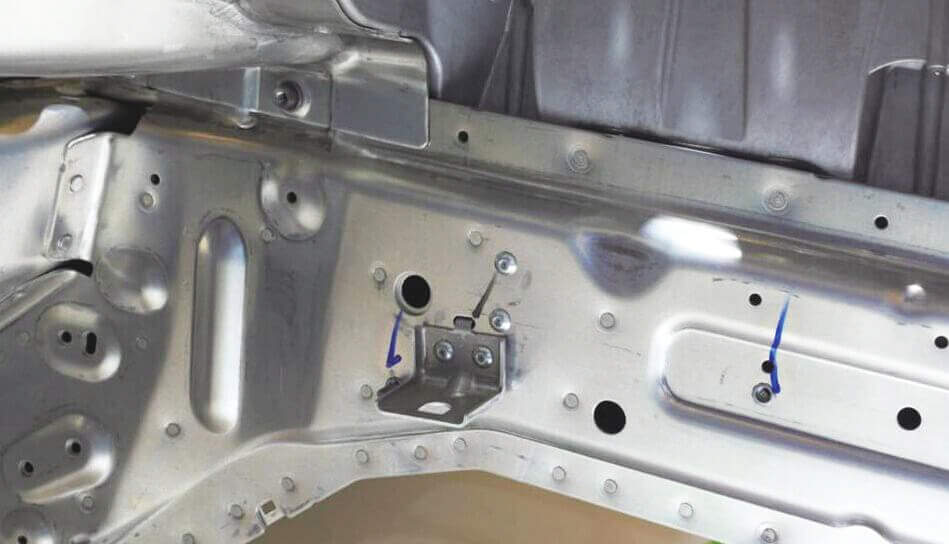
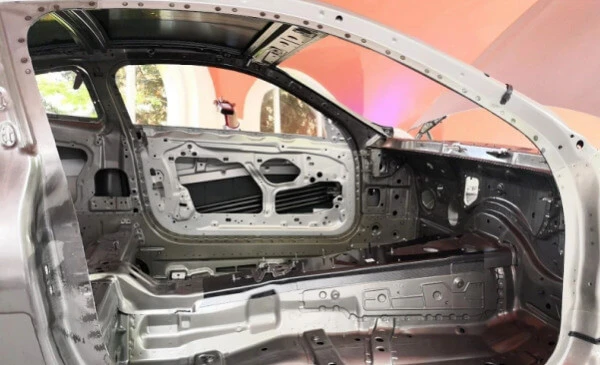
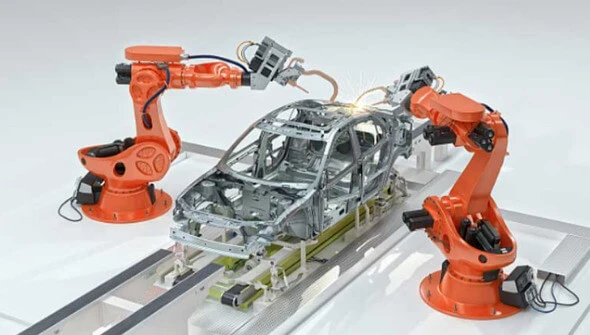
Body structures prioritize crash safety and long-term dimensional stability. Permanent riveting prevents thread stripping. It also minimizes hazards from maintenance errors. In mass production, riveting consistency is more easily controlled by quality systems.

c. Architectural Curtain Walls

Curtain wall systems must maintain stability for decades. Permanent rivets withstand wind loads, thermal expansion/contraction, and vibration. They also prevent intentional disassembly, ensuring clear structural responsibility boundaries and compliance with building safety codes.

d. HVAC Enclosures

HVAC equipment typically operates 24/7. Enclosures require protection against vibration, loosening, and maintenance errors. Permanent rivets guarantee long-term stability in vibrating environments, reducing noise and structural fatigue.

e. Industrial Enclosures and Cabinets

Industrial cabinets involve electrical safety and compliance requirements. Permanent riveting prevents unauthorized disassembly. This helps maintain protection ratings (e.g., IP ratings) while clearly defining responsibility boundaries between manufacturers and end-users.

FAQ: Are Rivets Permanent?

Q1: Are rivets permanent or removable?

Rivets are permanent fasteners that cannot be disassembled under normal circumstances. They can only be removed by drilling.

Q2: Can rivets be taken out?

Yes, but this requires destroying the rivet body with a drill bit. This constitutes destructive removal rather than maintenance disassembly.

Q3: Are pop rivets permanent?

Yes, Pop Rivets (blind rivets) form a permanent mechanical lock upon installation.

Q4: Are rivets stronger than screws?

Rivets typically offer greater stability than screws in vibration-resistant and thin-sheet applications, though absolute strength depends on specifications and materials.

Q5: When should I not use rivets?

Rivets should not be used when structures require frequent disassembly for maintenance or when subjected to extremely high adjustable preload forces.

Order High Quality Blind Rivet from Rivmate

Rivmate.png

Want to get a high quality and consistent pop rivet for your project? Contact Rivmate today to get affordable and consistent quality pop rivets and high strength structural blind rivets.
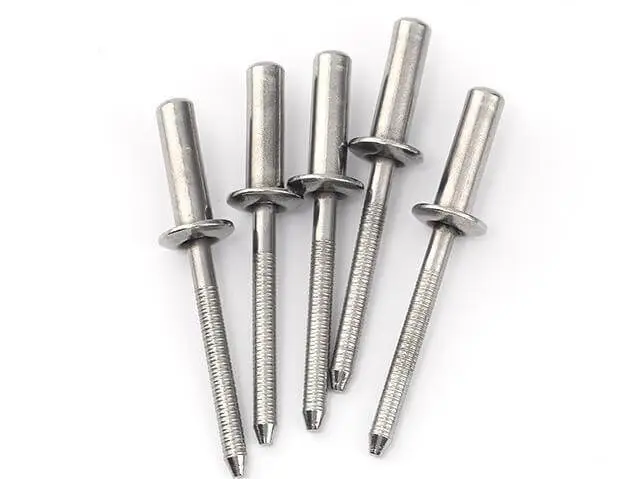
Don’t know how to choose the right pop rivet for your project? Don’t worry, Rivmate’s engineers will customize a rivet solution for your project!

Contact today to start your business!

Reference

Share:

More Posts

Get Rivets Quotes Now

Wholesale Blind Rivets from Rivet Manufacturer

Riveted Connections in Steel Structures - How to Choose Pop Rivets for Steel Structures?

Table of Contents

In modern engineering, riveted connections in steel structures continue to play an irreplaceable role. Compared to welding and bolted connections, riveting provides stable and reliable structural joints under conditions of no heat-affected zones, single-sided installation, and thin steel plates. Consequently, riveted connections are widely adopted in steel roof structures, cabinet systems, and light steel framing. Understanding the application principles and selection logic of riveting in steel structures is crucial for ensuring structural safety, construction efficiency, and long-term durability.

What Are Riveted Connections in Steel Structures?

Why do Airplanes Use Rivets Instead of Welds?

In steel structure engineering, riveted connections represent a permanent mechanical joining method achieved through plastic deformation induced by rivets. During installation, rivets are stretched or pressed to form a stable locking structure on the reverse side of steel plates, thereby securely joining two or more layers of steel components. This connection method does not rely on threads nor require high-temperature operations, ensuring structural stability and reliable load-bearing capacity.

Historically, traditional steel structures predominantly used solid rivets, which required dual-side operation and heavy equipment, resulting in lower construction efficiency. As engineering demands evolved, modern steel structures increasingly adopted blind rivets, particularly in scenarios where access to the component’s reverse side is impossible. Blind rivets achieve connections through single-side installation, significantly boosting construction efficiency.

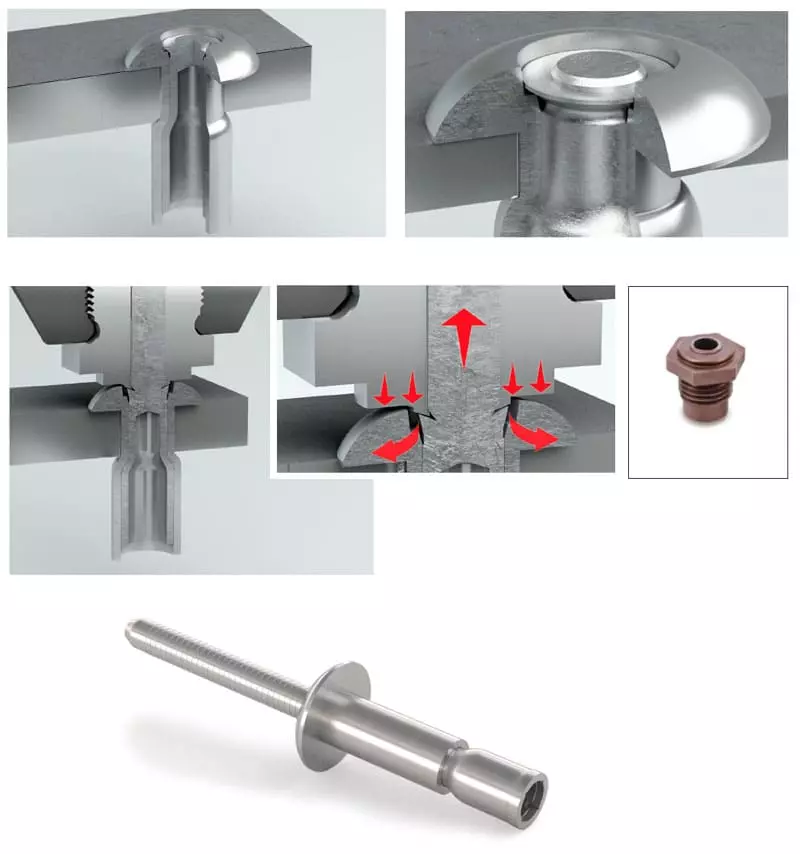
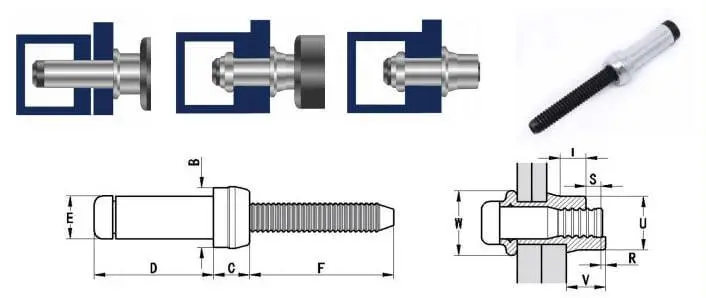
For steel structures with higher load-bearing requirements, structural blind rivets (such as Monobolt) are employed. Featuring a mechanical interlocking mechanism, these rivets offer substantially higher tensile and shear resistance than standard blind rivets. They can partially replace bolts or spot welding in applications like brackets, frames, and lightweight load-bearing components.

Types of Blind Rivet in Steel Structure

huck bolt
Lockbolt Rivets
Rivmate Bom Rivet
Bom Rivets
HuckLok Rivets - Mangnabulb Rivets - Rivmate
Hucklock Rivets
Rivmate Monobolt Rivet - Mono-Lock Blind Rivet
Monobolt Rivets

Standard Blind Rivet

Stainless Steel Open type blind pop rivet
Open Type Blind Rivets
Blind rivets for metal roofing - Connect metal

Standard blind rivets are the most commonly used type of blind rivets. It has the most traditional blind rivet design and is suitable for joining steel structures of average strength. For example, frames, braces and general structural component connections.

For some non-load-bearing steel connections, standard blind rivets are the most suitable choice because they are cheap and affordable!

Closed End Blind Rivets

Closed End Blind Rivets for Aluminum Boats

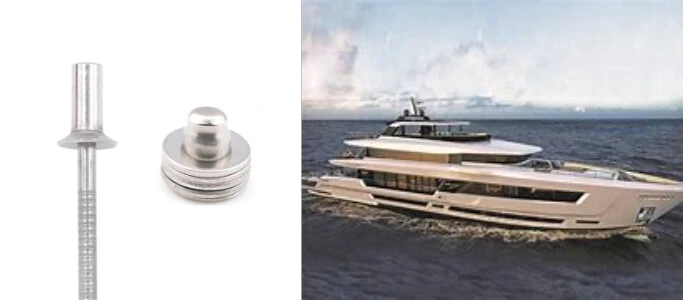
Sealed Blind Rivets have a design that is different from other blind rivets. It has a closed rivet body that prevents liquids and gases from entering through the joint. Sealed Blind Rivets are ideally suited for applications that require sealing, such as piping, and structural steel connections in marine environments.

Multi Grip Blind Rivet

Rivmate Multi Grip Blind Pop Rivet From China
Multi Grip Blind Rivets
Blind Rivets for Roofing - Roofing Rivets - Rivmate Rivet

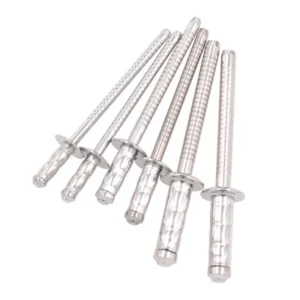
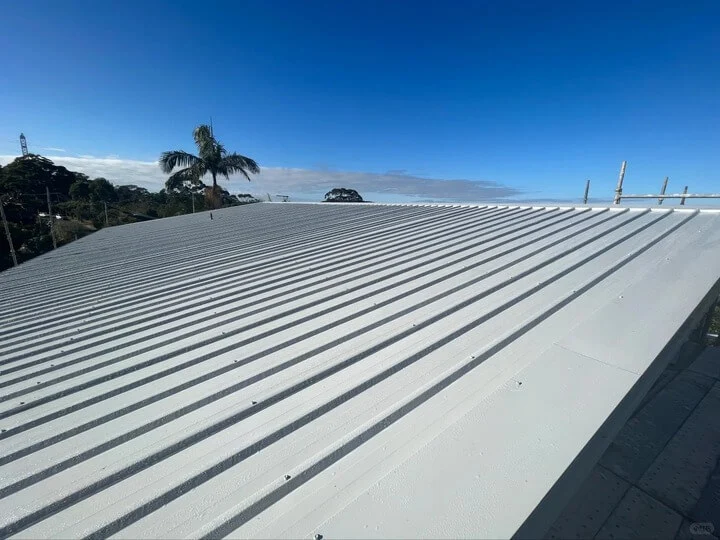
Multi grip blind rivet can accommodate many different material thicknesses. It provides sufficient strength while reducing stress on stock.Multi grip blind rivet is often used to fix metal roof panels, wall metal panel installation, such as the fixing of structural steel plant and equipment brackets, which need to be done with it.

High Strength Structural Rivets

RIVMATE Bom Rivets - Custom Blind Rivet Manufacturer in China
Bom Rivets
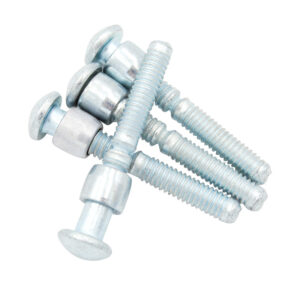
Rivmate Lockbolt Rivet Fastener | Magna Grip Lockbolts
Lockbolt Rivets
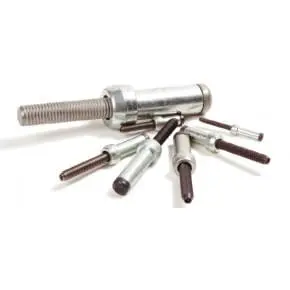
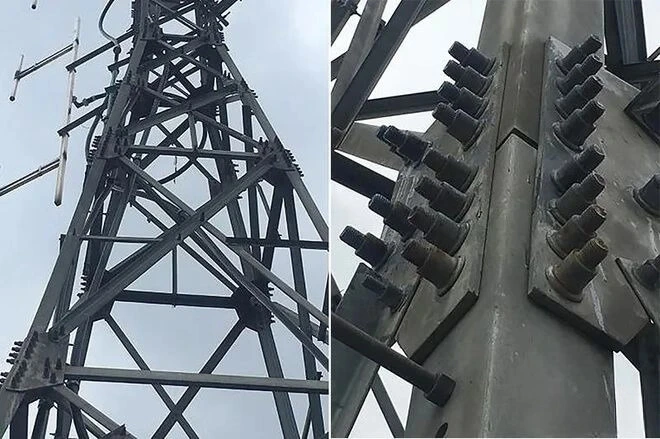
Lockbolts Fastener Rivets in Pylons

There are several types of high strength structural blind rivets such as bom rivet and lockbolt. high strength structural rivets are very widely used in steel construction. They can withstand very strong connection strength. That is why high strength structural rivets are used in applications that require high strength. For example, steel connections in high-rise buildings, truss and suspension structures in bridges, and rail connections in rail transportation. High-strength structural rivets can provide these applications with extremely high strength, durability and vibration resistance to ensure the reliability of the connection in a variety of complex environments.

Why Are Pop Rivets Used in Steel Structures?

The selection of Pop Rivets in steel structures is not driven by “convenience,” but rather by clear engineering logic. The following reasons explain why riveting is often more suitable than welding or bolting in many scenarios.

No Heat-Affected Zone (HAZ)

Pop Rivets utilize a cold joining process. No high temperatures are generated during installation. The mechanical properties of the steel remain unchanged. Common welding issues like annealing, embrittlement, or strength reduction do not occur. This is particularly crucial for thin steel plates and high-strength steel.

No Introduction of Welding Residual Stresses

Welding creates residual tensile stresses in the joint area, a major contributor to fatigue cracking. Riveting is a mechanically formed connection with more uniform stress distribution. It remains more stable under long-term vibration or alternating loads.

Viable Solution for Inaccessible Backsides

Box girders, enclosed sections, and thin-walled components often have inaccessible backsides. Bolts and solid rivets cannot be installed. Pop Rivets support single-side installation (Blind Installation). They are nearly the only reliable option for such structures.

Safer for Thin Steel Plates (0.8–4.0 mm)

Welding thin steel plates risks burn-through or deformation. Bolts may strip. Pop Rivets create clamping force through expansion without damaging the base material. They offer higher structural stability within the 0.8–4.0 mm steel plate range.

Stable Performance Under Vibration

Vibration is common in transportation equipment, machine frames, and industrial supports. Welds are prone to fatigue cracking. Bolts may loosen. Pop Rivets—especially structural blind rivets—maintain long-term clamping force through mechanical locking, offering more reliable vibration resistance.

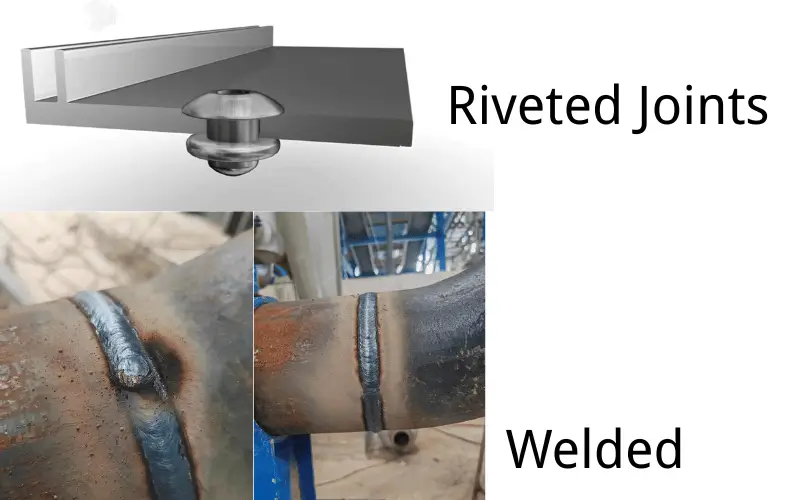
Riveted Connections vs Welded vs Bolted

Comparison DimensionRiveted (incl. Structural Blind Rivets)WeldedBolted
Shear / Tensile StrengthMedium–High; structural blind rivets can approach bolts in light-to-medium load connectionsHigh; can achieve fully fused, monolithic strengthHigh; adjustable via bolt grade and preload
Fatigue PerformanceExcellent; no HAZ, stress distribution is more controllableMedium–Low; weld toes are prone to stress concentration and fatigue crack initiationMedium; depends on preload and anti-loosening design—loosening accelerates fatigue
Vibration PerformanceExcellent; mechanical locking provides stable long-term clamping forceMedium; welds may develop fatigue cracks under vibrationMedium–Good; requires anti-loosening measures (lock washers, threadlocker, double nuts)
Installation RequirementsLow; only drilling and riveting tools needed, ideal for site workHigh; requires power supply, certified welders, fire protection, and post-weld inspectionMedium; needs rear access or embedded hardware; tooling is relatively simple
Maintenance & RepairMedium; typically drilled out and reinstalled—suited for module replacementLow; repairs are costly and involve cutting, re-welding, and re-inspectionHigh; removable and easy to maintain or replace
Total Lifecycle CostLow–Medium; fast installation, low rework, controllable overall costHigh; higher labor, process, inspection, and repair costsMedium; hardware cost is controllable, but maintenance and anti-loosening add cost
  • Riveting isn’t “weaker,” it’s “more controllable.”

    It introduces no heat-affected zone and relies not on thread engagement. More suitable for thin steel plates and enclosed structures. Results are easier to standardize.

  • Welding offers the highest strength ceiling but also the highest risk.

    Welding achieves full fusion strength. The trade-off involves thermal distortion, residual stresses, and weld quality variability. Demands high on-site conditions.

  • Bolts suit structures requiring disassembly for maintenance, but “loosening” must be addressed.

    Inadequate preload or lack of anti-loosening design leads to rapid degradation under vibration. Back-side accessibility often becomes a limiting factor.

How to Select the Right Rivet?

Pop Rivet Distributor - Rivmate Hemlock Rivets

①. Total Thickness of Steel Plates

Total thickness refers to the actual stacked thickness of the steel plates being joined. It must be measured precisely beforehand. In steel structures, the common range is 0.8–4.0 mm. Incorrect thickness assessment will directly result in inadequate clamping or failure to form.

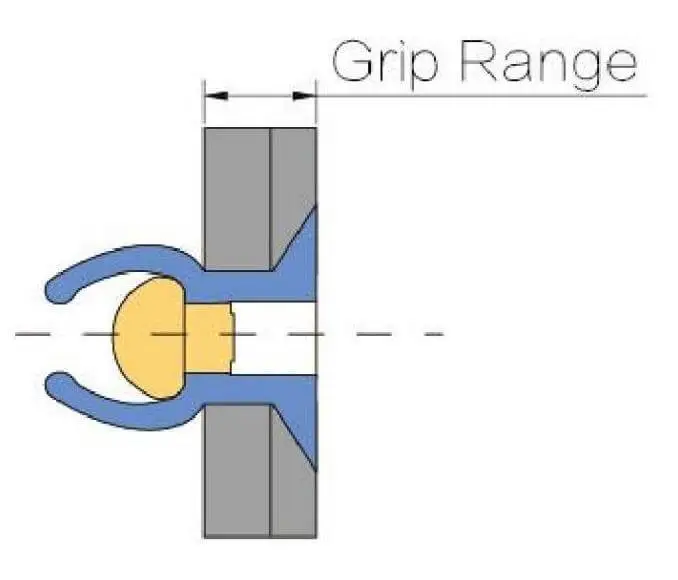
②. Engineering Significance of Grip Range

The Grip Range determines whether the rivet can achieve proper expansion on the back side of the steel plate. The total thickness should fall within the middle range of the Grip Range, not at its upper or lower limits. An excessively large Grip Range leads to insufficient clamping. An excessively small Grip Range prevents the rivet from breaking or causes structural failure.

③. Rivet Diameter vs. Shear Strength

In steel structures, diameter directly determines shear resistance. Larger diameters yield higher shear strength but impose stricter requirements on hole size and installation. Common selection logic:

  • 3.2 mm: Light-gauge steel, non-load-bearing applications
  • 4.0–4.8 mm: Standard range for structural steel
  • ≥6.4 mm: High-load or structural blind rivets

④. Rivet Length Calculation Logic

Length isn’t arbitrary. Basic principle: Rivet length ≈ Total plate thickness + 1.5 × Diameter

Insufficient length prevents full expansion. Excessive length compromises forming stability and actually reduces strength.

⑤. Material Combinations (Steel–Steel / Steel–Aluminum)

For steel-to-steel connections, prioritize carbon steel or stainless steel rivets. For steel-to-aluminum connections, galvanic corrosion must be carefully considered. A common engineering solution is: aluminum cap + stainless steel mandrel, balancing strength and corrosion resistance.

⑥. Corrosion Protection Requirements (Galvanized / Stainless Steel / Sealed Type)

Steel structures are often used in outdoor or semi-outdoor environments. The corrosion protection grade directly determines service life.

  • Indoor steel structures: Galvanized steel rivets are sufficient
  • Outdoor steel structures: Stainless steel or high-grade galvanization
  • Roofing / Exterior walls / Humid environments: Closed-head or sealed Pop Rivets

Are Pop Rivets Strong Enough for Steel Structures?

When properly selected, Pop Rivets offer a connection method that is “sufficiently strong and more controllable” in numerous steel structure applications.

Strength Range of Typical Structural Rivets

Standard pop rivets primarily connect thin steel sheets, targeting strength for non-load-bearing structures. In contrast, structural blind rivets (Structural Rivets / Monobolt) are specifically engineered for steel construction. Within the 4.8–6.4 mm range, their shear and tensile capacities significantly exceed typical sheet metal requirements.

Engineering Comparison Range with M6 / M8 Bolts

In thin steel plates (0.8–4.0 mm), bolts often fail to achieve their theoretical strength because the plate deforms first. Structural rivets distribute loads across the steel plate through extensive back expansion. In practical applications, their effective shear resistance can approach or even cover the working range of M6 bolts, offering greater stability under vibrational conditions.

When Must You Upgrade to Structural Rivets?

Standard pop rivets should not be used when:

  • The connection experiences continuous vibration or alternating loads
  • The connection is safety-critical or part of a secondary load-bearing structure
  • Plate thickness approaches upper limits, causing insufficient expansion of standard rivets
  • Project requirements mandate welding alternatives or reduced on-site construction risks

In these cases, structural blind rivets are a mandatory requirement, not merely an upgrade option.

Corrosion Resistance & Durability Design for Rivets in Steel Structures

In steel structures, corrosion resistance and durability often outweigh initial strength. Once corrosion occurs in a joint, strength rapidly deteriorates and maintenance costs significantly increase.

Suitable Environments for Galvanized Steel Rivets

Galvanized steel rivets represent the most common and cost-effective option. Their zinc coating protects the steel substrate through a sacrificial anode mechanism, making them suitable for indoor, dry environments, and general industrial settings. They can also be used in mild outdoor conditions provided the coating thickness meets standards and prolonged water accumulation is avoided.

Analysis of Stainless Steel Rivets' Advantages and Disadvantages

Stainless steel rivets (e.g., A2/A4) inherently possess exceptional corrosion resistance. They perform reliably in coastal, high-humidity, and highly polluted environments with minimal maintenance. However, their cost is significantly higher than galvanized steel rivets, and their greater hardness demands more sophisticated riveting equipment.

Risk of Galvanic Corrosion (Steel + Aluminum)

When aluminum rivets are used in steel structures, special attention must be paid to galvanic corrosion. In humid conditions, aluminum acts as an anode and corrodes preferentially, significantly shortening the connection’s lifespan. For steel structures, it is recommended to prioritize the use of steel or stainless steel rivets.

Advantages of Closed-End Rivets in Steel Structures

Closed-end rivets completely seal the point where the mandrel breaks off. This effectively prevents moisture, salt spray, and corrosive agents from entering the rivet interior. In steel roof structures, exterior walls, and outdoor equipment, Closed-End Rivets demonstrate significantly superior durability compared to open-end rivets.

Engineering Reference for Salt Spray Test Hours

Salt spray testing is a common standard for evaluating corrosion resistance:

  • 72 h: Standard galvanized coating, suitable for indoor or low-corrosion environments
  • 240 h: Heavy-duty galvanized or basic corrosion protection, suitable for general outdoor use
  • 1000 h and above: Stainless steel or high-grade corrosion protection systems, suitable for coastal and high-corrosion environments

In steel structure projects, salt spray ratings should be directly matched to the design service life, rather than solely pursuing low cost.

FAQ – Riveted Connections in Steel Structures

Q1: Are riveted connections strong enough for steel structures?

Yes, in light to medium-duty steel structures, the shear and tensile strength of structural blind rivets can meet design requirements. The key lies in proper selection and matching the clamping range.

Q2: Can pop rivets replace welding in steel?

Pop rivets can substitute welding in thin steel plates, field construction, inaccessible backsides, or where heat-affected zones must be avoided. However, they are unsuitable for heavy-duty primary load-bearing members.

Q3: What rivets are best for steel structures?

Structural rivets (Monobolt) are generally preferred for steel structures. Stainless steel or closed-end rivets are recommended for outdoor or corrosive environments.

Q4: Are structural rivets better than bolts?

Structural rivets outperform bolts in single-side installation, vibration resistance, and assembly consistency. Bolts remain more suitable for applications requiring disassembly or ultra-high load capacities.

Q5: Do rivets loosen in steel structures?

Properly installed rivets do not loosen due to vibration like bolts do. This is especially true for structural rivets, whose mechanical locking mechanism maintains clamping force over the long term.

Get the Right Riveted Connection for Your Steel Structure

In steel structure applications, choosing the right connection method matters more than “going cheap.” Rivmate doesn’t just supply rivets—we help you get your structure right the first time.

You can receive a free steel structure connection solution assessment to confirm rivet type, diameter, and clamping range compatibility; request free samples for on-site verification; and have engineers assist with strength and quantity calculations to avoid over- or under-design.

We also provide ISO and engineering-grade test data as design references, backed by one-on-one support from Rivmate engineers to ensure your steel connections are safe, stable, and reproducible.

📧 Product Inquiry: manufacture@world-rivet.com

🌐 Official Website: https://worldrivet.com/

Reference

Share:

More Posts

Get Rivets Quotes Now

Wholesale Blind Rivets from Rivet Manufacturer

How Do I Choose The Right Size Pop Rivet?

Table of Contents

How Do I Choose The Right Size Pop Rivet? Do you know what factors you should base your choice of the most suitable pop rivets on? Are you overwhelmed by all this, don’t worry, this article will solve all your questions about how do i choose the right size pop rivet!

What Determines Rivet Size?

Types of pop rivets - Rivmate Blind Rivet Supplier

To select the correct size for Pop Rivet, the key lies in understanding four crucial parameters, which directly determine the strength, clamping effect and long-term stability of the riveting.

  • Material Thickness
    The rivets must be able to penetrate all the workpieces and form sufficient expansion shapes on the backside. Therefore, the total plate thickness is the basic starting point for selection. The greater the total thickness, the longer the required rivets and the larger the diameters usually need to be.
  • Grip Range
    This is the key parameter that determines whether the rivet truly “holds the material”. The Grip Range must cover the total thickness of your plate; otherwise, there will be insufficient clamping or incomplete expansion. Engineering tests by Rivmate show that incorrect selection of the Grip Range can result in a loss of up to 40–70% of strength, which is the most dangerous error.
  • Rivet Diameter
    The larger the diameter, the usually higher the shear strength. Thin plates are generally made of 3.2mm or 4.0mm, while structural components are mostly made of 4.8mm or 6.4mm. The hole diameter must precisely match the diameter; otherwise, there will be loosening, pull-bolting tilt or insufficient expansion.
  • Rivet Length
    The length must be sufficient to cover the thickness of the material and leave the amount of material needed for proper expansion. Industry experience typically uses:
    Length = Total plate thickness + 1.2D (D = Diameter of the rivet)
    If the length is too short, it cannot form properly. If it is too long, it may cause the rivet to bend or fail to be fully tightened.

Overall, the correct logic for determining the Rivet Size is as follows: First, look at the total plate thickness, then match the Grip Range, and finally confirm whether the diameter and length meet the structural requirements.

The grip range is always the most crucial factor. It cannot be determined by intuition or appearance; otherwise, the rivets will not be able to generate sufficient clamping force, resulting in structural loosening or premature failure.

How to Choose the Right Pop Rivets Diameter?

The selection of the diameter of Pop Rivet is one of the factors that have the greatest impact on the structural strength among all the size parameters. The diameter determines the shear strength, the degree of material deformation, and the adaptability of the rivet in the thin plate. Therefore, in the engineering selection process, we will first assess the thickness of the sheet, the structural load, and the hardness of the material, and then determine the diameter range.

Here are the two core principles that users need to understand most, explained from an engineering perspective:

Pneumatic Blind Pop Rivet Gun
  • When the sheet material is very thin, it is advisable to avoid using rivets with excessively large diameters.
    When subjected to force, thin plates are prone to bulging and deformation, and even cause the rivets to fail to adhere tightly to the material surface. An excessively large diameter will also increase the difficulty of hole processing and affect the final clamping quality. Therefore, for household appliances sheet metal, light-load equipment, and DIY projects, using 3.2 mm or 4.0 mm rivets is sufficient to meet the requirements.
  • When the structure is subjected to a large load, the diameter must be increased to enhance the shear strength.
    The shear resistance of the rivets mainly depends on the diameter. The larger the diameter, the larger the force-bearing area, and the higher the overall strength. Therefore, for vehicle sheet metal, mechanical structural components, and heavy-duty connections, 4.8 mm or 6.4 mm are typically used, especially for structural blind rivets (Structural Rivet / Monobolt).

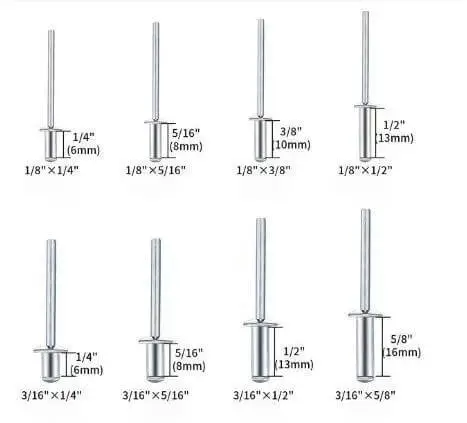
3.2 mm (1/8″): Suitable for thin sheets, light-load structures, household appliances, electronic enclosures, DIY projects; minimum risk of deformation.

4.0 mm (5/32″): Commonly used in sheet metal chassis cabinets and light industrial equipment; it performs well in balancing strength and plate thickness compatibility.

4.8 mm (3/16″): Suitable for load-bearing structures in automotive bodies and mechanical enclosures; the shear strength has been significantly enhanced.

6.4 mm (1/4″): Suitable for heavy-duty applications, structural components, construction machinery, etc.; mostly structural type rivets, with strength comparable to bolt connections.

In summary, the larger the diameter, the higher the strength; however, the thinner the material, the more prone it is to deformation due to an excessively large diameter. The principle for choosing the diameter correctly is to find the optimal balance point between “the material’s bearing capacity” and “the structural strength required”.

How to Choose the Right Grip Range?

Grip Range represents the total material thickness range within which the rivets can effectively grip. As long as the total plate thickness falls within the Grip Range, the rivets can expand correctly and form a stable connection.

To make the correct selection of Grip Range, one must follow three engineering principles:

  • The grip range must completely cover the total thickness of the board.
    The clamping range refers to the thickness interval within which the rivet can form normally. If the plate thickness exceeds the upper limit of the Grip Range, the rivet cannot fully expand; if the plate thickness is below the lower limit of the Grip Range, the rivet will expand excessively, resulting in loosening.
  • If the grip range is set too large, it will result in insufficient clamping force.
    The wider the clamping range, the more likely the rivet is to “fail to fully expand” when expanding on thinner materials. This can lead to loosening of the connection and a decrease in vibration resistance. In practical engineering, a too large Grip Range is the most common cause of failure.
  • The grip range is set too small, causing the rivets to fail to form properly.
    The rivets are not fully expanded, and the mandrel may have been pulled apart before any clamping force was applied. This results in a “false riveting” phenomenon. The strength of such connections is usually less than 30%.

Example:

When the total thickness of your material is 2.0 mm, you should choose the Grip Range of 1.5–3.0 mm. Never select 0–1.5 mm, as the rivets may become loose due to insufficient clamping, or even fail to expand properly.

Select the Length of the Pop Rivets

We determined the thickness of the material being joined and the diameter of the pop rivet in the first and second steps, respectively. Next we need to determine the length of the pop rivets.

So how do you choose the right rivet length for your project? Based on practical experience, the length of the rivet should be greater than or equal to the total material thickness plus 1.5 times the rivet diameter. Here is the formula:

Rivet Length = Total Material Thickness + 1.5 x Rivet Diameter

How Do I Choose The Right Size Pop Rivet? - Select the Length of the Pop Rivets

Next I will use an example where the thickness being riveted is 6mm and the rivet diameter is 1/8″ (3.2mm).

Total material thickness = 6mm
Rivet diameter = 3.2mm
1.5 times rivet diameter = 3.2mm × 1.5 = 4.8mm
Recommended Rivet Length = Total Material Thickness + 1.5x Rivet Diameter = 6mm + 4.8mm = 10.8mm

Therefore, a rivet with a length of 10.8mm and a diameter of 3.2mm should be selected to join a 6mm sheet. (Usually take a close standard length such as 11mm or 12mm)

Rivet DiameterTotal Material ThicknessRecommended Rivet Length
3/32″ (2.4 mm)0.5 – 3 mm4.8 mm
1/8″ (3.2 mm)3 – 5 mm6.4 mm
5/32″ (4.0 mm)5 – 7 mm8.0 mm
3/16″ (4.8 mm)7 – 9 mm9.6 mm
1/4″ (6.4 mm)9 – 11 mm12.7 mm

Should Rivets be The Same Size as Holes?

Sheet Metal Blind Fasteners : A Complete Buying Guide

In practice, the diameter of the rivet is not the same as the diameter of the hole. Generally speaking, the hole diameter will be slightly larger than the rivet diameter, so as to ensure that the rivet can be inserted smoothly into the hole and correctly expand to form a solid connection. Please follow our recommended hole diameter ranges and tolerances and use the appropriate drill and drilling method to ensure the quality and reliability of the installation of pop rivets.

Rivet Size Chart and Drill Size Chart

Rivet Diameter
Drill
mm(inch)
mm
2.4(3/32″)2.5-2.6
3.0(7/61″)3.1-3.2
3.2(1/8″)3.3-3.4
4.0(5/32″)4.1-4.2
4.8(3/16″)4.9-5.0
5.0(6/31″)5.1-5.2
6.0(15/64″)6.1-6.2
6.4(1/4″)6.5-6.6
8.0(5/16″)8.1-8.2
9.6(3/8″)9.1-9.2
What Are Rivets? Rivmate Rivets Supply

FAQ: Common Questions About Choosing Pop Rivet Size

Q1. How do I choose the right size pop rivet?

When selecting dimensions, simply verify that the total plate thickness falls within the Grip Range, then choose the diameter according to strength requirements. Finally, determine the length by applying the formula “plate thickness + 1.3D”. The Grip Range is the most critical parameter and must fully encompass the plate thickness.

Q2. What size pop rivet do I need for sheet metal?

Thin plates are typically selected at 3.2 mm or 4.0 mm, which prevents plate bulging while providing sufficient strength. For applications with higher load-bearing requirements, 4.8 mm should be chosen. Always ensure the Grip Range is matched to the plate thickness.

Q3. What drill bit for 1/8 rivet?

1/8″ (3.2 mm) rivets paired with a #30 drill bit (approximately 3.3 mm bore diameter). The bore diameter must be slightly larger than the rivet body to ensure smooth installation without compromising clamping force.

Q4. How long should a pop rivet be?

The rivet length shall satisfy the formula: Length = Plate thickness + 1.3 × Diameter. Ensure the tail end expands fully to form a stable clamping force.

Request Rivmate Rivet Samples & Engineering Support

Custom Rivet Manufacturer in China - Custom Pop Rivets for your Project

If you are choosing the appropriate rivet size, material or structural type for your project, the engineering team at Rivmate can offer you one-on-one professional support. We provide free samples to help you verify strength and compatibility in actual working conditions; at the same time, we offer free selection suggestions, including hole diameter, Grip Range, and thickness matching checks, to ensure that each rivet meets the application requirements.

Rivmate can also issue an ISO strength test report and support OEM brand packaging, which is suitable for production enterprises and long-term supply projects. Please contact us to obtain the fastest 4-hour technical and quotation response.

📧 Product Inquiry: manufacture@world-rivet.com

🌐 Official Website: https://worldrivet.com/

Reference

Share:

More Posts

Get Rivets Quotes Now

Wholesale Blind Rivets from Rivet Manufacturer

What Are Pop Rivets Used For?

Table of Contents

Pop rivets are among the most common and reliable blind fasteners in modern manufacturing. Their single-side installation, rapid assembly, and suitability for thin-sheet structures make them widely used across industries such as domestic appliances, automotive, construction, furniture, and sheet metal fabrication. What are pop rivets used for? Why do they often prove more stable, quicker, and more dependable than screws in thin-sheet connections? This guide will comprehensively explain the applications and selection logic of Pop Rivets from an engineer’s perspective, focusing on practical implementation.

What Are Pop Rivets?

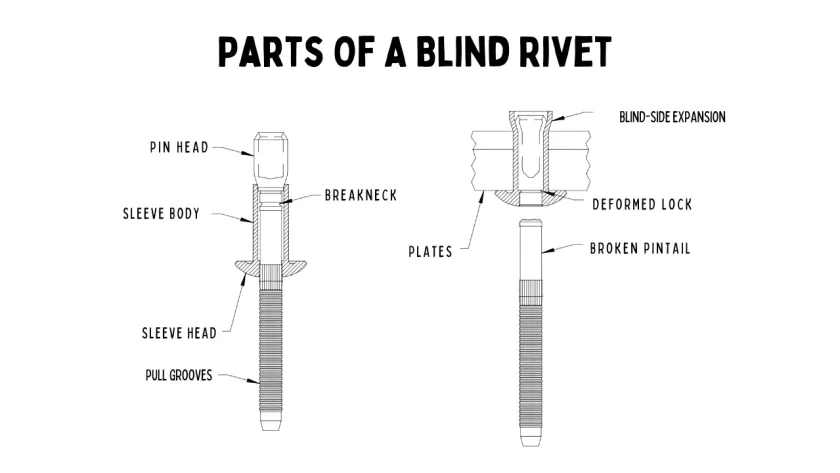
Pop rivets are a typical type of blind fastener, comprising two components: the body and the mandrel. The mandrel passes through the body and is drawn out during riveting, causing the body to undergo plastic expansion. This process creates a locking structure on the reverse side of the material, enabling connections where access is only possible from one side. This method is termed blind fastening (single-side installation / blind riveting).

Why Pop Rivet Mandrel not Breaking

Three key reasons make Pop Rivets particularly suitable for sheet metal applications. Firstly, thin sheets cannot support thread profiles, making screws prone to stripping; rivets, however, do not rely on thread engagement. Secondly, the expansion mechanism of Pop Rivets generates stable clamping forces across sheet thicknesses ranging from 0.3 to 3.0 millimetres. Thirdly, their rapid installation and consistent forming quality make them highly suitable for high-volume sheet metal production.

In summary, Pop Rivets represent a structurally simple, highly reliable fastening solution for single-sided sheet metal applications. They offer a more efficient alternative to screws and welding across numerous industries.

How Pop Rivets Work

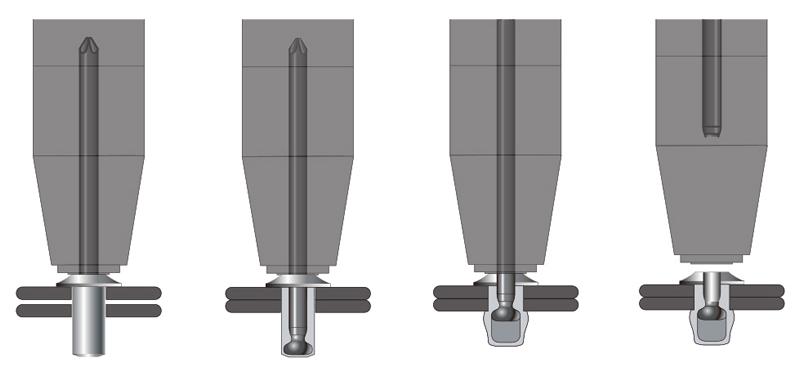
The core mechanism of Pop Rivet can be divided into three steps: expansion, locking, and fracture.

a. Expansion Locking

The more fully expanded, the higher the locking force.

When the nail gun pulls the mandrel, the forming section at the tail end of the mandrel will be pulled into the cap body. The cap body then undergoes plastic expansion and forms a “hook” or “mushroom head” on the back of the sheet.

This expansion structure enables the Pop Rivet to achieve stable clamping force even in thin plates (0.3 – 3.0 mm).

b. Final Clamping Force

The location of the broken core determines the consistency of strength.

After the expansion process is completed, the core shaft will break at the preset fracture groove. The fracture position is strictly controlled to ensure that the rivets achieve the optimal expansion state and complete the final locking. Some of the core shafts will remain inside the cap body, enhancing the overall strength and improving the vibration resistance performance.

c. Why It Works for Sheet Metal?

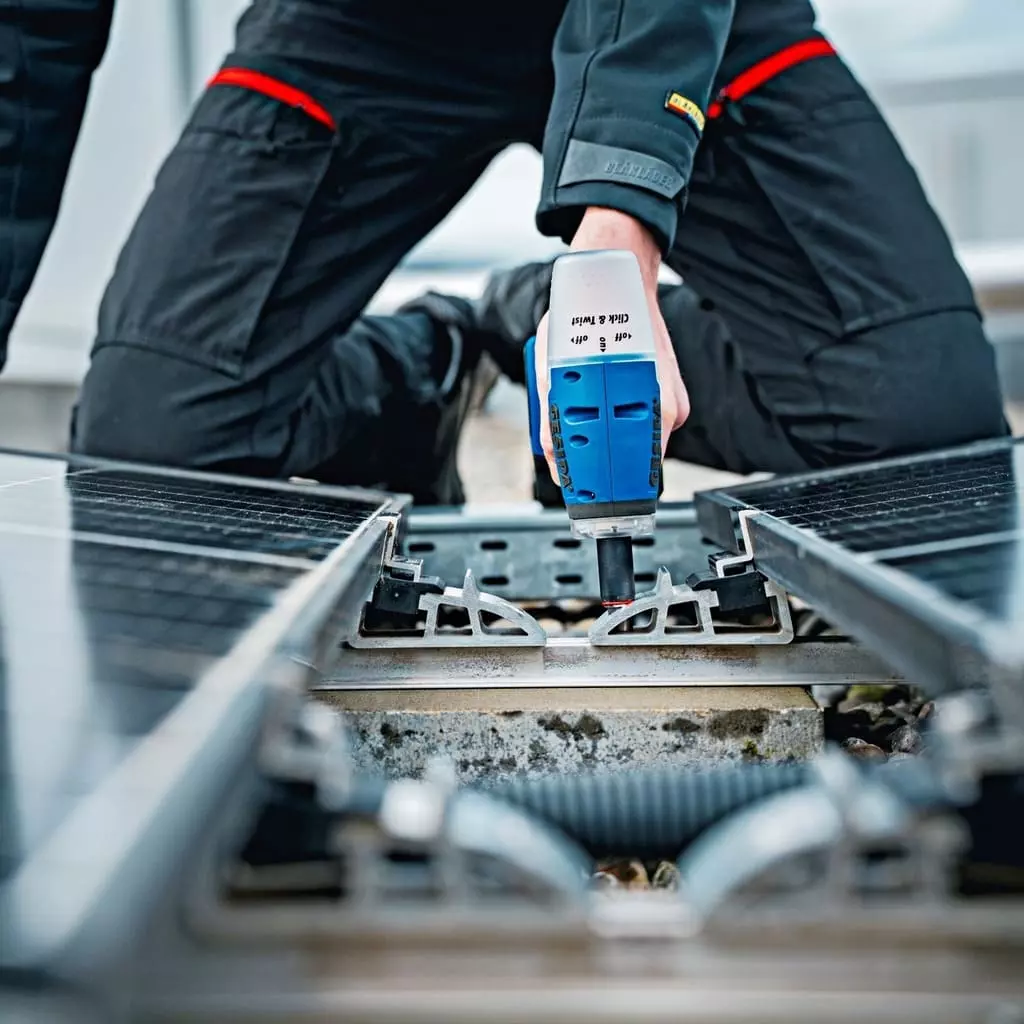
Rivet connections in solar panel (module + holder) systems

Pop Rivet is a fastening solution specifically designed for “thin plates + single-sided installation”.

The main drawback of thin plates is that they cannot provide sufficient threaded engagement. Screws tend to slip and loosen in thin plates, and even tear the material. However, the locking force of Pop Rivets relies on the “expansion shape”, which is independent of the plate thickness. As long as the hole diameter is correct, a stable connection can be achieved. This gives Pop Rivets an absolute advantage in the following scenarios:

  • Can only be operated from one side (blind fastening)
  • The sheet material is too thin to drill holes
  • Requires rapid and large-scale assembly
  • Requires a long-term stable and vibration-resistant connection

Why Pop Rivets Are So Widely Used?

The reason why Pop Rivets are widely adopted in the global manufacturing industry is not because they are cheap, but because they possess technical advantages in thin plate structures that cannot be replaced by other fastening methods. These advantages directly determine the application scope and reliability of Pop Rivets.

① Blind Installation, suitable for structures where access to the rear is not possible.

The greatest advantage of Pop Rivets is that “installation can be done from the front only”. Many structures are enclosed from the inside and their backs are inaccessible, such as metal shells, computer cases, and tubular profiles. Screws require bilateral engagement, while rivets do not.

② Gentle on thin sheets, it is one of the most reliable methods for joining thin sheets.

The riveting operation only takes 1–2 seconds. It is suitable for mass production on assembly lines and ensures high assembly consistency. Compared to threaded connections, no torque control is required, and there will be no deviations due to differences in operator skills.

③ It is friendly to thin plates and is one of the most reliable methods for connecting thin plates.

Industry applications for zinc plated blind rivets

The thin plate cannot provide sufficient thread engagement, which will cause the screws to slip, loosen or even fall off. The clamping force of Pop Rivets relies on the “expansion structure” and does not depend on the depth of the thread. Therefore, they can be safely used in thin plates ranging from 0.3 to 3 mm.

④ Highly resistant to vibration, making it exceptionally well-suited for vibrating conditions.

The deformed metal after expansion will firmly lock the sheet, creating a long-term stable clamping state. Compared to screws, it will not loosen by itself due to vibration and does not require anti-loosening washers. This is why it is often used in: vehicle interiors, motor housings, HVAC, industrial equipment.

⑤ Low cost, yet no compromise on performance

The open-type aluminum rivets are one of the least costly industrial fasteners. The production method is cold heading automation, which is highly efficient, keeping their prices consistently within a very stable low range. They are suitable for mass production and cost-sensitive projects.

What Are Pop Rivets Used For: Industry Applications & Engineering Reasons

Pop rivets are used to fasten thin sheet-metal parts together from one side only, providing a quick, strong, and vibration-resistant connection.

1. Sheet Metal Fabrication

Self Piercing Rivets for Sheet Metal- Self Piercing Rivets Application
Sheet Metal Blind Fasteners : A Complete Buying Guide

Typical applications: HVAC enclosures, chassis cabinets, equipment covers.

The thickness of sheet metal is usually only 0.3–1.0 mm, which is insufficient to ensure reliable screw engagement. The screws will slip, loosen, or even fail to lock. However, Pop Rivets provide clamping force through an expansion structure, independent of the depth of the screw thread.

Reason for the project:

  • Single-sided installation, suitable for enclosed sheet metal enclosures
  • Stable connection strength for thin plates
  • Resistant to loosening under prolonged vibration
  • Closed-end design provides waterproofing and dustproofing

Suitable for areas subject to frequent vibration where disassembly is not required.

Rivmate Automotive Blind Rivets Solution
Automotive Blind Rivets Application - Blind Rivets on Car

Typical applications: interior panels of vehicles, thin plate supports, wire harness fasteners.

The vibration of the vehicle is intense, and the screws are prone to loosening. Anti-loosening glue or washers are needed. Pop Rivets perform more stably in a vibrating environment, and they have low costs and fast batch installation speed.

Reason for the project:

  • Excellent vibration resistance performance
  • High installation consistency, beneficial for automotive assembly lines
  • Aluminum rivets can reduce weight
  • Can be used in composite structures made of thin steel plates and plastics

Suitable for areas that require frequent vibration but do not need to be disassembled.

What is a blind rivet used for?Application of Blind Rivets for Construction Industry
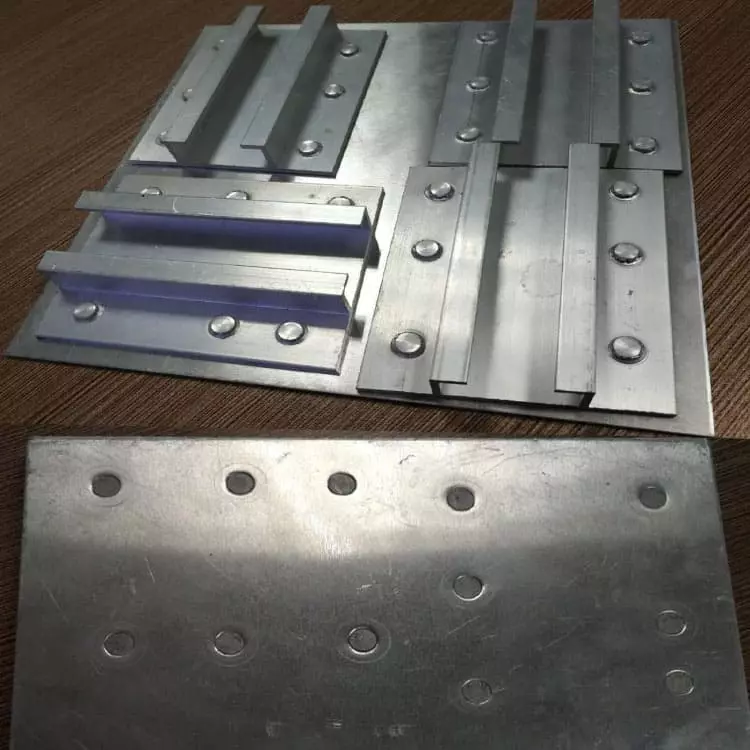
Common locations for rivets in solar roofs

Typical Application: Metal roofing, curtain wall system, ventilation ducts.

The exterior of the building is exposed to rain, ultraviolet rays, and temperature variations. Using screws may lead to water seepage or loosening. Pop Rivets (especially the closed type + EPDM gasket) can achieve complete sealing.

Reason for the project:

  • Excellent sealing performance, preventing water leakage
  • Resistant to loosening caused by temperature cycling
  • Stainless steel/aluminum nails are corrosion-resistant
  • Single-sided operation is suitable for roof construction

Outdoor + Metal Panels. Rivets are usually more reliable than screws.

4. Electronics & Appliances

What Are Pop Rivets Used For? - Pop Rivets for Electronic Devices

Typical Application: Washing machine body, refrigerator panel, electrical control box body.

The sheet metal of household appliances is usually very thin (0.5 – 0.8 mm). The threads cannot provide a stable locking, and they will loosen with long-term vibration. Rivets offer higher structural reliability.

Reason for the project:

  • Thin plates are not suitable for screws; rivets are more reliable.
  • Mechanical and electrical equipment vibrates significantly (washing machines are especially so).
  • Installation is fast, facilitating large-scale production.
  • Aluminum rivets can prevent rusting and enhance the appearance lifespan.

Thin plates + vibration + high production line efficiency → Pop Rivets must be used.

Blind Rivets for Furniture
What Are Pop Rivets Used For? - Pop Rivets for Furniture Manufacturing

Typical Applications: Aluminum profile frames, metal furniture, DIY toolboxes.

Maintenance and DIY users prefer Pop Rivets because the installation process is simple, requiring only a manual riveting gun. Screws need a threaded depth, while rivets are suitable for various thin-walled materials.

Reason for the project:

  • No need for tapping
  • No power supply required, nor welding equipment
  • Aluminum profiles are suitable for aluminum rivets, aesthetically pleasing and rust-free
  • Strong enough for light-load structures

Simple, fast and low-cost – these are the best features for DIY.

Why do Airplanes Use Rivets Instead of Welds?

Typical Application: Lightweight structural components, skin panel connections, and vessel equipment shells.

In the early days of aviation, solid rivets were almost exclusively used. However, in non-critical structures, blind rivets were employed. For marine equipment, aluminum or stainless steel blind rivets are preferred.

Reason for the project:

  • The rivets are more resistant to fatigue than screws.
  • Light in weight (made of aluminum).
  • The stainless steel rivets are resistant to seawater corrosion.
  • The single-sided operation is suitable for complex structures.

When lightweight construction, corrosion resistance and long-term reliability are required, blind rivets offer superior performance.

Pop Rivets vs Screws vs Welding

Comparison AspectPop Rivet (Blind Rivet)ScrewWelding
Cost★★★★☆ Low★★★☆☆ Medium★☆☆☆☆ High
Strength★★★☆☆ Moderate★★★★☆ Dependent on thread engagement★★★★★ Highest
Removability❌ Not removable✔ Removable and reusable❌ Not removable
Thin Sheet Suitability✔ Best choice✘ Prone to stripping
Material Compatibility✔ Metals + plastics✔ But requires thread engagement✘ Metals only
Water Resistance✔ Closed-end type can be sealed✘ Washers still risk leaking✔ Depends on welding quality
Vibration Resistance✔ Stable✘ Can loosen over time✔ Good, but welds may fatigue
Installation Difficulty★★☆☆☆ Easy★★★☆☆ Moderate★★★★★ Complex
  • Cost:
    The Pop Rivets have the lowest cost and are suitable for mass production. The cost of screws is moderate, while welding is the most expensive as it involves labor, equipment, and inspection costs.
  • Strength:
    The welding strength is the highest and can be used as the main structural connection. The strength of screws depends on the length of the thread engagement. Pop rivets perform stably in thin plates but are not suitable for extremely high loads.
  • Removability:
    The screws can be easily removed and reinstalled. The Pop Rivets are non-disposable and need to be drilled out. Welding is completely non-reusable.
  • Material Compatibility:
    Pop Rivets can be used to connect various materials such as metal and plastic. Screws require materials that can be tapped. Welding is only applicable to metal and the materials must be compatible.
  • Thickness Compatibility :
    Pop Rivets are most suitable for thin boards with a thickness ranging from 0.3 to 3 mm. Screws are suitable for medium-thick boards. Welding is not limited by thickness.
  • Waterproofing Capacity: The closed-type Pop Rivets with EPDM can achieve a high level of sealing. However, the screws without additional washers may still allow water to seep through. Proper welding can provide a fully sealed result.
  • Installation Difficulty:
    The installation of Pop Rivets is the easiest, as it does not require contact with the backside. Screws need to be countersunk or have threaded structures. Welding installation is the most complex, requiring equipment and professional workers.

Types of Pop Rivets & Their Applications

Open-ended structures are the simplest and most cost-effective, meeting the majority of sheet metal fastening requirements.

Suitable industries: Light-duty applications such as household appliances, cabinets, and HVAC systems. Due to their rapid installation and high versatility, they represent the most widely used basic rivet type.

Steel BodySteel Material Open End Blind Rivets
Rivmate Aluminum Sealed Type Blind Rivet

Closed-end design provides waterproof and dustproof protection, preventing corrosion caused by water ingress through the mandrel breakage point.

Suitable for outdoor structures such as roofing, external wall panels, electrical enclosures, and other applications demanding high sealing reliability.

Multi-grip rivets accommodate a wider range of plate thicknesses, with a single rivet replacing multiple specifications, thereby reducing inventory and selection risks.

Suitable for projects involving significant plate thickness variations or unstable on-site construction conditions.

Multi-grip Blind Rivets
Peel Type Blind Rivets

The tail unfolds like petals, providing a large bearing surface that prevents tearing through the material.

Suitable for: Plastic, wood, FRP and other soft or brittle materials. The preferred rivet type for lightweight structures.

e. Structural Rivets / Monobolt

Structural rivets feature a mechanical locking mechanism, offering strength comparable to bolts and welded joints with exceptional vibration and impact resistance.

Suitable for: Automotive, machinery, rail transport and other heavy-duty structures, providing a professional-grade solution for high-strength applications.

4.8 steel csk monobolt

FAQ: Common Questions About Pop Rivet Applications

Q1. What are pop rivets used for?

Pop rivets are widely used in thin-sheet structures such as sheet metal cabinets, domestic appliance casings, automotive interiors, and metal roofing, owing to their single-sided installation capability, rapid application, and stable joint formation.

For thin sheets, they offer exceptional strength, providing stable shear and tensile resistance; however, they are unsuitable for supporting primary structures or applications requiring extremely high strength, where structural rivets or welding must be employed.

Standard open-ended rivets are not waterproof. Closed-end rivets or sealed rivets with EPDM gaskets can achieve a high degree of waterproofing and are commonly used in roofing or outdoor equipment.

Cannot be removed directly; must be drilled out from the centre using a drill bit. After removal, rivets of the same or larger specification may be reinstalled.

Q5. What size pop rivet should I use?

Selection must be based on hole diameter, plate thickness (grip range), and strength requirements. The hole diameter should typically exceed the rivet diameter by 0.1–0.2 mm. The rivet length must cover the total plate thickness while ensuring sufficient expansion space.

Request Free Pop Rivet Samples & Expert Engineering Support

Types of Blind Rivets

If you are selecting suitable pop rivets for your project, the most effective approach is to obtain direct access to engineer-level technical support and physical samples. Rivmate provides comprehensive assistance throughout the process, enabling more precise selection, better cost control, and more reliable structural integrity.

📧 Product Inquiry: manufacture@world-rivet.com

🌐 Official Website: https://worldrivet.com/

Reference

Share:

More Posts

Get Rivets Quotes Now

Wholesale Blind Rivets from Rivet Manufacturer

How to Install Pop Rivets ? - The Most Complete Guide

Table of Contents

In industrial assembly and sheet metal fabrication, pop rivets represent one of the swiftest, most dependable, and cost-effective fastening solutions available. How to install pop rivets?
Though the installation method appears straightforward, it directly impacts joint strength, waterproofing performance, and long-term stability. Consequently, mastering the correct installation procedure for pop rivets constitutes an essential foundational skill for any engineer engaged in sheet metal work, HVAC systems, domestic appliances, vehicle modifications, or outdoor structural assembly. This guide systematically explains the entire process from selection to installation from an engineer’s perspective, enabling you to install rivets correctly the first time and avoid issues such as loosening, water ingress, or failed riveting. Rivmate also provides professional, practical advice tailored to different applications.

What Are Pop Rivets?

Pop rivets can also be called Blind rivets. it was designed to be able to cater for single side mounted applications.

Originally used in aircraft manufacturing and invented by Hamilton N. Wylie in England, Pop rivets are now used in everything from aircraft and automotive manufacturing to the assembly of various electronic products due to their quick and easy installation and the ability to be mechanized on a large scale.

Pop rivets consist of two parts, the rivet body and the mandrel. During installation, the mandrel is pulled off and embedded in the rivet body, thus realizing a stable connection.

Rivmate Sealed Blind Pop Rivets

Types of Pop Rivets

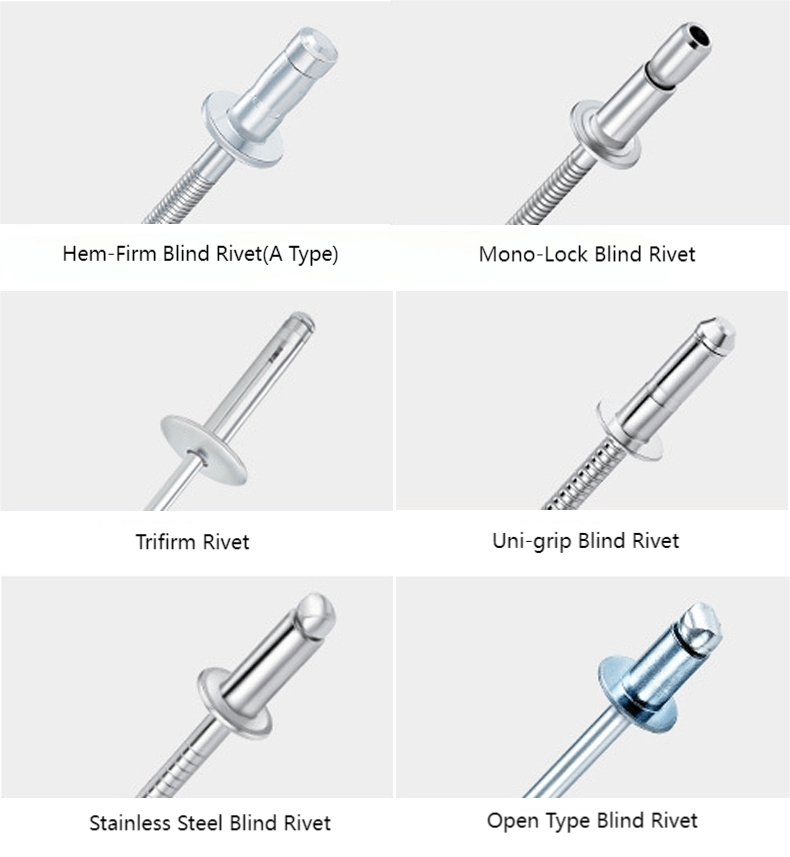
Since pop rivets were invented, they have evolved and there are now many, many types of pop rivets. And pop rivets have now become the number one choice for sheet metal connections. Different types of rivets are made of different materials and they are applied in different scenarios. Below I will list the most common types of pop rivets and introduce the corresponding application scenarios:

Stainless Steel Open type blind pop rivet
Open Type Blind Rivets
Rivmate Aluminum Sealed Type Blind Pop Rivet
Sealed Type Blind Rivets
Peel Type Blind Rivets in China
Peel Type Blind Rivets
Rivmate Multi Grip Blind Pop Rivet From China
Multi Grip Blind Rivets
  • Open Type Blind Rivets

    Open end blind rivets are the most common type of blind rivets and the ones used in the largest quantities. It is characterized by leaving an open hole after installation. It is often used in scenarios such as the housing of appliances, the attachment of furniture and the connection of electronic devices.

  • Sealed Type Blind Rivets:

    Sealed Blind Rivet is a specially designed blind rivet. It has a closed end of the rivet body to form a sealed structure. In addition to providing a good connection, it also prevents liquids and gases from entering the connection area. It is often used in automobile exhaust systems, waterproof connections in roofs and furniture that needs to be waterproof such as washing machines.

  • Peel Type Blind Rivets

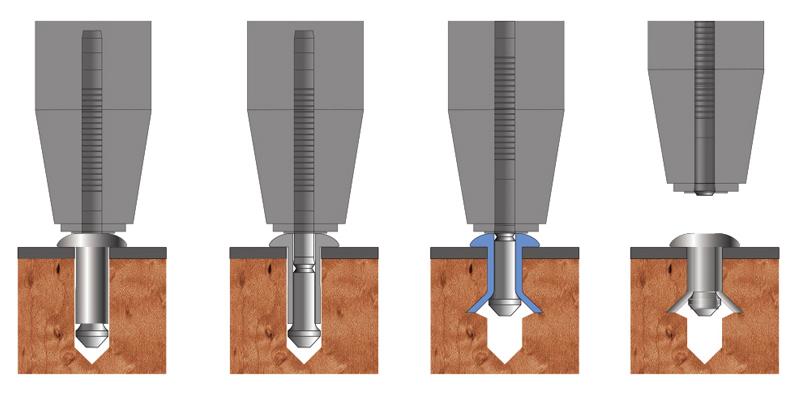
    Peel type blind rivets are blind rivets specifically designed to join soft and brittle materials such as plastics, wood and composites. Its unique design creates multiple petal-shaped clamping areas, providing a larger contact area and more uniform clamping force.Peel rivets are ideal for use in plastic shells, soft wood joints and composite joints.

  • Multi grip blind rivets

    Multi-Grip Blind Rivets can accommodate a wide range of material thicknesses, reducing inventory requirements and simplifying the selection process.Multi-Grip Blind Rivets provide reliable clamping force and joint strength over a wide range of material thicknesses during installation. It is used in a wide range of applications, including automotive body connections, aircraft repair, structural steel connections, marine and equipment fastening.

Rivmate Monobolt Rivet - Mono-Lock Blind Rivet
Monobolt Rivet
Exploding Pop Rivets- Rivmate Tri Fold Grip Blind Rivet
Tri Fold Rivets
Rivmate Waterproof Bulb Tite Rivets
Waterproof Bulb Tite Rivets
Pop Rivet Distributor - Rivmate Hemlock Rivets
Hem Rivets
  • Monobolt Rivet

    The Monobolt rivet is a high strength structural rivet designed for use in connection applications where high strength and reliability are required. It has a unique locking mandrel design that ensures the rivet will not loosen after installation and will remain stable in high stress and high vibration environments. It will be used in applications where high strength is required. For example, automotive chassis, steel structures, railroad body connections and heavy machinery connections.

  • Exploding pop rivets

    Exploding pop rivets are specially designed blind rivets with unique expansion and locking characteristics that allow them to be installed with a large diameter “bulb” shaped expansion body to provide greater clamping force and better load distribution. These rivets are particularly suitable for joining soft and thin materials such as plastics, composites and sheet metal.

What You Need Before Installing Pop Rivets ?

① Pop Rivets

You need to choose the appropriate type of rivet for the application in advance, including:

Before choosing rivets, make sure to confirm the Grip Range. An incorrect Grip Range will result in riveting failure – too short to hold firmly or too long for incomplete forming.

② Drill & Drill Bits

The size of the hole directly determines whether the rivet can expand correctly.

  • Generally, it should be 0.1–0.2 mm larger than the diameter of the rivet.
  • If the hole is too large → the rivet will become loose.
  • If the hole is too small → the rivet cannot be inserted or will be overly compressed.

Use metal-specific drill bits and keep the holes drilled vertically to avoid oval holes that may lead to a decrease in strength.

③ Deburring Tool

After drilling, deburring is essential. Burrs can affect the mating surface of the rivet and the clamping force. Many failed riveting operations are due to the fact that “deburring was not done”.

④ Rivet Gun

Choose the production volume and rivet type that suit you:

Hand Threaded Rivet Insert Tool
Rivmate C Series blind rivet tool
  • Manual Rivet Gun: Suitable for DIY and small-scale use.
  • Pneumatic Rivet Gun: Fast speed, suitable for factory production.
  • Battery Rivet Gun: Portable and highly efficient, used in construction sites.
  • Heavy-Duty Rivet Gun: Necessary for installing structural rivets (Monobolt, T-Rivet).

Structural rivets require a higher tensile strength, which is generally beyond the capacity of manual tools.

How Pop Rivets Work ?

a. Core shaft pulls the cap body, causing the rivet to expand and lock on the reverse side.

The core structure of a Pop Rivet consists of two parts: the rivet body and the mandrel. When the riveting gun starts to apply force, the thickened part of the mandrel will pull the tail end of the rivet body forward, causing it to expand on the backside of the material. The expanded tail end spreads out like a “mushroom”, firmly clamping the two thin plates together. This is the fundamental reason why Pop Rivets can form reliable connections on thin plate structures.

How to Choose Rivets for Thick Material

b. The mandrel fractures but remains partially intact, continuing to provide clamping force.

Upon completion of the expansion action, the mandrel fractures at the predetermined fracture groove location. The front section of the fractured mandrel remains within the cap body, serving to maintain the rivet’s shape and provide internal support. This residual mandrel prevents a reduction in clamping force and enhances overall tensile strength. Many users are unaware that mandrel retention is a critical design feature ensuring the strength stability of blind rivets, rather than a “residual defect”.

c. Why can Pop Rivets be installed from one side only?

Applications of Monobolt Blind Rivets for Building and Cabinets And Enclosures

Pop Rivet, also known as Blind Rivet, is so named because it can be installed in “blind areas”, that is, riveting can still be completed when the back of the structure is inaccessible to the installer. The reason is very simple: all the force application processes occur on the front side, and no manual support or tool application is required on the back. The expansion on the back is automatically completed internally, thus no additional equipment or space is needed. This feature makes blind rivets extremely common in applications such as chassis and cabinet, appliance shells, vehicle interior trims, and profile cavity.

Summary of the Pop Rivet Working Process

The installation process can be briefly summarized as follows: Insert the rivet into the pre-drilled hole, the rivet gun starts to pull the mandrel, the tail of the cap expands and clamps the material on the back, then the mandrel breaks at a specific notch, and finally a reliable and non-loose connection is formed. This entire process only takes a few seconds, which is an important reason why Pop Rivet is popular in mass production.

Step-by-Step: How to Install Pop Rivets?

The process for installing Pop Rivets is straightforward: first select the correct rivet size and material, ensuring the grip range matches the plate thickness. Then drill a hole with a diameter matching the rivet, swiftly deburring the edges to ensure a flush fit. Next, insert the rivet into the hole and use a rivet gun to sever the mandrel, completing the expansion and securing the rivet. Finally, inspect the back for a full, symmetrical formation. Should incorrect installation or insufficient expansion occur, simply drill out the centre to reinstall.

StepActionWhy It Matters
1Select the correct rivetDetermines final strength and compatibility with sheet thickness
2Drill the hole and control diameterIncorrect hole size can cause looseness or prevent proper expansion
3Deburr the holePrevents poor seating and stress concentration
4Insert the rivetEnsures uniform expansion and proper alignment
5Use a rivet gun to pull and break the mandrelCreates the final clamping force needed for a secure joint
6Inspect the formed rivetConfirms strength, sealing, and vibration resistance
7Drill out and reinstall if incorrectBlind rivets are non-removable and must be drilled out for rework
How to Install Pop Rivets? - Pull the Mandrel Until it Breaks

① Choose the correct rivet

  • Select rivets made of aluminum, steel, stainless steel, etc. based on the material of the base metal.
  • Choose the correct Grip Range (clamping range) according to the total plate thickness.
  • The length of the rivet should be: plate thickness + 1.5D – 2D (length required for expansion).

The material and length of the rivet determine whether it can fully expand, whether it will loosen or break. Mismatch of the grip range can lead to insufficient clamping or inability to be pulled apart.

② Mark the position and drill holes

  • Use a drill bit that matches the diameter of the rivet, for example, a 3.3mm drill bit for a 3.2mm rivet.
  • The tolerance of the hole diameter must be controlled within +0.1mm.

③ Remove burrs

Use a chamfering tool or file to gently remove the burrs around the hole. Burrs can prevent the cap from fitting tightly, causing the rivet head to lift and the connection to become loose.

④ Insert the rivet into the hole

The cap of the rivet should be tightly against the outer side of the workpiece. Keep the rivet perpendicular to the surface of the plate. An inclined installation will cause uneven expansion, affecting the shear strength and also resulting in an asymmetrical appearance.

⑤ Use a riveting gun to break the mandrel.

Use a manual, pneumatic or electric rivet gun. Pull the rivet gun until you hear a “pop” and the mandrel breaks.

The mandrel pulls the tail of the cap body to expand, forming a real locking force. The fracture must be correct; otherwise, the rivet will not expand enough and will become loose.

⑥ Check the riveting forming effect

Check three key points:

  • Whether the rivet head is fully flush with the surface.
  • Whether the backside expansion is uniform and mushroom-shaped.
  • Whether the mandrel breaks at the correct position.

These details determine the final shear resistance, tensile strength and waterproof performance.

⑦ How to Fix Incorrect Installation

Use a drill bit slightly larger than the mandrel to drill into the center of the rivet. Remove the cap and the expansion body.

Clean the hole → reinstall a new rivet.

Blind rivets are non-removable. Once they are not formed properly, they can only be repaired by “drilling out”. This is the safest method and the one least likely to damage the parent material.

Pop Rivet Installation Chart

Rivet DiameterDrill Bit SizeHole Size (mm)Typical Grip RangeRecommended Rivet Length
3.2 mm (1/8″)#30 drill bit3.3 mm0.5 – 3.0 mm6–8 mm
4.0 mm (5/32″)#20 drill bit4.1 mm1.0 – 4.0 mm8–10 mm
4.8 mm (3/16″)#11 drill bit4.9–5.0 mm1.5 – 6.0 mm10–12 mm
6.4 mm (1/4″)#6 drill bit6.5–6.6 mm2.0 – 8.0 mm12–16 mm

During the installation process of Pop Rivets, many problems do not stem from the rivets themselves, but rather from installation mistakes. The following five types of errors are the most common and are most likely to cause structural failure, loosening or leakage. Each point is accompanied by an engineering consequence explanation to enhance credibility.

How to extend the life of zinc plated rivets?
  • Oversized Hole Size
    When the diameter of the coupler rivet is too large, after the rivet expands, it cannot fully grip the base material. It is recommended to control the hole diameter within the range of the rivet diameter + 0.1 mm.
  • Wrong Grip Range
    The Grip Range determines whether the rivets can expand properly. Incorrect selection will result in insufficient clamping force, loose structure or poor formation.
  • No Deburring
    If the burrs are not removed after drilling, the head of the rivet cannot fit smoothly. This will cause stress concentration, causing the rivet to gradually loosen during vibration. In waterproof applications, it will even lead to the risk of water seepage.
  • Incompatibility of materials leads to galvanic corrosion
    If the potential difference between the rivet material and the base material is too large, electrochemical corrosion will occur. For example: aluminum plate + stainless steel core shaft, it will corrode more rapidly outdoors. Solution: Use insulating gaskets or change the material combination.
  • Not Enough Blind-Side Clearance
    Blind rivets require space on the backside for expansion. When the space is insufficient, the rivets cannot fully expand. Poor formation can lead to decreased shear strength, deformation of the rivet body, and even complete failure. Before installation, it is necessary to check the Blind-Side Space.

FAQ About Installing Pop Rivets

Q1. How to instaall pop rivets without a gun?

Screws and washers may be used for manual riveting in the absence of a rivet gun, though the resulting finish is inferior and this method is not recommended for structural components. This technique employs screws to pull the mandrel, but the tension is inconsistent and may result in insufficient rivet expansion.

Q2. Do pop rivets need pre-drilled holes?

Yes, the vast majority of Pop Rivets require pre-drilling, with the hole diameter matching that of the rivet itself; otherwise, they may become loose or fail to expand properly. Only a few “self-drilling rivets” are exceptions, but their applications are limited.

Q3. Why won’t my pop rivet break off?

This is typically due to the rivet not being fully drawn, an incompatible grip range, an excessively large hole, or insufficient draw force from the rivet gun. Switching to a more powerful rivet gun or checking the dimensions should resolve the issue.

Q4. Why is my rivet loose after installation?

The most common causes are excessive hole diameter, failure to deburr, excessively thin material, or incorrect selection of the grip range. Looseness indicates insufficient expansion; it is recommended to re-drill and reinstall.

Q5. Do pop rivets work on plastic?

Yes, but large flange rivets or types specifically designed for soft materials must be used to prevent tearing. Plastic is prone to deformation, so tensile forces must be reduced and the load-bearing area increased.

Get Free Rivet Samples & Engineering Support from Rivmate

how many blind rivets per box

If you are choosing the right Pop Rivets for your project, or if you are unsure about the correct hole size, grip range, and material compatibility, the Rivmate engineering team can provide you with free support. We offer:

  • Free Nail Samples: Suitable for batch trial assembly, process verification and structural testing.
  • Free Aperture / Grip Range Check: Tell us the plate thickness and material, and we will adjust the hole diameter, rivet diameter and clamping range for you.
  • Engineering Support: Our engineers can offer professional advice based on the load, environment and materials.
  • OEM Packaging and Long-Term Supply Support: Suitable for brand owners, distributors and equipment manufacturers to reduce procurement costs.

Contact us immediately to obtain free samples or have an engineer review your project parameters.

📧 Product Inquiry: manufacture@world-rivet.com

🌐 Official Website: https://worldrivet.com/

Reference

Share:

More Posts

Get Rivets Quotes Now

Wholesale Blind Rivets from Rivet Manufacturer

Advantages and Disadvantages of Pop Rivets

Table of Contents

When it comes to sheetrock connections, there are many options. One of the most popular is the blind rivet. blind rivets have many advantages over other types of connecting fasteners. Let’s take a look at the advantages and disadvantages of pop rivets.

How Does Bom Rivet Work?
how do rivets work

To evaluate the advantages and disadvantages of Pop Rivet, one must first understand its structure and working mechanism. The primary reason why Pop Rivet is widely used in the sheet metal industry is its one-sided installation, mechanical locking, and stable structure working principle.

a. Mandrel Pull → Expansion & Clamping

During installation, the riveting gun will pull the core shaft. The special chamfer on the core shaft will force the tail end of the rivet head to expand outward. After expansion, a “back lock point” is formed, tightly clamping two or more layers of sheet materials together. This deformation is permanent and will not return to its original state due to vibration.

b. Mandrel Breaks at a Set Point

When the expansion force reaches the designed value, the mandrel will break at the “breakage groove” position. The broken mandrel usually remains partially or completely inside the cap body. This ensures that the clamping force meets the standard and also guarantees the assembly reliability.

c. Blind Installation

Pop Rivet does not require contact with the back side of the workpiece. The installation tool can complete the riveting simply by operating on the front side. This makes it particularly suitable for:

  • Closed structure
  • Pipe material
  • Cabinet or chassis
  • Assembly scenario where it is impossible to access the back side

This is the core advantage of Pop Rivet, which enables it to be widely used in sheet metal manufacturing and field construction.

d. Permanent Fastening

Due to the irreversible nature of the expansion structure, the rivets become permanent connections. To remove them, drilling is usually required. This is both an advantage and a disadvantage:

  • Advantage: Does not loosen
  • Disadvantage: Cannot be reused

This “non-detachable” feature is an engineering factor that we must take into account when evaluating the suitability of Pop Rivet.

Advantages of Pop Rivets

The advantages are obvious – cheap, fast and easy to install。

1. Single-Side Installation

The foremost advantage of Pop Rivets is their blind installation capability, requiring operation from a single side of the workpiece. No access to the reverse side is needed, nor are threaded structures or backing plates required. They are suitable for enclosures, metal-enclosed spaces, tubing, and applications with restricted installation access. This simplifies the installation process, reduces cycle times, and lowers labour costs.

peel type blind rivets installing

2. Fast and Efficient Assembly

The assembly speed of pop rivets is typically 2–4 times faster than that of screws. A single operation with a rivet gun completes the locking, forming, and breaking off of the rivet core, ensuring high operational consistency. In mass production, assembly efficiency is significantly enhanced, reducing manual labour time. This is also why blind rivets are extensively adopted in the home appliance industry.

3. Low Cost

The Pop Rivet features a simple construction comprising only a cap body and a mandrel. The cold heading process is highly automated with excellent material utilisation, resulting in exceptionally low production costs. Aluminium Pop Rivets are particularly economical yet still meet most thin-sheet joining requirements. This makes the Pop Rivet one of the most cost-effective metal joining solutions available.

4. Lightweight

Applications of Interlcok Blind Rivets

Materials such as aluminium, aluminium-steel composites, and galvanised steel confer significant weight advantages upon Pop Rivets. Compared to screws, Pop Rivets feature no threads and require no washers, resulting in a simpler construction. Their application in automotive, electrical, and aerospace components for light loads contributes to overall weight reduction.

5. Consistent Performance

The deformation process of Pop Rivet is determined by the core shaft surface, so the expansion amount is very stable. The Rivmate test shows:

  • Standard aluminum rivets’ tensile strength: 300–400 N
  • Steel rivets’ tensile strength: 500–900 N (depending on size)
  • Discrepancy in shear strength is less than ±8%

This consistency makes Pop Rivet highly suitable for automation and mass production.

6. Works on Thin Sheet Metal

Thin plates cannot provide threaded engagement, and screws are prone to slipping or loosening. The Pop Rivet, however, relies entirely on mechanical expansion for locking, without using threads.

Therefore:

  • 0.3 – 1.0 mm thick plates can also be securely connected.
  • The thinner the plate, the more pronounced the advantage.

This makes blind rivets the preferred fastening method in the sheet metal industry.

Disadvantages of Pop Rivets

1. Not Removable

Pop Rivet is a permanent connection method. Once the riveting is formed, it cannot be reused like screws. If you want to remove it, you can only drill out the rivet, which will damage the hole diameter and increase the maintenance cost. Therefore, it is not suitable for structures that require regular maintenance or disassembly.

2. Limited by Grip Range

The grip range of Pop Rivet is fixed and limited. If the thickness of the plate exceeds the range, the rivet cannot expand properly; if the plate thickness is too thin, it cannot generate sufficient clamping force. This requires engineers to strictly select the correct size based on the plate thickness when making the design.

the grip range of blind rivet

3. Not Ideal for High-Structural Loads

Although Pop Rivet performs well in thin plates, it is not the primary fastening method for handling heavy loads. In structures with high shear, high tensile strength, or those with extremely high safety requirements (such as large-scale steel structures), bolts, welding, or structural rivets are more reliable. Pop Rivet is suitable as a connection solution for lightweight structures, rather than for primary load-bearing connections.

4. Mandrel Retention Issues

In standard open-type rivets, the core shaft remains after fracture, but it does not completely lock. Under long-term vibration conditions, the core shaft may slightly loosen and produce noise. Structural rivets mechanically lock the core, but ordinary rivets do not have this capability. This can occasionally become a noise source in household appliances and mechanical equipment.

5. Requires Precise Hole Size

Riveting Metal to Wood

The rivets require matching hole sizes to ensure the expansion effect.

The hole is too large → This will lead to loosening and a decrease in shear resistance.

The hole is too small → It is difficult to insert or install the rivet, or it may deform.

This means that the processing accuracy must be controllable; otherwise, the reliability of the connection will be compromised.

6. Appearance Less Premium

The head of the Pop Rivet will be exposed on the material surface, which is a visible fixation method. For scenarios that require a completely smooth appearance (such as high-end shells and decorative panels), welding, countersunk screws, or concealed fasteners might be more suitable. Therefore, the Pop Rivet may not be the best choice in appearance-sensitive situations.

Pop Rivets vs Other Fasteners

What Are the Future Trends in Welded vs. Riveted Ship Construction
Comparison AspectPop Rivet (Blind Rivet)ScrewWeldingStructural Rivet (Monobolt / Structural Blind Rivet)
Installation MethodInstalled from one side; ideal for blind or closed structuresRequires access to both sides or at least the threaded sideRequires welding space, equipment, and skilled laborInstalled from one side but requires a high-strength riveting tool
Removability❌ Not removable; must be drilled out✅ Fully removable and reusable❌ Permanent connection; must be cut or ground off❌ Not removable
Suitable Material ThicknessThin sheet metal, 0.3–3.0 mmMedium to thick materials; requires enough thickness for threadingAny thickness depending on welding processThin sheet metal + structural joints, 0.8–6 mm
Tensile / Shear StrengthMedium; sufficient for most sheet-metal assembliesMedium–High depending on grade and diameterVery high; suitable for primary structural connectionsHigh–Very High; can replace bolts or welds in many structural applications
AppearanceVisible head; industrial lookVisible head; countersunk options availableCan be ground smooth for seamless appearanceLarger head; used mainly for structural joints
CostLow; ideal for high-volume productionMedium; varies by screw grade and coatingHigh due to labor, equipment, and inspectionHigher unit cost, but replaces welding or bolting in structural use
Typical ApplicationsSheet metal parts, appliances, enclosures, roofingFurniture, equipment installation, serviceable componentsSteel structures, pressure vessels, heavy-duty frameworksVehicle frames, construction machinery, rail equipment

When Should You Use Pop Rivets?

Pop Rivets are particularly suitable for situations involving thin plates, single-sided operation, cost sensitivity, and the need for stable clamping force. The following environments are typically the best choice for using Pop Rivets:

Why the selection of solar roof rivets is crucial?
roof rivets
  • Sheet metal assembly
    The thin sheet cannot provide sufficient thread depth, while the Pop Rivet can be stably formed in plates ranging from 0.3 to 3.0 mm.
  • HVAC enclosures
    The outer shell structure is mostly made of thin-walled metal and needs to be assembled quickly. Riveting can ensure that it does not loosen or leak water.
  • Metal roofing
    The closed-type or ring-fitted Pop Rivet has excellent waterproofing properties and is suitable for long-term outdoor exposure.
  • Appliances
    Lightweight, thin plate, high aesthetic requirements; screws are prone to slipping, while rivets provide a more stable assembly.
  • Automotive interior
    It is mostly composed of thin plates and plastic, and is not suitable for welding or threading. The Pop Rivet is low in cost and reliable in terms of shock resistance.
  • Electrical boxes
    It requires quick installation and excellent anti-loosening performance. Pop Rivet can maintain structural integrity.
  • Thin aluminum structures
    Aluminum is soft, and screws tend to slip off easily. However, riveting in soft materials can provide a more stable clamping force.

Why are these scenarios suitable for Pop Rivets?

Because these industries generally possess several common characteristics:

  • The material is thin and not suitable for tapping;
  • The back side cannot be in contact and can only be installed on one side;
  • High efficiency and mass production are required;
  • Long-term stability of the connection is necessary without loosening;
  • Cost-sensitive, not suitable for using welding or bolt structures.

When Should You Not Use Pop Rivets?

Although Pop Rivets perform exceptionally well in thin plates, single-side installation, and mass production, they are not universal solutions. In the following scenarios, Pop Rivets are not the optimal choice and may even lead to structural failure.

  • High-load structures are not suitable for using Pop Rivets.
    When the structure needs to withstand continuous tension, shear force or structural loads (such as steel beam connections, load-bearing supports), the strength of standard Pop Rivets is insufficient. In such cases, solid rivets, structural blind rivets or bolt welding solutions should be used.
  • Products that require disassembly for maintenance are not suitable for using Pop Rivets.
    Pop Rivets are for permanent connection. Any subsequent repairs will require the removal of the rivets, which may damage the base material. If the structure needs frequent disassembly and assembly, screws, Rivet Nuts or bolts should be chosen.
  • It is not recommended to use the decorative surface with extremely strict requirements for appearance.
    The surface of the rivet will leave a head, which is less smooth compared to welded or concealed fasteners, and may affect the decorative quality.
  • The thick plate structure is not suitable for using Pop Rivets.
    The Grip Range of Pop Rivets is limited and is usually only applicable to materials ranging from 0.3 to 6 mm. For thick steel plates or multi-layered laminated plates, the clamping force and expansion capacity are insufficient.
  • Mechanical structures that are subjected to impact loads or strong vibrations are not applicable.
    In situations involving large machinery, engineering equipment, and heavy power systems, there are instantaneous high impact loads. Ordinary Pop Rivets will experience fatigue, looseness, and even fracture. Therefore, high-strength bolts or structural-type rivets should be used.

FAQ:Advantages and Disadvantages of Pop Rivets

Q1. What are the advantages of pop rivets?

Pop rivets offer key advantages including single-side installation, rapid assembly, low cost, suitability for thin sheets, excellent vibration resistance, and the option for waterproof structural designs.

Q2. What are the disadvantages of pop rivets?

They are non-removable, have strict requirements for hole diameters, and are unsuitable for high-load structures. Some models may exhibit residual mandrel loosening, and their appearance is not as smooth as welded joints.

Extremely reliable for joining thin sheet metal, with shear strength reaching 200–500 lbf. However, for heavy-duty structures, structural rivets or bolts should be used instead.

Standard open-ended rivets are not waterproof; closed-end, sealed rivets, and rivets with EPDM gaskets can achieve near 100% waterproofing.

Q5. Do pop rivets loosen over time?

Within the correct aperture and clamping range, Pop Rivets will not loosen spontaneously. However, if the aperture is too large or the material is fatigued, the structure may exhibit micro-movement.

Get Your Pop Rivet Selection & Samples from Rivmate

Rivmate - russia(Moscow) International Fastener exhibition 2025

Choosing the right Pop Rivets is not complicated, but it must be based on the thickness of the plate, the material, the load and the environmental requirements. To help your project get off the ground quickly, Rivmate offers a complete and free technical support service.

We can offer you:

  • Free Samples – Suitable for testing strength, assembly feel and compatibility
  • Free Configuration Service – Provide board thickness, material, and load information, and we will offer professional recommendations within 4 hours
  • Engineer’s Structural Matching Suggestions – Include hole diameter, tolerance, and clamping range calculations
  • OEM Brand Packaging – Supports engineering projects and distribution business
  • Long-Term Stable Supply – ISO factory, automated production, annual production capacity can support continuous purchasing

If you are looking for high-quality, cost-effective Pop Rivets that are suitable for thin plate structures, please feel free to contact the engineers at Rivmate. We will assist you in obtaining the best fastening solution at the lowest cost.

📧 Product Inquiry: manufacture@world-rivet.com

🌐 Official Website: https://worldrivet.com/

Reference

Share:

More Posts

Get Rivets Quotes Now

Wholesale Blind Rivets from Rivet Manufacturer

Aircraft Blind Rivets - How to Choose Blind Rivets for Aircraft?

Picture of Rivmate Fastener

Rivmate Fastener

Top Rivet and Rivet Nut Manufacturer in China

Table of Contents

Aircraft Blind Rivets - How to Choose Blind Rivets for Aircraft?

Aircraft blind rivets are an important type of connection. So do you know why airplanes use a lot of blind rivets? Do you know what are the applications of blind rivets in airplanes? Let’s come together to understand it.

Table of Contents

Why are Blind Rivets Used in Aircraft?

Can you imagine? Isn’t it contradictory for an aircraft seeking to reduce weight to use millions of rivets for a C919 and over five million rivets for an airliner A380? Why would an aeroplane prefer to be riveted with millions of nails rather than welded, which seems to be more lightweight?

In the pursuit of lightness, aircraft skins are usually as light and thin as possible, with a greater proportion of composite materials used to reduce the structural weight of the aircraft. Too thin skin will increase the difficulty of welding, and the skin of the composite material is more vulnerable to welding damage, so the different materials have to rely on rivets to connect.

Rivets are so small, can withstand the high strength brought by the aircraft? In fact, the application of the aircraft core rivets on the strength requirements of up to 1100 MPa, equivalent to a square centimetre area to withstand the weight of ten cars. In terms of robustness, you can rest assured.

Types of pop rivets - Rivmate Blind Rivet Supplier

And the blind rivets are produced in an assembly line, the machining accuracy reaches micron level, the error of each parameter is extremely small, whether it is quantitative production or quality control is trustworthy.

Do millions of rivets prevent airplanes from flying? According to the data, rivets can also reduce the resistance of the airplane by 3%.

The airplane needs to be overhauled at the end of each flight, and the many advantages of rivets, such as replaceability and stability, so that even if the aircraft parts are damaged can be replaced in a timely manner to eliminate safety hazards, which will allow the aircraft to be used for a longer period of time!

Which are Blind Rivets in Aircraft ?

The main types of blind rivets used in the structure of the aircraft are as follows:

  1. Standard blind rivets
  2. Structural blind rivets
  3. High-strength blind rivets

Standard Blind Rivets

Stainless Steel Open type blind pop rivet
Open Type Blind Rivet
Rivmate Aluminum Sealed Type Blind Pop Rivet
Sealed Type Blind Rivet

There are two main types of standard blind rivets: open end blind rivets and closed end blind rivets. The strength of standard blind rivets is limited, so they are generally used in the internal structure of aircraft.

The connection of the internal structure of the airplane uses a large number of standard blind rivets. Such as cabin partitions, seats and instrument panels, maneuvering systems, lighting equipment and communications equipment can be seen on a large number of open rivets and closed rivets.

Structural Blind Rivets

Types of pop rivets - Rivmate Blind Rivet Supplier

Structural Blind Rivets offer higher strength and load carrying capacity than standard blind rivets. Usually made of aluminum alloy and carbon steel, they can connect important structural components in aircraft. This includes the connection of aircraft fuselage, such as fuselage segments, keels and frames, and other structural components, which ensure the strength and overall rigidity of the fuselage.

High Strength Blind Rivets

Rivmate Lockbolt Rivet Fastener | Magna Grip Lockbolts
Lockbolt Rivet
RIVMATE Bom Rivets - Custom Blind Rivet Manufacturer in China
Bom Rivet
HuckLok Rivets - Mangnabulb Rivets - Rivmate
Hucklok Rivet

High strength blind rivets are used in critical positions in aircraft manufacturing because of their ultra-high strength. This includes the connection of key structural components of the main and tail wings, such as wing panels, wing ribs, wing beams, horizontal stabilizing surfaces and vertical stabilizing surfaces.

Engine mounting brackets, support beams, brackets, etc. for aircraft. These parts are required to withstand the weight and vibration of the engine and maintain a solid connection. So high strength blind rivets are also needed to complete this connection. Landing gear struts, suspension parts, structural frames and other key components of the airplane. They are needed to withstand the loads and impacts of the landing gear during takeoff and landing. Usually also use high strength rivets to make the connection.

How are Aircraft Rivets Installed ?

Only the following steps need to be followed to install aircraft blind rivets:

  1.  Preparation: Identify the parts and locations to be connected and ensure that the blind rivets used meet the design requirements and standards.
  2. Pre-drilling: Use a drill bit to pre-drill holes in the connecting parts for insertion of the blind rivets. The diameter and depth of the pre-drilled holes should match the size and requirements of the Blind Rivet.
  3. Inserting the Blind Rivet: Insert the end of the Blind Rivet into the pre-drilled hole, making sure that the core and the shell are on opposite sides of each of the two connecting parts.
  4. Use a rivet gun: Using a specialised rivet gun or pneumatic tool, place the head of the rivet gun over the head of the blind rivet.
  5. Pulling the rivet: By operating the rivet gun, apply the appropriate force to pull the rivet. This causes the shell portion of the blind rivet to compress against the connecting component while the core is withdrawn, creating a strong connection.
  6. Completing the Rivet: Keep operating the rivet gun until the case of the blind rivet is fully compressed and tightly fitted to the connecting part. Make sure the head of the rivet is flush with the surface of the connecting component.
  7. Inspection and Testing: After completing the riveting, perform a visual inspection to ensure that the Blind Rivet is securely attached and has a smooth surface. Perform necessary tests and quality controls to ensure that the connection meets standards and requirements.

Why do Airplanes Use Rivets Instead of Welds?

Blind rivets and welding are common joining methods. So why are blind rivets used heavily in aircraft instead of welding? I will explain this in a few ways below.

Material Compatibility

Aircraft Blind Rivets - How to Choose Blind Rivets for Aircraft? - Material Compatibility

A large part of an aircraft’s aircraft cost comes from its weight. That’s why it’s critical for aircraft manufacturers to reduce the overall weight of the aircraft. Aluminium is a material that is lightweight and provides high strength, so a lot of aluminium is used in the structure of aircraft.

But this faces a problem, aluminium is not heat sensitive. If welded connections are used, they can cause damage to the structure of the aircraft itself. Blind rivets are a good solution to this problem. Blind rivets do not generate heat, do not damage the aluminium material itself, and provide a high strength connection. This is why most aerospace manufacturing companies prefer to use riveted joints.

Maintenance is Very Easy to Check

If repairs need to be made, blind rivets make it easier to complete the process than welding. Because the connection of the blind rivet is visible, engineers can inspect the blind rivet very easily.

Why do Airplanes Use Rivets Instead of Welds?

For inspecting welded joints, specialised machines or equipment must be used for inspection testing and there is no easy way to complete this process. In the production of aircraft, manufacturing companies seek to simplify the process of production and maintenance.

In modern aircraft manufacturing, riveting and welding go hand in hand. Rivets are preferred, however, as they can withstand extreme stress and will not break. The safety of the aircraft is paramount to the aircraft manufacturing company.

Productivity

Blind rivets can be installed quickly and efficiently with automated equipment and are suitable for mass production. In contrast, welding typically requires more complex operations and longer times.

Stronger Riveted Joints

With aeroplanes, safety is the first concern. While welding joins two parts together from the outside, a blind rivet joins two parts from the inside, allowing for a stronger and safer connection. Aeroplanes fly at high altitudes under tremendous pressure, so a safe and stable connection is especially important.

Why Import Aircraft Blind Rivets from China?

Customers around the world import aircraft blind rivets from China for the following reasons:

  • Supply chain advantage: China has an extensive supply chain network and manufacturing capabilities in the manufacturing sector. It can solve any technical problems about aircraft blind rivets.
  • Quality and reliability: Chinese manufacturers have accumulated extensive experience and technology in aircraft manufacturing and the aviation industry. They are able to provide high quality aircraft blind rivets that meet international standards and requirements.
  • Cost-effectiveness: The competitiveness of China’s manufacturing industry makes it potentially cost-effective to import aircraft blind rivets from China. Chinese manufacturers may be able to offer competitive prices, reducing the cost of aircraft manufacturing and maintenance.
  • Market demand: There is a high demand for aircraft blind rivets in the aircraft manufacturing and maintenance industries. China may be able to meet the global market demand for large quantities of aircraft blind rivets and provide timely supply.

Improving Aircraft Safety with Rivmate Rivet

Increase the safety of your aircraft project with high strength rivets from Rivmate Rivet. We have a full range of blind rivet products and specialized solutions, including standard blind rivets, structural blind rivets, and high strength blind rivets.

At Rivmate, you get high quality blind rivets. You don’t have to worry about damage caused by Rivmate Rivet. The quality of the blind rivets produced in our factory is consistent. We have more than 15 years of experience. We make sure that every Blind Rivet meets international quality and standards.

In addition, you will find excellent customized blind rivet solutions. Explore our high quality range of fasteners and re-improve the safety of your aircraft project with Rivmate Rivet’s unrivaled rivet solutions.

Contact us today!

Contact Person Search

Submit Your Sourcing Request

What Are Self Piercing Rivets Made of ?

Picture of Rivmate Fastener

Rivmate Fastener

Top Rivet and Rivet Nut Manufacturer in China

Table of Contents

Self Piercing Rivets for Automotive

There is no doubt that proper connections will improve the safety and productivity of your automotive project. If you choose the right spr rivet, your project will be a success.

However, many engineers don’t know much about spr rivet. Don’t know the history of spr rivet, how spr rivet is made, and what are self piercing rivets made of.

Don’t worry, this article will tell you all the answers. Let’s get started!

Table of Contents

What is the History of Self Piercing Rivets?

The history of Self Piercing Rivets (SPR Rivet) dates back to the mid-twentieth century, originating from the needs and technological developments of the automotive manufacturing industry.

The concept of SPR Rivets first appeared in the 1950s and 1960s. At the time, automotive manufacturers were challenged with the need for more efficient and robust joining methods. While traditional rivet connections required pre-drilling, SPR rivets offered a faster, easier solution. In the 1970s, SPR rivets began to be widely used in automotive manufacturing. Automakers realised the advantages of SPR rivets, such as strength, rigidity and lightweight design, and used them to join body structures, doors, roofs and other key components.

What is the History of Self Piercing Rivets?

In the 1990s, the use of SPR rivets expanded further as the automotive industry’s need for lightweight designs increased. Aluminium alloys became a more common material choice to reduce vehicle weight and improve fuel efficiency, and SPR rivets played an important role in joining aluminium alloy body structures. At the beginning of the 21st century, the technology and application of SPR rivets matured. Automotive manufacturers and suppliers continue to improve the design and performance of SPR rivets to meet more stringent safety standards and quality requirements.

Today, SPR rivets have become one of the commonly used joining methods in automotive manufacturing. They are widely used in the body, chassis, doors, roof, suspension and other critical parts of the car. The importance of SPR rivets in modern automotive manufacturing continues to grow as the demand for lightweight, high strength and multi-material connections continues to grow.

What Are SPR Rivets?

The Self Piercing Rivet (SPR) is a mechanical joint used to join materials. It is a specially designed rivet that can directly penetrate and join a wide range of materials without pre-punched holes.

Self piercing rivets can be inserted into the material to be joined by applying pressure. It can be perforated as it passes through the first material and then forms a diffused flat shape in the second material to securely join the two materials.

SPR rivets can be used in a wide range of automotive manufacturing applications, and there are a number of advantages to them. These include no need for pre-punched holes, high strength connections, excellent resistance to vibration and fatigue, and suitability for joining different types and thicknesses of materials.

What Are Self Piercing Rivets Made of?

What Are Self Piercing Rivets Made of?

The Self piercing rivet was originally designed to allow the joining of thin plates without the need for drilling. Aluminium and carbon steel have good penetration ability and can effectively penetrate and join different materials. Therefore SPR Rivet is usually produced from aluminium and carbon steel as raw materials.

Aluminium SPR rivet is a very lightweight connecting rivet, so in the automotive and aerospace industries, the use of aluminium SPR Rivet can keep the overall weight of the component relatively low. Furthermore, aluminium is naturally corrosion resistant and resists environmental factors such as moisture and chemicals very well.

Compared to other materials, aluminium and carbon steel are relatively affordable, making them economical choices for mass production applications.

What Material are Self Piercing Rivets Used On?

application of self piercing rivet

Self-Piercing Rivets (SPR) are often used to join a wide range of materials, especially in automotive manufacturing and other industrial applications. Below are some common material suitability combinations:

1. steel to steel: SPR rivets can be used to join different types of steel, such as high-strength steel, carbon steel and so on.

2. Steel to Aluminium: SPR rivets are widely used to join steel and aluminium materials, which is very important for lightweight design in automotive manufacturing.

3. aluminium to aluminium: SPR rivets are also commonly used to join aluminium materials, for example in aerospace and shipbuilding.

4. Alloy Materials: In addition to steel and aluminium, SPR rivets can also be used to join other alloy materials such as magnesium alloys and copper alloys.

Due to the design and characteristics of self piercing rivets, they are able to securely join materials together without the use of pre-punched holes. This makes them ideal for joining different materials, providing a strong, reliable joint that can cope with variations in material thickness.

How are Self Piercing Rivets Made?

The video above shows the general process of producing a spr rivet in our spr factory. To produce a qualified self piercing rivets, the following steps are generally followed:

  1. Choose the material of the spr rivet that is right for your project. spr rivet bodies are usually made of high strength steel or aluminium alloys.
  2. The rivet body is formed through a process of cold heading or cold forming. In this process, the selected material is fed into a machine and pressure is applied to form it into the desired cylindrical or conical shape.
  3. Producing the head of the rivet. The head of the rivet may be shaped into the desired form by cold heading or other forming processes.
  4. The rivet chip needs to be manufactured separately from the body of the rivet. The material is usually made to the desired diameter and length by drawing or other processes.
  5. The rivet chip is inserted into the hollow body of the rivet. The rivet chip extends out of the rivet body and acts as a perforation during rivet installation.
  6. To increase corrosion resistance and improve appearance, the finished self-drilling rivet may be given a surface treatment such as plating, coating or anodising.

Where Are Self Piercing Rivets Used?

Self piercing rivet (SPR Rivet) is widely used in many fields and applications. Below I will detail some of the specific scenarios in which SPR Rivet is used in automotive manufacturing as an example.

Automotive Body Connections

Self Piercing Rivets for Automotive Body Connections

Auto body connections are an important part of automotive manufacturing. It is related to the safety of the car during operation.SPR rivets are widely used for joining body structure parts such as body frames, doors, bonnets and boot lids.

So why do automotive body joints use spr rivet for this process? There are several main reasons:

  • The spr rivet has the ability to join multiple materials. In modern automotive manufacturing, multiple materials such as steel, aluminium and composites are often used. spr rivet is ideally suited to achieving lightweight designs and optimising the body structure.
  • Vehicles generate vibrations, shocks and a variety of loads during driving. spr rivet provides a uniform distribution of joining forces, creating a strong connection.
  • SPR rivet does not require pre-punched holes.
  • SPR Rivet provides excellent sealing properties. Car bodies have high demands on water, dust, noise and air leakage protection, SPR Rivet can solve this problem.

Automotive Structural Connections

Self Piercing Rivets for Automotive Structural Connections

There are a variety of structural components in automobiles, including automotive suspension components, chassis components, and measurements. All of these components are connected using a spr rivet.

These automotive structural components are subjected to varying loads and vibrations over a long period of time, and therefore require connecting fasteners that are fatigue resistant and durable; SPR Rivet provides superior connecting durability!

Car Roof and Body Cap Connection

Self Piercing Rivets for Car Roof and Body Cap Connection

SPR rivets are also used in the connection of larger body parts such as roofs and lids of automobiles.

Larger body parts need to evenly distribute the connection force, in order to ensure the stability and flatness of the whole part. SPR rivets can provide even distribution of the connection force, so that the force between the joints is balanced, avoiding the problem of excessive local stress or deformation. It can also ensure the structural stability of the body parts and the aesthetics and quality of the vehicle appearance.

Automobile Compartment Assembly

Self Piercing Rivets for Automobile Compartment Assembly

Car seats, seatbelt carriers, dashboards and interior trims serve as important components in the interior of a car. If a vehicle is involved in an accident, these components will come into direct contact with the driver. So they need to be strong and safe enough to better protect the driver.

As these components are key decorative components in the vehicle, they require a certain level of quality and aesthetics, and SPR rivet creates smaller bumps and depressions in the joints and fewer assembly marks, resulting in a flatter and more aesthetically pleasing interior.

To learn more about automotive self piercing rivets, you can check out this post of mine. I believe it can help you!

Conclusion

Hopefully, with our detailed guide, you’ll choose the right spr rivet for a secure connection to your car project.

We also discuss how the spr rivet is produced, what materials are available to make it and where it is used. This guide will answer the vast majority of your questions about spr rivet!

Rivmate is The Perfect Partner for Your Automotive Project!

Even if you have the best automotive designs and solutions, success is unlikely with substandard SPR Rivet.

Thankfully, The SPR Rivets of Rivmate are manufactured in China at one of the top rivet factories in the country. Our industry-leading experts ensure that every product meets the highest international standards and deliver quality products to your doorstep.

In addition, you can choose from our comprehensive catalogue of rivets such as speed rivet, pop rivet, rivet nut, self clinching fastener, structural rivet and lockbolt rivet.

We offer customised rivet products to our global customers so that they get the best value for their money.

Our 24/7 customer representatives are always available to help you make better decisions and guide you through the process. You can also get a free estimate for your project. What are you waiting for? Get a quote today!

Contact Person Search

Submit Your Sourcing Request

How to Choose Self Piercing Rivets for Automotive ?

Picture of Rivmate Fastener

Rivmate Fastener

Top Rivet and Rivet Nut Manufacturer in China

Table of Contents

Self Piercing Rivets for Automotive

This complete guide to automotive spr rivets discusses the importance of the self piercing rivets for automotive manufacturing and lists the steps that can be taken when choosing the right automotive spr rivet.

Table of Contents

When it comes to running a car, perfect operation requires a secure connection. The right spr rivet can provide a secure and stable connection and achieve light weight, providing a better overall experience for customers using the car.

In this article, we delve into the science of car spr rivet and teach you how to choose the right spr rivets for your car.

Let’s get started.

Rivmate SPR Rivet(Self piercing rivet)

The Importance of Using Self Piercing Rivets in Automobiles

In the automotive industry, many materials are used, including materials that are difficult to resistor touch weld. Aluminium alloy profiles bring challenges to the welding process while relieving the mass of the car body. For example, MIG/MAG welding, which is widely used in automotive general-purpose parts, will face the following difficulties.

After the use of aluminium alloy profiles, the thickness of the material is thinner than the original, easy to appear in the steel welding through the phenomenon; After welding is easy to deformation.

  • Aluminium alloy profiles are more sensitive to heat input and are prone to welding cracks.
  • The compressive strength of butt welds in the heat-affected zone is easily weakened.
  • It is not easy to connect between steel and aluminium dissimilar metals.

Therefore, the main welding methods in the automotive industry (MIG/MAG welding, touch welding, laser welding, etc.) can no longer meet the requirements of aluminium alloy profiles. More advanced joining technologies have to be developed in order not to hold back the development of lightweight automobiles. SPR Rivet meets the requirements for joining lightweight materials such as stainless steel sheets or aluminium. No exothermic reaction in the riveting process; its anti-static tensile strength and fatigue relief are better than the touch welding process, and the plate only in the riveting does not need to turn the hole; process steps to simplify, reduce costs, can be suitable for automotive body efficiency of the production of the car body, and effectively overcome the aluminium touch welding produced by the various difficult points.

How to Choose Self Piercing Rivets for Automotive ?

Advantages and Disadvantages of Self Piercing Rivets

Of course, spr rivet is not perfect. It has advantages and disadvantages. spr rivet’s advantages meet the needs in automotive manufacturing. Below we will discuss the pros and cons of the spr rivet in more detail.

Advantanges

Strength and Rigidity

SPR rivets provide high strength and rigidity in connections for demanding structural applications. It can rivet aluminium and high strength steel.

Environmental Protection

SPR rivet does not produce any pollution, including smoke, noise, etc. during the installation process.

Automated Installation

SPR rivets can be installed efficiently with automated equipment, increasing productivity and consistency. This reduces the need for manual handling, speeds up production lines and reduces human error.

Simplified Manufacturing Process

SPR rivets are simple to install and do not require pre-drilling. They can be joined in a one-sided operation, eliminating the need for access from the other side, simplifying manufacturing processes and procedures. And SPR rivets are ideal for mass production, which can be fully automated.

Consistent Riveting Results

SPR rivet’s riveting results are better than electric welding and the quality of the joint is consistent and very stable.

Disadvantages

Equipment Requirements

SPR Rivet installation equipment is very expensive and heavy compared to other joining methods. And in order to properly install and operate SPR rivets, operators require additional investment and training.

High Cost

Self Piercing Rivets for Automotive - High Cost Self Piercing Rivets Tool

SPR rivets are costly compared to traditional riveting or bolting methods. This includes the cost of the rivet itself as well as the equipment and tools required.

Restricted Joining Locations

Since SPR rivets require prior penetration of the workpiece, the joining locations are somewhat restricted. Both sides of the material at the joint must be in contact, and there is no way to make a one-sided joint.

Repair Difficulty

Once SPR rivets have been installed, repairing or replacing the connection becomes complicated. This may require specialised equipment and techniques, making repair and maintenance more difficult.

How to Choose Self Piercing Rivets for Automotive ?

SPR rivet is used in a wide range of applications, particularly in the window and door, automotive and decorative industries, where it is well suited to meet the requirements of these industries. So what should we look for when choosing SPR Rivet for our projects? I will complete this explanation with an example of an automotive project:

Determine the Specifications of the SPR Rivet

Generally Self piercing rivets are available in sizes between 3.2 and 5.3. The length of this type of rivets is between 5-13mm. you need to make sure that the specification size of the sprit rivet required for your project is met.

You just need to follow the following points to complete the process:

  1. Determine the thickness of the sheet metal parts of the car
  2. the strength requirements of the project
  3. vibration and load conditions

Based on the above requirements, you will be able to roughly determine what specifications of SPR Rivet you need for your project.

Rivmate SPR Rivet(Self piercing rivet)

Determine the Material of the SPR Rivet

Compatibility between different materials is also one of the important factors in choosing the right sprit rivet. Common metals include aluminium, carbon steel, stainless steel, and copper.

As an example, aluminium is one of the common materials used in automotive manufacturing, so if you want to achieve a stable connection, then you can choose between aluminium and carbon steel for your SPR Rivet. If the material that needs to be riveted is carbon steel, then you need to choose a high strength carbon steel SPR Rivet class to complete this process of connection.

In short, the strength of the material of the spr rivet needs to be greater than the strength of the material being riveted!

Whether by Special Request

It is well known that automobiles operate in environments that are exposed to a variety of environmental conditions, including humidity, salt spray, road salt, and more. So the external environmental influences need to be considered when choosing the material for SPR rivet. Choosing SPR rivets with good corrosion resistance is the only way to ensure the durability and reliability of the connection.

Testing and Validation

After determining the specification and material of the SPR rivet, it is still necessary to test and verify the supplier’s SPR rivet samples. Evaluate the strength, reliability and durability of the actual connection of the project, to ensure that the selected SPR rivet meets the really requirements.

Conclusion

For modern cars, safety is just as important as the speed they provide. People don’t just buy cars to get to their destinations quickly, but also to enjoy the pleasures of life that they bring with them, and all of this is based on the fact that the car is safe. A good connection helps to increase the weight and safety of the car and makes your customers loyal fans of your brand.

Redefine the safety of your car and choose the best quality spr rivet for your project.

Reinforce Your Automotive Projects with the Rivmate Rivet!

Rivmate is a rivet solution manufacturer and supplier with fifteen years of industry experience. We have the widest range of rivets and the best rivets in the international market.

Our rivet products undergo a 15-step testing process and come with a standard three-year after-sales package. We also offer OEM services with low minimum order quantities, fast lead times and competitive prices.

Your business needs are our top priority. So let us take the safety of your project to another level!

Contact us today!

Contact Person Search

在此添加您的标题文本

Submit Your Sourcing Request

Cheap Pop Rivets - Why is Pop Rivet So Cheap?

Table of Contents

In the realm of metal fabrication and sheet metal assembly, pop rivets are arguably the most ubiquitous and extensively utilised fasteners. Many users notice a peculiar phenomenon when procuring them: cheap pop rivets are ubiquitous on the market, with boxes selling for as little as a few dollars. This prompts numerous engineers to question: do low-cost rivets equate to poor quality? Why are pop rivets so cheap? How can they be offered at such low prices?

This blog will dissect the cost composition, structural variations, and common quality misconceptions surrounding rivets from Rivmate’s professional perspective. It aims to assist you in discerning which economical rivets are reliable and which are unsuitable for critical structural applications, thereby enabling informed procurement decisions.

What Are Cheap Pop Rivets?

Ultimate Guide to Blind Rivet Construction

In many procurement scenarios, “cheap pop rivets” is mistakenly regarded as of poor quality. However, from an engineering and supply chain perspective, “cheap” actually falls into two categories: “high-quality low-price” and “low-quality low-price”.

First of all, the Pop Rivets themselves have a simple structure, consisting of a cap body and a core shaft. Additionally, due to the high efficiency of cold heading manufacturing, they naturally achieve the status of low-cost rivets. For instance, using aluminum materials, small-sized, open-type rivets, their cost is much lower than that of stainless steel or structural rivets. This is a normal phenomenon of high quality but low cost.

However, there are also truly “inferior and cheap rivets” on the market. These products usually have obvious risks, including: unstable core shaft, insufficient thickness of the cap body, extremely thin coating leading to rapid rusting, and failing to meet the ISO requirements for tensile strength. These problems will be exposed during installation, such as the rivet not fully expanding, the core shaft breaking prematurely, and loose connections, which directly affect the structural safety.

Therefore, “cheap” does not mean “bad”. The key lies in distinguishing:

  • High quality and low cost → Low-cost materials but using standard techniques (such as aluminum open type)
  • Low quality and low cost → To reduce costs, less material is used, the strength is decreased, and some work is cut corners.

Rivmate’s suggestion is: When evaluating the price, one must pay attention to material, structure, strength test, coating, and standard certification simultaneously. This will be further elaborated in the subsequent sections.

Why Are Pop Rivets So Cheap?

The reason why the cost of Pop Rivets is low is not because of poor quality, but because of the inherent cost advantages of its structure and manufacturing method.

① The cold heading process is extremely efficient.

Pop Rivets are formed through the process of cold heading. This method generates very little waste and has a high material utilization rate.

No need for drilling or cutting; one cold heading machine can produce 300-600 rivets per minute; large-scale automation → significant reduction in average cost.

This is also the reason why most rivet factories around the world adopt the cold heading process.

② Simple structure, consisting of only two components

The blind rivet is composed of two parts: the cap body (Body) and the mandrel (Mandrel). It does not have any complex structures such as threads or lock plates.

Fewer parts → Simpler process → Longer mold life → Lower production cost.

③ The material cost is low and the supply volume is huge.

Common use of cheap rivets:

  • Aluminum (the cheapest and lightest)
  • Galvanized steel (low cost, easy to process)

These materials have a stable global supply chain and exhibit minimal price fluctuations, which keeps the overall cost of the rivets at a low level.

④ Automated production lines reduce labor and inspection costs

Modern riveting factories have basically achieved full automation:

  • Automatic feeding
  • Automatic cold heading
  • Automatic core insertion
  • Automatic break test

Manually, only the equipment needs to be monitored. The higher the level of automation, the lower the unit cost.

⑤ The standardized international dimensions lead to intense competition.

The size of blind rivets is globally standardized:

  • 3.2 mm
  • 4.0 mm
  • 4.8 mm
  • 6.4 mm

Standardization → No need for customization → Multiple suppliers can manufacture → Market competition leads to lower prices.

⑥ Small-sized packaging reduces transportation and storage costs.

Pop Rivets are usually:

  • 250 pcs
  • 500 pcs
  • 1000 pcs

It is sold in a box. It is lightweight and small in size. The transportation cost can be almost negligible, further reducing the overall cost.

Industry Price Reference for Cheap Pop Rivets

Blind Rivets Price Per Box

To assist procurement personnel in swiftly assessing whether quotations are reasonable, the following outlines reference price ranges (USD/box) for blind rivets across different materials, structures, and packaging specifications. These prices are compiled based on data from global OEM factories, hardware distribution channels, and Rivmate’s supply chain.

MaterialRivet TypeQuantity (pcs/box)Market Reference Price (USD/Box)
AluminumOpen-End500–1000 pcs$2 – $4
AluminumClosed-End250–500 pcs$4 – $8
Steel (Zinc-Plated Carbon Steel)Open-End500–1000 pcs$3 – $6
Steel (Zinc-Plated Carbon Steel)Structural250–500 pcs$6 – $12
Stainless SteelOpen-End250–500 pcs$10 – $18
Stainless SteelClosed-End / Structural100–250 pcs$12 – $25

Are Cheap Rivets Low Quality?

Many users would naturally think that “cheap = bad”, but this is not entirely true in the field of rivets. Low price could be due to cheaper materials, simpler structure or large-scale production, but it could also be a real quality issue.

a. Inconsistent Mandrel Break-Off

A common problem with cheap rivets is that the core shaft’s fracture position is unstable.

Breaking too early → Insufficient expansion;

Breaking too late → Unable to fully lock, and even the riveting gun got stuck.

The main causes are usually poor control of the depth of the fracture groove or substandard hardness of the mandrel.

b. Weak Clamping Force

The uneven wall thickness of the cap body of low-quality rivets or the overly soft material can lead to incomplete expansion. Insufficient clamping force will cause the structure to loosen, especially more pronounced in a vibrating environment.

c. Poor Coating Quality

The most common problem with cheap steel rivets is that the coating is too thin. Rust spots will appear within a few weeks, especially when used outdoors or in humid environments. The standard galvanization thickness is usually ≥ 5–8 μm, while inferior products may only have 1–2 μm.

d. Inconsistent Dimensional Tolerance

The mold life of the low-cost rivets was not strictly monitored, resulting in significant diameter variations, unstable core engagement, and inconsistent Grip Range. These factors will directly affect the installation effect.

e. Post-Installation Loosening

Cheap rivets often loosen up after being used for a period of time due to asymmetry in the expansion area or uneven metal annealing. This problem is more likely to occur in mechanical equipment, vehicle bodies, or in vibration conditions.

How to Identify Good Cheap Rivets?

Core factors to consider in solar roof rivet selection

The criteria for judgment include dimensions such as strength, fracture consistency, and surface treatment, and each of these aspects directly affects the assembly safety and long-term stability:

  • Check whether the tensile / shear strength meets the standards.
    Qualified rivets should provide basic mechanical performance data, such as a 3.2mm aluminum rivet with a tensile strength of ≥ 400N and a 4.8mm steel rivet with a shear strength of ≥ 1000N. If the supplier is unable to provide such data, the risk is relatively high.
  • Check whether the fracture rate of the spindle is abnormal.
    The mandrel should break stably under the specified pulling force. If 2-3 out of 20 breakages are poor, this is a typical sign of low quality.
  • Check whether the breaking forces are consistent.
    High-quality rivets have consistent feel during the riveting process. Poor-quality products, on the other hand, will show “some being very soft and some being very hard”, indicating that the processing of the fracture groove is not uniform.
  • Confirm whether the grip range is truly valid and reliable.
    The common problems with cheap rivets are “loosening when clamping thin plates, and not clamping thick plates tightly enough”. It is necessary to confirm whether the thickness of the cap body and the design can cover the actual thickness range of the plates you are using.
  • Check the thickness of the surface treatment.
    If the galvanized coating is too thin, it will rust. And if the stainless steel does not have sufficient material grade, it will also corrode. Observing the consistency of the color and the feel can be used for the initial screening.
  • Confirm whether all the material certifications (such as ISO and RoHS) are complete.
    The certification indicates that the raw materials and production processes are traceable, which also demonstrates a more stable quality management.

To quickly assess the quality, a simple but highly effective test can be conducted: simply use a riveting gun to rivet 10 rivets in succession. Observe the consistency of the broken cores, the expansion shape, and the grip force. If there are 1-2 abnormalities among the 10, it indicates that the quality of this batch of rivets has significant fluctuations and it is not recommended for use in structural applications.

Material Comparison for Cheap Pop Rivets

Custom Raw Material
Custom Raw Material

Why are aluminum rivets the cheapest?

The price of aluminum raw materials is low, and its processing performance is excellent. The cold heading forming speed is fast. Therefore, aluminum rivets have always been the type of blind rivets with the largest global production volume and the widest application. They have sufficient strength, good anti-corrosion performance, and are lightweight. They are a typical representative of “low cost but reliable”.

MaterialPrice LevelStrength PerformanceCorrosion ResistanceTypical Applications
Aluminum★ Lowest CostMedium (ideal for thin sheet metal)Excellent, does not rustHome appliances, light-duty sheet metal, decorative parts
Steel / Zinc-Plated Steel★★ LowHighModerate (zinc layer can rust if damaged)Construction, machinery, general metal assembly
Stainless Steel★★★★★ Highest CostVery HighOutstanding; ideal for coastal and outdoor useMarine equipment, roofing systems, high-corrosion environments, high-strength structures
Copper★★★ Medium–HighMediumGood; develops natural oxide layer but does not rustDecorative components, electrical applications, EMI protection scenarios

Summary: Which Material Is Worth Buying?

  • Budget is limited → Choose aluminum rivets
    Lightweight, anti-corrosive, non-rusting, with the highest cost-effectiveness.
  • Requires higher strength → Choose galvanized steel rivets
    The cost is not high, but its strength is more than twice that of aluminum.
  • Outdoor / Beach → Must use stainless steel rivets
    Although it is expensive, its anti-corrosion lifespan is much longer than that of other materials.
  • Special decorative or electrical purposes → Consider using copper rivets
    But it is usually not part of the “affordable” series.

Are Cheap Pop Rivets Suitable for Your Application?

Whether the inexpensive Pop Rivets can be used depends entirely on your specific application. In light-load, indoor, non-critical structures, inexpensive rivets are usually sufficient; but in high-corrosion, high-vibration, load-bearing structures, they pose risks.

For scenarios such as sheet metal assembly, household appliances, HVAC enclosures, vehicle interiors, and general DIY, inexpensive aluminum rivets or galvanized steel rivets perform stably.

They have low corrosion requirements, small load capacity, and the structures are mostly thin plates, making them highly suitable for using low-cost rivets.

However, in scenarios such as outdoor environments, humid conditions, high salt spray, mechanical vibrations, structural components, marine equipment, and exterior wall curtain systems, it is not advisable to use cheap rivets. This is because their coatings are thin, their strength is low, and the consistency of the core shafts is poor, which can lead to loosening, rusting, and even failure.

  • Light load + indoor environment → Cheap rivets can be used
  • Heavy load / outdoor / vibration / waterproof → Use high-performance or stainless steel rivets

How to Get Cheap but High-Quality Pop Rivets?

Pop Rivet Warehouse - Pop Rivet Manufacturer

To purchase cheap pop rivets without getting scammed, the key is not to focus solely on the lowest price, but rather on finding the lowest reliable cost. The following procurement strategies are derived from the long-term supply chain experience of the Rivmate engineering team, which can both reduce prices and ensure stable performance.

Firstly, purchase from the factory rather than the distributor. Factories offer a more transparent cost structure, without multiple layers of markup, and have greater quality control. Secondly, try to use standard specifications (3.2 / 4.0 / 4.8 mm) to avoid MOQ and customization fees, which will significantly reduce the unit price. Thirdly, if there is a continuous demand, an annual purchase agreement (Annual Contract) can be adopted. This usually reduces the overall cost by 8–12%, while avoiding the risk of price fluctuations. Fourthly, choose OEM bulk packaging (Bulk / OEM Box), which can reduce printing and brand packaging-related costs, and the price per box decreases significantly. Finally, large-scale purchasing is always the most effective price leverage. Because rivets belong to high-automation production line products, the more stable the production capacity, the lower the production cost. Therefore, the larger the quantity, the better the price.

These methods do not require sacrificing quality, but can significantly reduce procurement costs.

Best Low-Cost Rivet Choices for Your Application

Rivmate Closed End Blind Pop Rivets
Interlock Structural Rivet
  • General metal sheet metal → Aluminum Open-End Rivets
    The most affordable, lightweight, and easy to install. Suitable for most light and medium load scenarios, it is the top value-for-money option.
  • Outdoor scene → Aluminum Body + Steel Mandrel
    The cost remains low, but its corrosion resistance is much better than that of ordinary steel. It is suitable for outdoor equipment, metal enclosures, and other environments where it will be exposed for a long time.
  • Require waterproof sealing → Closed-End Rivets
    The tail is completely sealed, providing waterproof and airtight protection. It is recommended for use in roofing, curtain walls, HVAC ducts, condensation equipment, and other structures that require IP-level sealing.
  • High-strength, shock-resistant structure → Structural Rivets
    Although it is not the cheapest, it is the most reliable in high-load and vibration scenarios. It is suitable for indispensable connection points in mechanical equipment, automobiles, engineering structures, etc.

FAQ: Cheap Pop Rivets – Quick Answers to High-Volume Questions

Q1: Why are pop rivets so cheap?

Due to its simple structure, low material costs, rapid production speed, and globally standardised specifications.

Q2: Are cheap pop rivets any good?

If sourced from reputable manufacturers, they are perfectly adequate; however, substandard rivets may suffer from core breakage, instability, or poor corrosion resistance.

Q3: What are the cheapest types of rivets?

Aluminium open-ended blind rivets are typically the most economical option, suitable for most light-duty assemblies.

Q4: Are aluminum pop rivets strong?

Aluminium rivets offer moderate strength, yet are sufficient for most sheet metal assembly requirements. They are lightweight and rust-free.

Q5: How much does a box of rivets cost?

A box of aluminium blind rivets typically costs USD 2–4, steel rivets around USD 4–8, and stainless steel rivets can reach USD 12–25.

Get High-Quality Pop Rivets at the Best Price – Contact Rivmate Today

Purchasing cost of zinc plated blind rivets

Choosing low-cost rivets does not mean sacrificing quality; instead, it means finding a reliable manufacturer. Rivmate has an automated cold heading production line, a complete ISO quality system, and stable large-scale supply capabilities, which can help you achieve the best balance between cost and performance.

Contact us now and you will receive:

  • Free Samples —— Verify quality through actual riveting tests.
  • Free Application Selection —— Engineers provide professional solutions based on plate thickness, load, and environment.
  • Bulk Purchase Discounts —— Annual orders can save 8–12% in costs.
  • OEM Packaging Service —— Suitable for distributors and brand owners.
  • ISO Tensile and Salt Spray Test Reports —— Provide traceable quality assurance.

Whether you are looking for economical rivets or high-performance structural blind rivets, Rivmate can provide you with the most cost-effective solution for your project. Please get in touch to enjoy a more efficient and cost-effective riveting procurement experience.

📧 Product Inquiry: manufacture@world-rivet.com

🌐 Official Website: https://worldrivet.com/

reference

Share:

More Posts

Get Rivets Quotes Now

Wholesale Blind Rivets from Rivet Manufacturer

Submit Your Rivet Request

First order over $5,000 free riveting tools