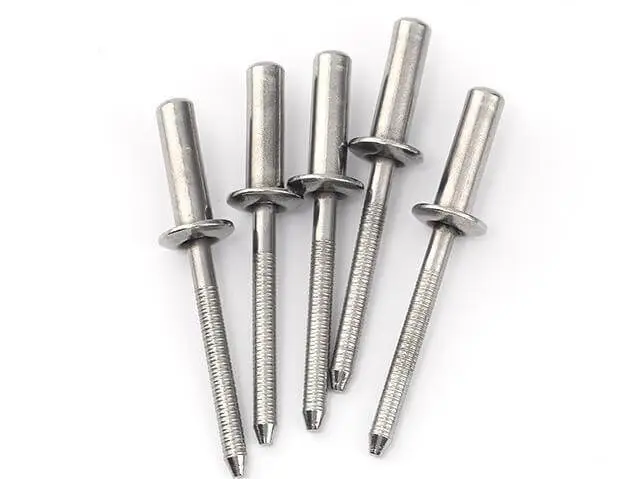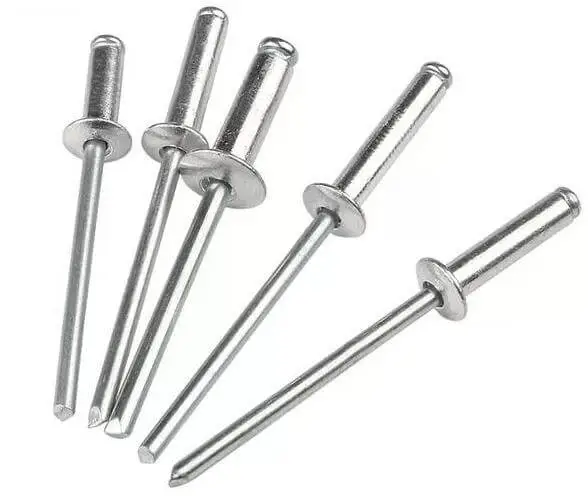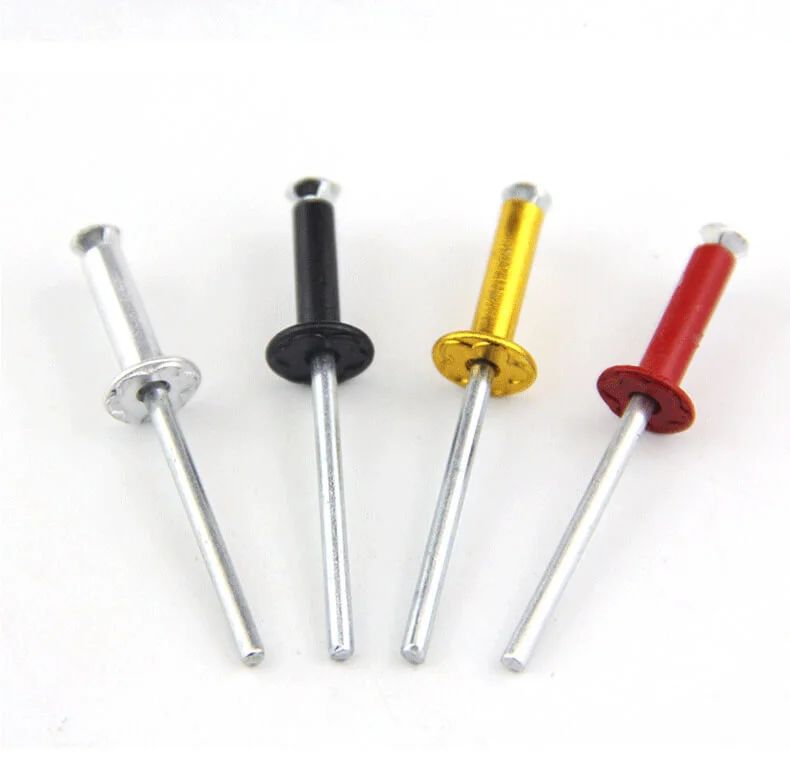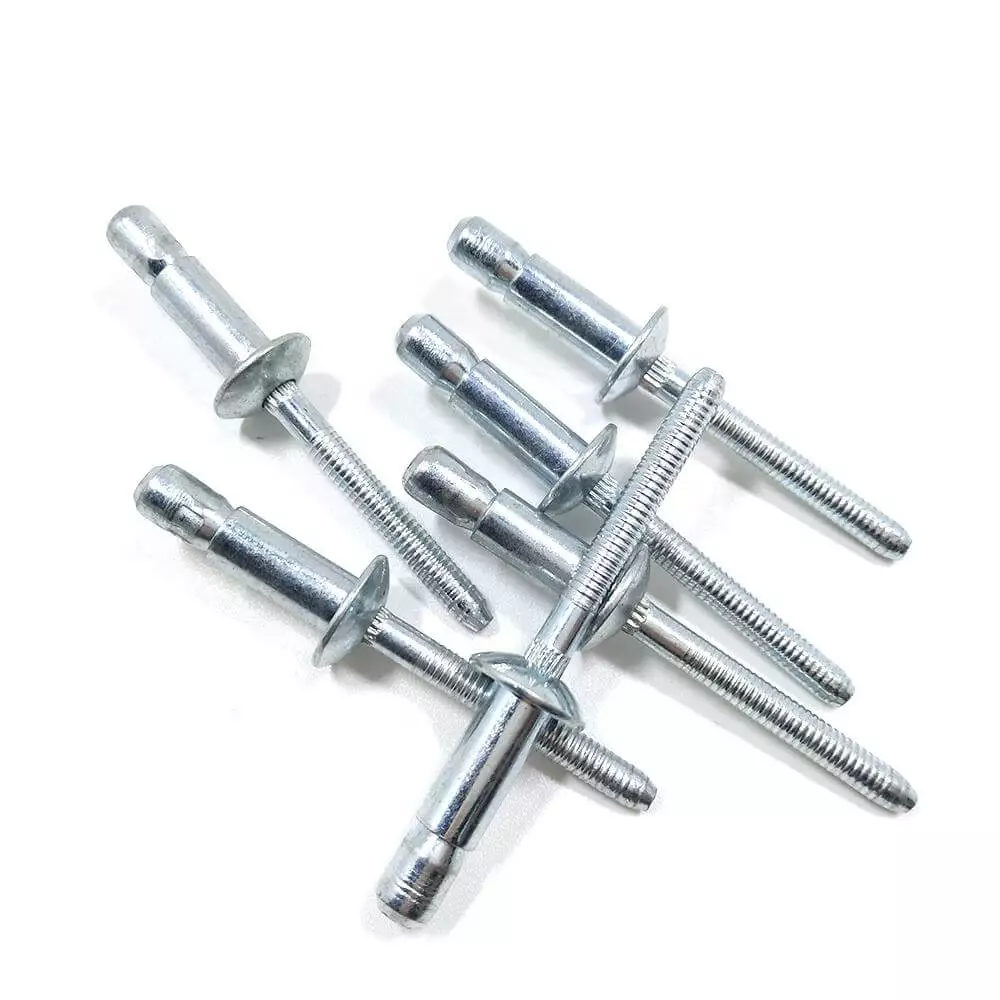
Whatsapp: +86 18962304392

Email: manufacture@world-rivet.com

Grip Range for Rivets - The Guide to Choosing Right Grip Range

Table of Contents

During the selection process, the key parameter that determines whether a rivet can be properly formed and securely clamped is its “Grip Range”. In simple terms, the Grip Range represents the total thickness of the material that the rivet can safely and effectively clamp during installation. If the selected Grip Range does not match the thickness of the material, even if the rivet itself is of high quality, it may still result in problems such as insufficient clamping, deformation of the cap body, or fracture of the core shaft. Correctly understanding and calculating the grip range for rivets is the prerequisite for every assembly engineer to ensure the connection strength and waterproof performance.

This blog will systematically explain “how to measure grip range”, “how to select the appropriate clamping range”, and the structural details that should be noted in different applications through technical examples and standard data tables (rivets grip length chart).

What Is the Grip Range of a Rivet?
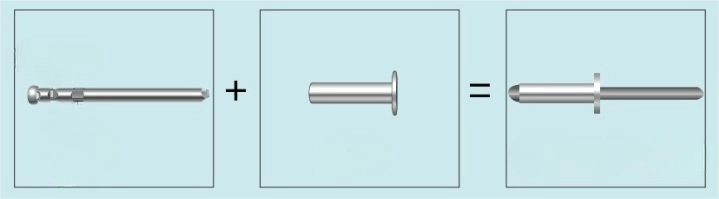
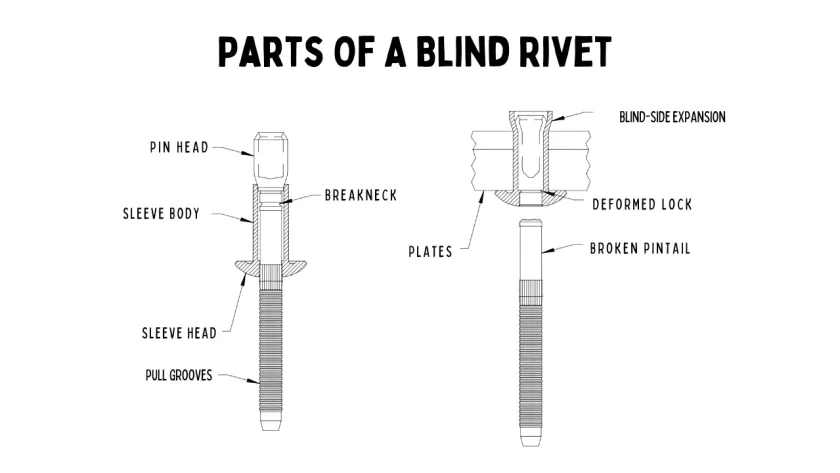
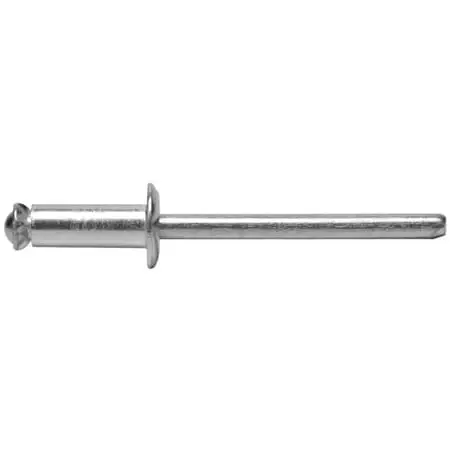
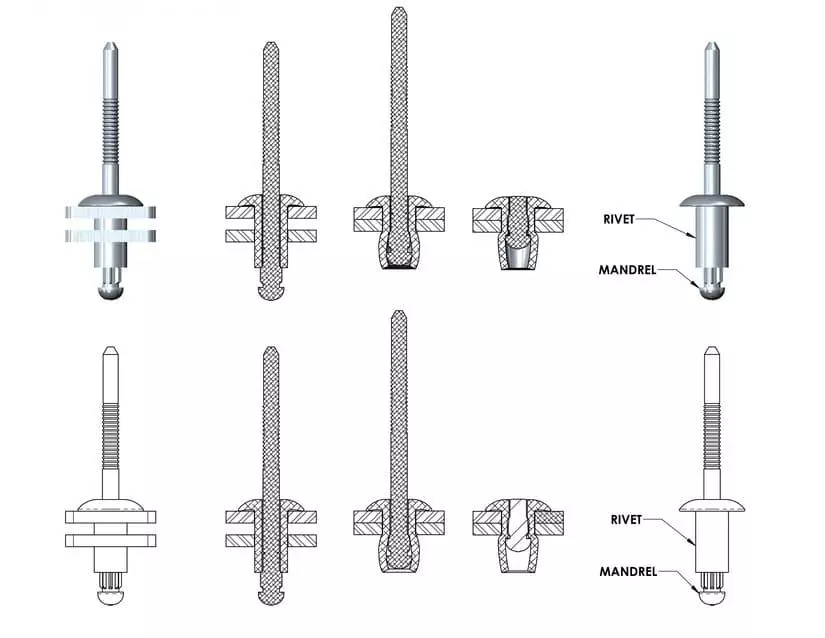
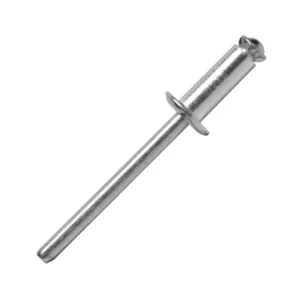
Components of Rivet - Grip Range for Rivets

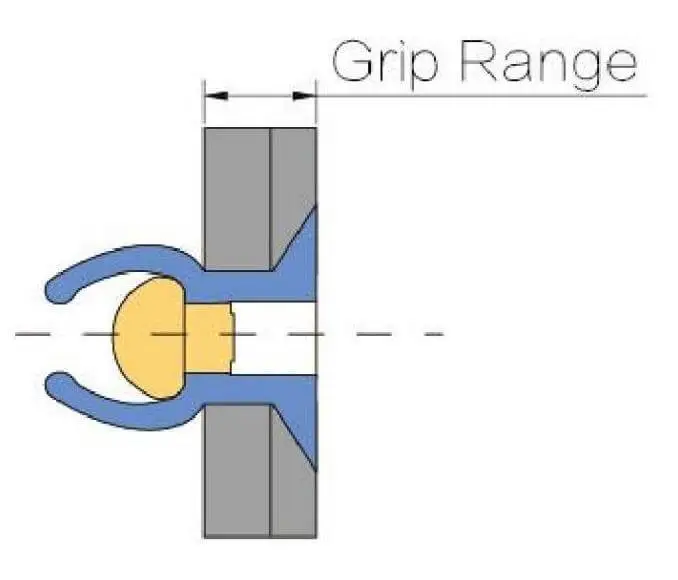
In the field of riveting engineering, the Grip Range is one of the most fundamental and crucial parameters. It refers to the total thickness range of the materials through which the rivet can reliably clamp and form a secure connection during installation. In other words, when the total thickness of the two or more layers of materials being connected falls within this range, the rivet can expand, lock, and achieve the designed strength normally.

The Grip Range is usually indicated in millimeters (mm) or inches (inch), for example, 3.2–4.8 mm or 1/8”–3/16”. This range indicates that if the total thickness of your material is between 3.2 and 4.8 millimeters, this type of rivet can be safely used without being too tight or deformed excessively. Choosing the correct Grip Range means that the plastic expansion, core shaft fracture and cap fitting during the riveting process can all be in the best condition.

Grip Range ≠ Rivet Length

  • Rivet Length (Total Length of Rivet) refers to the overall length of the rivet from the cap edge to the tail end;
  • Grip Range (Clamping Range) is the thickness of the material that it can effectively grip.

The two are closely related but not identical. The total length of the rivet affects “the remaining space after installation” and “the back expansion form”, while the Grip Range determines whether the rivet can fully lock the material. For example, for a 4.8×12 mm rivet, its Grip Range might be 3.0–6.0 mm. Beyond this range, it cannot ensure sufficient expansion or stable locking force.

In professional assembly, the selection of the Grip Range is often more important than the total length, as it directly affects the connection quality, waterproof performance and structural safety. If the material thickness is unstable (such as with coatings, sealing gaskets or paint layers), Rivmate engineers usually recommend leaving a margin of 0.2–0.3 mm to prevent insufficient clamping due to assembly tolerances.

Working Principle of Grip Range

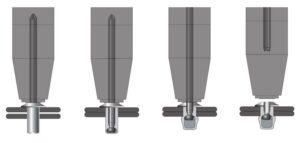
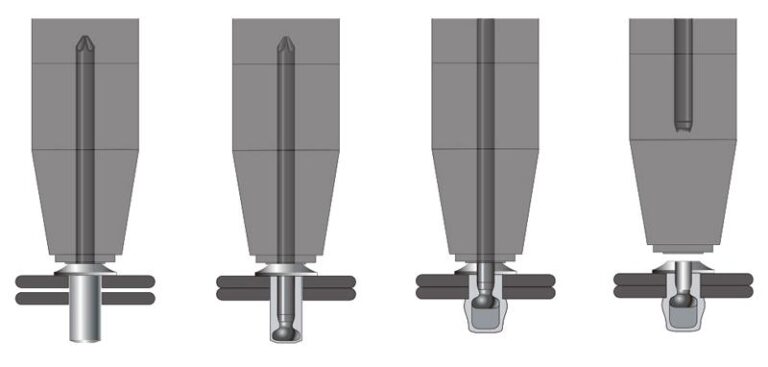
When the rivet is inserted into the hole, the riveting gun pulls the core shaft. The conical end at the tail of the core shaft pushes the tail of the rivet cap body outward to expand, thereby forming a “mushroom-shaped” or “umbrella-shaped” structure on the back. At this point:

  • If the material thickness is lower than the lower limit of the Grip Range, the rivet will fail to provide effective back support, resulting in loosening;
  • If the material thickness is higher than the upper limit of the Grip Range, the core shaft cannot fully break or the cap body will be subjected to abnormal force, leading to poor riveting.

The grip range can be understood as the “safe working range” that the nail designer has set for this specification. Any nailing operation outside this range is considered a potentially risky operation.

Why Grip Range Matters

In the selection of rivets, the Grip Range is a crucial parameter that determines the reliability and service life of the connection. It may seem like a simple thickness range, but it directly affects whether the rivet can form a correct locking structure.

① Structural Integrity

The Grip Range directly affects the “back expansion shape” of the rivet and the “locking position of the core shaft”. Under standard conditions, the tail end of the rivet will form a “mushroom-shaped” expansion on the material’s back, achieving a secure clamping. However, if the Grip Range is improperly selected, the structural strength will significantly decrease.

  • Grip Range too small → The nails cannot fully fill the hole walls, and the cap expands prematurely. The result is insecure clamping, vibration-induced loosening, and uneven force distribution on the back.
  • Excessive Grip Range → Before the core shaft breaks, the expansion is not complete, resulting in a “false lock”. The rivets seem to be installed properly, but in fact, the interior has not been fully formed.
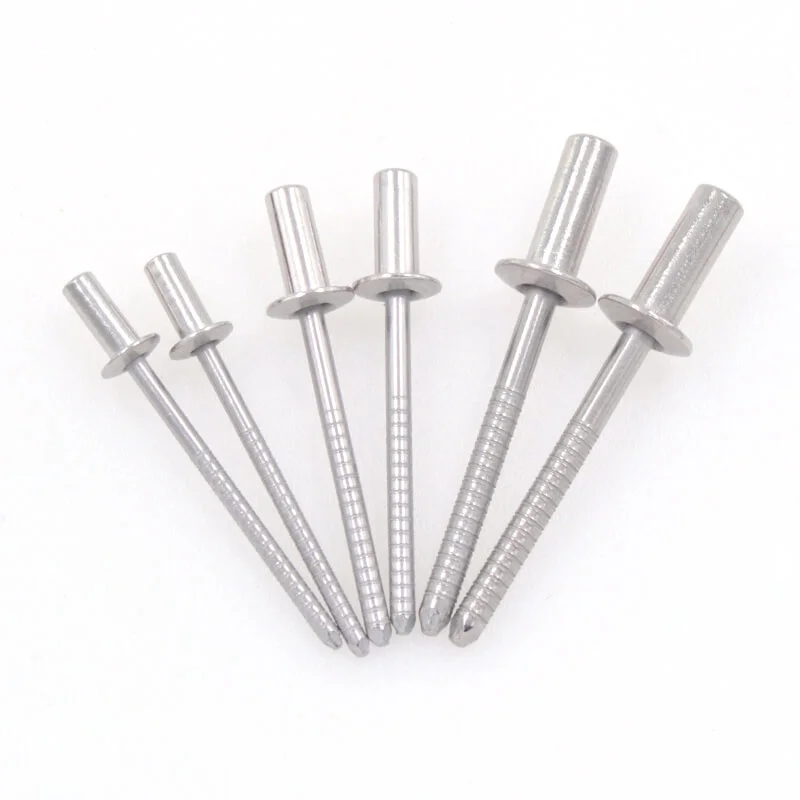
the grip range of blind rivet

A deviation of the Grip Range of only ±0.5 mm would result in a decrease of approximately 18% in the average tensile strength and 12% in the shear strength. For high-stress areas, such as roof supports or steel truss connections, this difference is sufficient to affect the overall safety factor.

② Waterproofness and Sealing Capability

In the application of Blind Rivet (blind rivets), the Grip Range not only affects the mechanical strength but also determines the sealing quality. An appropriate Grip Range enables the rivet head to closely adhere to the material surface, forming a stable waterproof barrier.

Especially in roof systems, exterior wall panels, and waterproof and thermal insulation boards, the correct matching of Grip Range is the foundation for reliable waterproofing. According to Rivmate’s long-term project data, when waterproof closed-end rivets are installed in Grip Range in a value-based manner, their sealing lifespan is approximately 30-40% longer than when installed at the limit value.

③ Assembly Efficiency and Process Stability

In mass production or on-site assembly, the precise matching of Grip Range can significantly enhance efficiency and consistency. For automated production lines, the precise control provided by Grip Range enables stable equipment tension output and reduces the rate of defective products.

Measurement Method

The most common and reliable method is to use a vernier caliper or a thickness gauge. When measuring, the following principles should be followed:
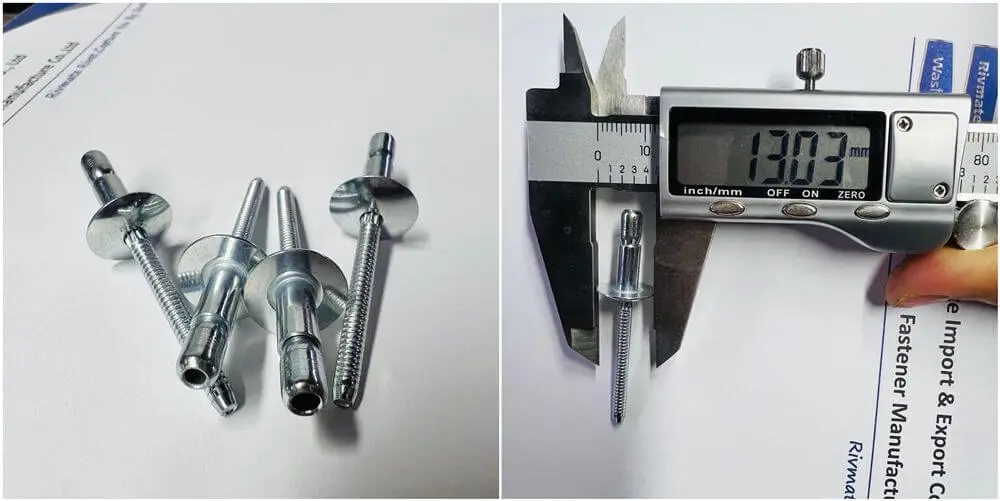
Riveted Connections in Steel Structures - How to Choose Pop Rivets for Steel Structures?
  • Measure the total thickness of all clamping layers, including the sheet material, gaskets, coatings, sealing films, etc.
  • If there are local coatings or anti-corrosion layers, add a correction value of 0.2–0.3 mm based on the thickness.
  • For composite materials (such as aluminum + plastic), measure the actual pressed thickness instead of the loose superimposed value.

Grip Range Matching Principle

The total thickness of the material measured must fall within the middle value range of the specified Grip Range of the rivets. It is strictly forbidden to choose the specifications at the extreme values of the range. For example: If the material thickness is 2.8 mm, a rivet with a Grip Range of 1.0–4.0 mm can be selected. If the thickness is 4.5 mm, a specification of 3.0–6.0 mm should be chosen instead of the critical one.

The median value of Grip Range represents the most ideal working range for the forming force of the rivet, the expansion shape and the fracture point of the mandrel. If it is used continuously at the upper or lower limit, it will lead to stress concentration, warping of the cap body or loosening of the rivet point.

Experience Formula (Recommended by Rivmate):

Ideal material thickness ≈ Lower limit of Grip Range + 70% × (Upper limit of Grip Range – Lower limit of Grip Range)

Installation Allowance

In actual assembly, the materials are often not perfectly uniform. Taking into account tolerances, coatings, temperature expansion and gasket compression, appropriate margins should be reserved.

Coating or painted parts: Increase by 0.2–0.3 mm.

Add gaskets or rubber seals: Increase by 0.5 mm.

The high-temperature assembly scenarios (such as aluminum parts) can be slightly reduced to prevent thermal expansion.

Grip Range Reference Table : Grip Range vs Material Thickness

This table shows the typical Grip Range corresponding to different bolt diameters. As the diameter increases, the Grip Range also expands to accommodate thicker or multi-layered structures. However, it should be noted that as the Grip Range expands, the required pulling force also increases, and the installation tools must have the corresponding load capacity.

Rivet DiameterGrip RangeRecommended Total Thickness
3.2 mm0.8–3.0 mm2.0 mm
4.0 mm1.0–4.0 mm3.0 mm
4.8 mm3.0–6.0 mm5.0 mm
6.4 mm4.0–8.0 mm6.0 mm

Grip Range by Rivet Type

Rivet TypeGrip Range CharacteristicsTypical Applications
Open-End RivetNarrow grip range; requires precise matching to material thickness. Suitable for lightweight structures and single-sheet connections.Thin sheet assemblies, home appliances, light industrial products
Closed-End RivetModerate grip range with superior waterproof sealing performance; mandrel is completely enclosed inside the rivet body.Roofing systems, exterior wall panels, electrical enclosures
Multi-Grip RivetWide grip range—can cover up to three times the normal thickness variation; highly adaptable but with slightly lower peak strength.OEM production lines, mixed-thickness assembly, maintenance and replacement applications
Structural RivetHigh-strength grip design with large expansion range; mandrel lock system provides excellent tensile and shear resistance.Steel structures, solar mounting systems, load-bearing connections

This is the most common blind riveting structure. Its Grip Range is relatively narrow, typically covering a thickness range of 2–3 mm. After installation, the core shaft part breaks and remains inside the opening, forming the basic clamping force. These rivets have high requirements for hole diameter accuracy and the installation angle must be perpendicular; otherwise, it is prone to cause the cap body to warp or insufficient clamping.

It is applicable for lightweight thin plate assembly or situations with controllable thickness.

If the material thickness fluctuates greatly, the Multi-Grip series should be used instead to avoid not being able to grip tightly.

The tail end of the closed-type rivet is sealed, and it does not penetrate even after the core shaft breaks. It has excellent waterproof and gas-sealing performance. Due to the limited internal closed space, the median value in Grip Range is relatively small, usually ranging from 2 to 4 mm. These rivets are often used in structures with strict requirements for sealing, such as roof systems, exterior wall panels, and electronic equipment enclosures.

  • When selecting the model, it is necessary to ensure that the material thickness is close to the median value in the Grip Range to guarantee reliable sealing.
  • If additional sealing is required, EPDM gaskets can be used in combination.
  • It is suitable for applications that need long-term corrosion protection or exposure to humid environments.
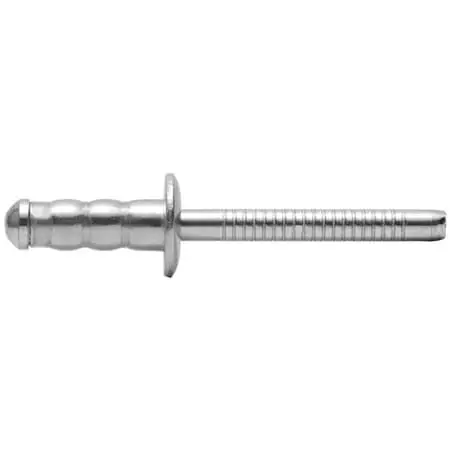
Multi-grip Blind Rivets

The multi-grip type rivets are designed with a special cap body geometry and core shaft structure, enabling them to adapt to a wider range of material thicknesses. For instance, a single model can cover thicknesses of 3–9 mm, which is 2 to 3 times more adaptable than ordinary rivets. These rivets are highly suitable for mixed-size production or repair replacement purposes, reducing the number of inventory models and enhancing assembly flexibility. However, it should be noted that their internal expansion path is longer, so the maximum tensile strength is often slightly lower than that of a single Grip specification rivet.

  • Suitable for OEM production lines with significant differences in plate thickness.
  • If the load-bearing capacity of the connection area is high, structural rivets should be preferred.
  • When choosing, attention should be paid to the consistency of production batches to avoid differences in mechanical properties.

The structural rivets adopt a mechanical lock core design, and even if the core shaft breaks, it is still locked by the cap body, thus maintaining the overall force state. Its Grip Range is relatively large, and the expansion is uniform, making it suitable for thick plates, multi-layer structures or high-load applications. This type of rivets is commonly used in building steel structures, photovoltaic supports and industrial equipment.

  • Suitable for engineering structures with high requirements for strength, seismic resistance and vibration resistance.
  • Installation requires the use of professional riveting equipment to ensure the accuracy of the core separation position.
  • In environments with high wind pressure or heavy loads, it can effectively replace traditional welding or bolt connections.

Choose the Right Grip Range with Rivmate

In the field of blind riveting, Grip Range is not merely a parameter, but rather a core indicator of connection reliability. It determines whether the rivets can form an ideal expansion shape during installation, achieve uniform clamping force, and maintain long-term structural stability.

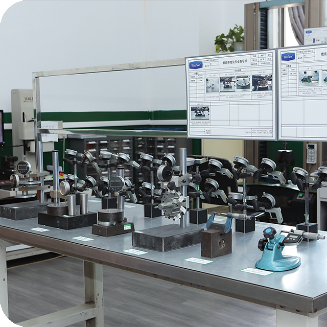
Rivmate Testing and Support

Vickers Hardness Tester
Thickness Measuring Meter Concentricitr tester
Salt Spray Test Box

All Rivmate series fasteners have been verified in accordance with the following international standards:

  • ISO 14589 (Performance Test for Riveted Connections)
  • ASTM B117 (Salt Spray Corrosion Test)
  • DIN 7337 (General Specification for Blind Rivets)

The Grip Range of each product has undergone dual tests of mechanics and environment to ensure stable and reliable performance during actual assembly. Rivmate can also provide customers with clamping force analysis reports, trial riveting verification, and structural calculation services, helping engineers verify the rationality of the design in advance.

Want to know how to select the right Grip Range for your project? Contact the Rivmate technical team immediately to obtain professional selection guidance and sample testing support.

📧 Product Inquiry: manufacture@world-rivet.com

🌐 Official Website: https://worldrivet.com/

Reference
Share:

More Posts

Get Rivets Quotes Now

Wholesale Blind Rivets from Rivet Manufacturer

How to Choose The Best Blind Rivet for Roofing ?

Table of Contents

The roof surface is constantly exposed to wind, temperature fluctuations and ultraviolet rays, which places extremely high demands on the waterproofing, corrosion resistance and structural stability of the fasteners. Compared to screws or welding methods, the Blind Rivet for Roofing (a special blind rivet for roofing) has become the preferred solution in metal roofing and light steel structure assembly due to its single-sided operation, reliable sealing, excellent seismic resistance and anti-loosening properties.

However, many roof leakage or corrosion problems do not originate from the roof panels themselves, but rather from the use of inappropriate rivet materials or incorrect installation methods. Rivmate has been deeply involved in blind riveting technology for over 15 years and has focused on providing industrial-grade waterproof Blind Rivets, successfully serving global roof system manufacturers and construction contractors worldwide. This article will systematically explain to you how to select the most suitable roof blind rivets based on environmental, structural and performance requirements, ensuring that your roof remains stable, leak-proof and durable in harsh environments.

Why Rivets Matter in Metal Roofing

In the metal roofing system, the connection method directly determines the durability and waterproofing performance. The reason why the “roofing blind rivet” is widely adopted lies in its ability to achieve stable, sealed, and lightweight connections on one side. This feature is particularly crucial for large-span roof panels, purlins, and inaccessible connection areas.

1) Basic Structure of Blind Rivets

  • Shell/Body: The outer casing in contact with the roof panel. It is responsible for creating the mechanical locking of the “outer surface – back expansion” structure. Common cap types include round heads, countersunk heads, and sealing caps.
  • Mandrel: Driven by a riveting gun. It causes the tail of the cap body to expand into a mushroom or umbrella-shaped supporting surface on the back of the sheet.
  • Break Point: The core rod undergoes a controlled fracture at the specified pulling force. The fracture surface is flat, ensuring consistency in appearance and strength.

Why Pop Rivet Mandrel not Breaking

The result is: The cap body is firmly attached to the outer surface, and the back side expands uniformly. The strong connection is achieved without the need for operations on the back side. This is the core advantage when choosing the roofing fastener solution for roof applications.

① Single-Side Access

The joints of the metal roof panels, eaves, gutters, and the surrounding areas of equipment supports, as well as the backside, are often inaccessible. Blind rivets only require construction on the front side. This eliminates the need for backside washers or nuts. It enhances the safety and efficiency of high-altitude work.

② Maintain stable clamping force and resist thermal expansion and contraction

The roof panels are significantly affected by the temperature difference caused by sunlight. The linear expansion of the aluminum galvanized sheet occurs repeatedly throughout the year. The plastic forming + mechanical locking of blind rivets can provide stable clamping force, reducing the occurrence of minor loosening, abnormal sounds, and water leakage paths due to temperature changes. Under the same working conditions, the appropriate specification of structural or closed-type rivets can significantly reduce the risk of loosening.

③ Achievable Waterproof Sealing

Rivmate Sealed Blind Pop Rivets
sealed type blind rivet

Choose the closed-end (sealed) type, and pair it with EPDM/chloroprene rubber gaskets, which can form a continuous sealing path. Compared to ordinary screws, the plastic expansion around the riveted holes is more capable of filling tiny gaps. This is particularly beneficial for environments such as wind-driven rain, negative pressure suction, or melting snow and water. In practical engineering, the scheme of the closed-end type with a sealing gasket can meet the requirements of salt spray and rain test (refer to the test ideas of ASTM B117, ISO 9227, etc. for verification).

④ Efficient, lightweight, and maintenance-friendly

When the number of connection points per unit area is the same, the blind riveting method is usually lighter and does not require torque calibration. Electric/air-powered riveting guns can achieve one core break per shot in a continuous operation. For long-edge lap joints and flashing structures, it can significantly shorten the construction time and reduce the rework rate.

3) Comparison with Screws and Welding

  • Sealing: Screws rely on the compression of the washer and the consistency of the torque; blind riveting can form multiple sealing paths through the combination of expansion molding and closed structure.
  • Consistency: Screws are prone to slipping and torque fluctuations; the core-breaking tensile force of blind riveting is set by the tool, making it more standardized.
  • Appearance and Looseness: The screw heads are high and the appearance is prone to inconsistency; the cap type of blind riveting is uniform, making it less likely to come loose. It is more friendly to micro-looseness caused by wind vibration and temperature differences.
  • Applicability: Screws are easy to install and can be disassembled; blind riveting is a permanent connection, suitable for roof panel joints and edge pieces that do not need frequent disassembly.

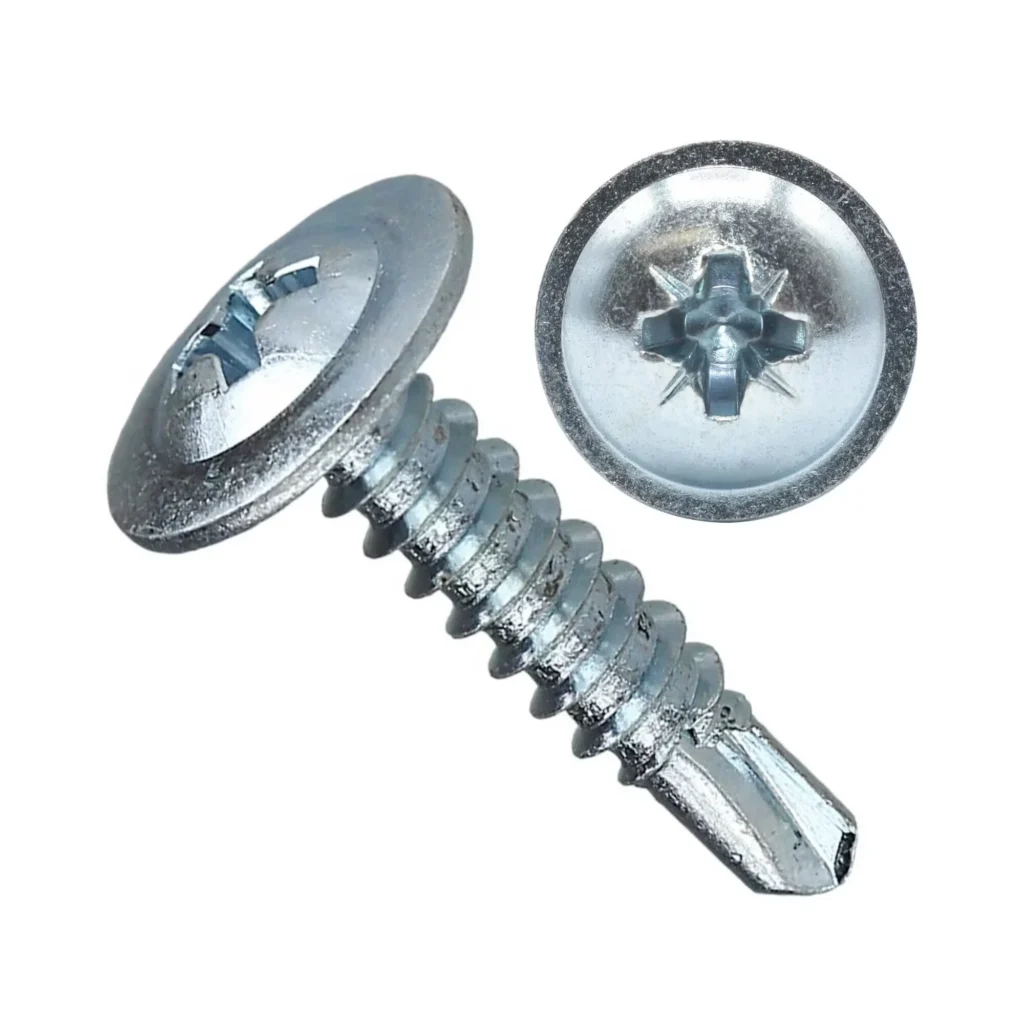
Self-Drilling Screws
  • Heat affected zone: Welding will create a heat affected zone and damage to the coating, making it a potential starting point for corrosion; blind riveting is a cold process, more friendly to the coating and plating of the sheet.
  • Construction conditions: Welding requires power supply, gas, fire prevention measures and skilled welders; blind riveting is lightweight, more accommodating to weather and on-site conditions.
  • Appearance and deformation: Welding may cause local curving and discoloration; blind riveting results in less deformation of the panel and controllable final appearance.
  • Overall cost: Considering fire prevention, surface repair, quality inspection and rework, the overall construction cost of blind riveting is more competitive in roofing and enclosure systems.

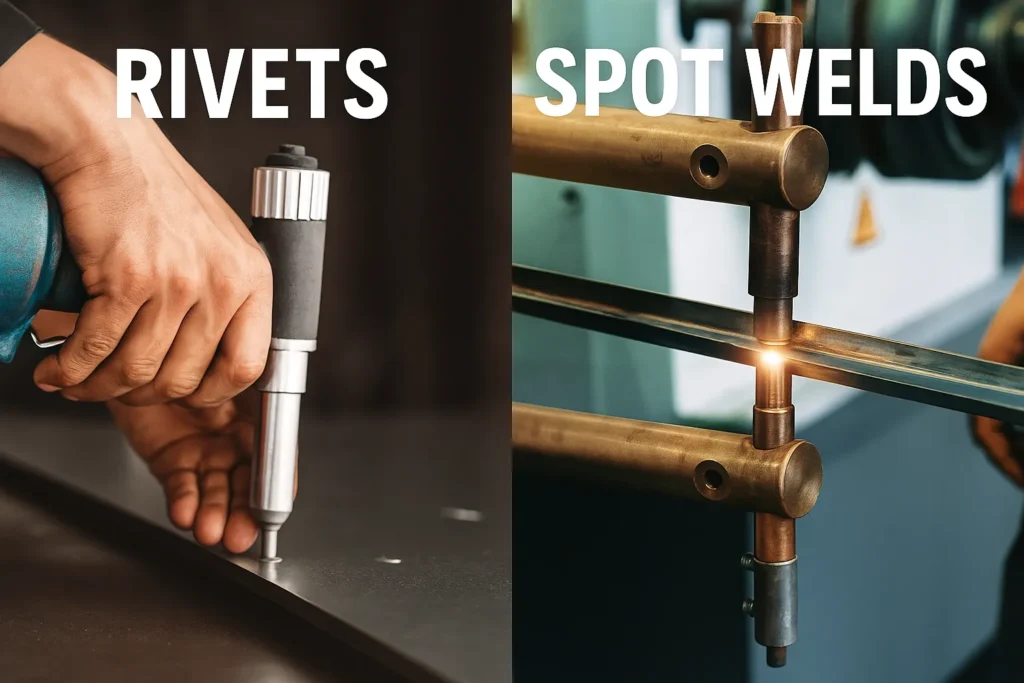
Rivets vs Spot Welds

Common Metal Roofing Rivet Types

In the metal roofing system, choosing the right blind rivets for roofing is of utmost importance. Different types of rivets vary significantly in terms of waterproofing performance, structural strength, and weather resistance. Incorrect selection may result in roof leakage, corrosion spread, or connection fatigue failure.

The following will introduce, from a professional perspective, the four most commonly used types of roof-specific rivets, and illustrate their performance characteristics and selection guidelines through practical application cases.

Rivmate Aluminum Sealed Type Blind Pop Rivet

The closed-type rivet (also known as a waterproof rivet) completely seals the bottom of the cap body. After the core shaft breaks, it remains inside and does not form a through hole. This design enables 100% waterproof and air-sealing, and it is one of the most commonly used fastening solutions in metal roofing systems.

Performance Advantages:

  • Completely prevent leakage caused by rainwater, condensation water or wind pressure backflow.
  • The core shaft locking structure enhances tensile strength and vibration resistance.
  • It can be combined with EPDM sealing gaskets to form a double protective layer.

Material Selection Suggestions:

It is recommended to adopt the combination of aluminum alloy cap body and stainless steel core shaft, which can achieve both corrosion prevention and strength. For use in coastal areas or high-humidity environments, the fully stainless steel enclosed type can be selected.

Typical Application Scenarios:

  • The connection point between the ridge cover plate and the flashing structure
  • The edges of the drainage groove and the skylight
  • Roof maintenance or renovation projects

Stainless Steel Open type blind pop rivet

The stainless steel blind rivets are made of A2 or A4 grade stainless steel and possess extremely high corrosion resistance and shear strength. They can maintain structural stability for a long time in high-salt or acidic environments.

Performance Advantages:

  • Rust-proof and resistant to electrochemical corrosion, suitable for marine and chemical industrial areas.
  • High mechanical strength, ensuring no loosening during long-term use.
  • Capable of withstanding extreme climatic conditions such as high and low temperatures.

Material Combination Suggestions:

  • All Stainless (Stainless–Stainless): The highest level of corrosion resistance, suitable for exposed rooftops.
  • Steel Core Shaft + Aluminum Cap Body (Steel–Aluminum): Achieves a balance between strength and cost.

Typical Application Scenarios:

  • Coastal building roof
  • Industrial plant exhaust hood and support structure
  • High-humidity cold storage system

Peel Blind Rivets Supplier in China - Rivmate Color Rivets

The colored rivets are made using the polyester powder coating or epoxy resin baking paint process, and their colors are consistent with those of the roof panels, meeting the aesthetic and protective requirements of modern architecture.

Performance Advantages:

  • Excellent color matching, visually harmonious, no need for additional painting.
  • The coating has UV resistance and anti-fading properties, remaining unchanged even after long-term exposure.
  • An additional anti-corrosion protective layer is provided to delay oxidation.

Materials and Coating Process Recommendations:

  • The cap body is made of aluminum alloy, and the surface is electrostatically sprayed with RAL standard colors.
  • The recommended thickness of the outer coating is ≥ 25μm, which can effectively prevent moisture and ultraviolet rays from penetrating.

Typical Application Scenarios:

  • Commercial building roofing system
  • Residential decorative metal roofing
  • Building curtain wall and exterior facade decoration fixation

Interlock Structural Rivet

Structural rivets are a type of high-strength, vibration-resistant permanent fastener. After the core shaft breaks, it will be mechanically locked in the cap body, thereby enhancing the shear and tensile strength. They are suitable for load-bearing parts such as steel purlins and support frameworks under the roof.

Performance Advantages:

  • The shear strength is more than three times that of ordinary aluminum rivets.
  • The core shaft is securely locked and does not come off, preventing loosening caused by long-term vibration.
  • No welding is required, and it can quickly replace the traditional bolt structure.

Material and Structure Suggestions:

  • Stainless steel cap body + steel core shaft: High strength, suitable for structural joints.
  • Double-lock type (Lock-Bolt Type) structure: The broken core is fully locked, enhancing fatigue life.

Typical Application Scenarios:

  • Fixation of roof trusses and beams in steel structures
  • Installation bases for photovoltaic supports and equipment
  • Construction projects in areas with high wind pressure or seismic zones

Rivmate Roofing Rivet Selection Chart

Rivet TypeWaterproof RatingCorrosion ResistanceTensile StrengthRecommended Applications
Sealed Rivet (Closed-End)★★★★★★★★★☆MediumRidge caps, flashing, waterproof panel joints
Stainless Steel Rivet★★★★☆★★★★★HighCoastal areas, high humidity environments, industrial roofs
Color-Coated Rivet★★★★☆★★★★☆MediumDecorative roofing, architectural façades
Structural Rivet★★★★☆★★★★★Very HighSteel purlins, solar mounting systems, load-bearing connections

Essential Rivet Selection Criteria

Choosing the appropriate “blind rivet for roofing” is not only related to the waterproofing performance, but also directly affects the structural stability and service life of the roofing system.

The following four core standards are the key factors that every construction engineer or purchasing manager must consider when choosing roof rivets.

a. Material Compatibility

The roof structure is usually composed of different materials, such as galvanized aluminum sheets, stainless steel plates, steel purlins, etc. There is an electrochemical potential difference between different metals. If the rivet material is improperly selected, galvanic corrosion will occur, which will accelerate the corrosion process.

  • The material of the rivets should be as close to the potential of the riveted material as possible.
    • For aluminum roofing → Choose either “aluminum + aluminum” or “aluminum + stainless steel core shaft”.
    • For stainless steel roofing → Use “fully stainless rivets (Stainless–Stainless)”.
  • Avoid using the combination of “aluminum + carbon steel”, as the corrosion rate will increase by 3-5 times in humid or coastal areas.
  • For different metal combinations, add “anti-corrosion gaskets or coating isolation membranes” to the contact surfaces.

The rivet series of Rivmate have all passed the ISO 9227 salt spray test, ensuring that the combined materials maintain structural stability for over 500 hours.

b. Load-Bearing Strength

The roof connection not only bears the self-weight but also has to withstand long-term alternating loads such as wind load, snow load, and thermal expansion and contraction stress. If the tensile strength of the rivets is insufficient, it is prone to loosening, core breakage or cracking of the board seams.

  • When selecting the type, the minimum tensile strength of the required rivets should be calculated based on the roof design wind pressure (kN/m²) and the plate thickness.
    • Common aluminum rivets: 600–800 N
    • Stainless steel rivets: 900–1200 N
    • Structural rivets: ≥1500 N
  • If the roof is located in a high wind area (such as coastal areas or high-rise buildings), structural blind rivets (Structural Rivet) should be used.
  • For heavy-duty connections (such as supports, photovoltaic mounting brackets), it is recommended to conduct a shear load test or consult the Rivmate engineering team for calculation verification.

The structural rivets of Rivmate have a shear strength of up to 2.5 kN in accordance with the EN ISO 14589 standard, and their long-term fatigue resistance is superior to that of welded connections.

c. Environmental Resistance

The roof is the most vulnerable part in an exposed environment. Ultraviolet rays, moisture, acid rain and salt fog will continuously erode the fasteners. If the anti-corrosion performance is insufficient, the rivet points may rust through within a few years, leading to water seepage and even structural failure.

Blind Rivets for Roofing - Roofing Rivets - Rivmate Rivet
  • Coastal / High Humidity Environment → Select Closed-End Stainless Rivet, which is resistant to salt fog and rust.
  • Industrial Area / Acid Rain Environment → Recommend Nickel Coated or Copper Core Rivets, with strong resistance to chemical corrosion.
  • Extremely Temperature Differential Climate → Choose EPDM Gasket Combined with Closed-End Rivets, capable of withstanding a temperature range of -40°C to 120°C.
  • General Roofing → Aluminum alloy rivets can meet the daily rust prevention requirements, offering both light weight and economy.

The anti-corrosion products of Rivmate passed the ASTM B117 salt spray test for 1000 hours without rust, ensuring that the roof system can have a corrosion protection lifespan of over 10 years.

d. Appearance and Visual Consistency

For commercial buildings, public facilities and residential projects, the roof not only serves as a protective system but also constitutes a visual component of the building facade. Incongruous appearance of the connection pieces will undermine the overall architectural design sense.

  • Choose Color-Coated Rivets, with the color matching that of the roof panel, to enhance the overall aesthetic appeal.
  • It is recommended to use UV-stabilized polyester coating to prevent powdering or fading after prolonged exposure to sunlight.
  • For metal curtain walls and decorative roofs, the sealed dome structure can be selected, with a smooth and flat cap surface, providing a more unified visual effect.
  • Rivmate offers RAL standard color customization service to meet architects’ requirements for visual consistency.

Comprehensive Suggestions

Selection CriteriaRecommended Rivet TypeSuggested Material CombinationTypical Application
Material CompatibilitySealed / Aluminum AlloyAluminum + Aluminum / Aluminum + Stainless Steel MandrelAluminum roofing panel joints
Load-Bearing StrengthStructural TypeStainless Steel + Stainless SteelSupport structures, high wind pressure zones
Environmental DurabilitySealed TypeStainless Steel + EPDM WasherCoastal areas, acid rain environments
Aesthetic ConsistencyColor-Coated Dome TypeAluminum + Painted CoatingCommercial buildings, architectural façades

FAQs: Blind Rivets for Roofing

Q1: Why are blind rivets used instead of self-tapping screws for the roof?

A: The greatest advantage of blind rivets lies in their one-sided installation, waterproof sealing, and structural stability. Self-tapping screws rely on torque to compress the washers. If the installation angle or torque is uneven, it can cause water seepage through tiny cracks. Blind rivets achieve a permanent seal through the plastic expansion of the cap body and the locking of the core shaft, and are not affected by torque errors.

Furthermore, the riveted structure has better vibration resistance than the screws, making it more suitable for structures like metal roofs that are frequently subjected to wind loads. During the long-term maintenance period, the leakage rate of the blind rivets can be more than 40% lower than that of the screws.

Q2: Can sealed-type rivets really be waterproof?

A: Yes. The closed-type blind rivets have a closed cap design at the tail end. Even if the core shaft breaks, it will not cause a perforation. If combined with an EPDM or neoprene gasket, it can achieve IP67-level waterproof performance.

Rivmate has verified through the ASTM B117 rain simulation test that this structure shows no leakage under continuous water pressure for 120 hours. Therefore, it is widely used in key areas such as roof cover plates, flashing edges, and equipment penetration points.

Q3: Do different metal roofing materials require rivets of different materials?

A: Yes, it must be matched.

There is an electrochemical potential difference between metals. Improper combination can lead to galvanic corrosion. For example, when using aluminum plates with carbon steel rivets, aluminum will rapidly oxidize in a humid environment. The recommended combinations are as follows:

  • Aluminum roof panel → Aluminum + Aluminum / Aluminum + Stainless steel core shaft
  • Stainless steel roof → Fully stainless steel structure
  • Steel roof → Galvanized steel or stainless steel rivets

Q4: How to determine whether the riveting quality is qualified?

A: It can be quickly tested from the following four aspects:

  1. Hat fit: It should fit perfectly and have no gaps.
  2. Back expansion condition: It should be evenly symmetrical, without cracks or skewing.
  3. Core shaft fracture position: The fracture point should be smooth and level with the hat surface.
  4. Manual inspection: It should not loosen even when slightly twisted, which is considered qualified.

If the cap body is tilted, the core is exposed, or the clamping is not secure, it indicates that the hole diameter or pulling force setting is incorrect. It is recommended to use a calibrated pneumatic or electric riveting gun to maintain consistent core pulling force.

Q5: Which climate conditions are Rivmate rivets suitable for?

A: The roof fastener series of Rivmate covers various climate zones:

  • Coastal and salt spray areas → Stainless steel closed type, with corrosion resistance ≥ 1000 hours of salt spray.
  • High temperature or cold areas → Aluminum + EPDM sealing gasket combination, capable of withstanding a temperature difference of -40°C to 120°C.
  • Industrial polluted environment → Nickel coating or copper core rivets, resistant to acid and alkali gas corrosion.

Each project can be customized for the local climate conditions regarding the type of rivets and the coating scheme.

Conclusion & Rivmate Recommendations

  • At the initial stage of selection, factors such as environmental corrosion grade, plate thickness, wind pressure and temperature changes should be comprehensively considered.
  • For high-risk areas (ridge, eaves, flashing), closed-type waterproof structures should be given priority.
  • Avoid using combinations of different materials (such as aluminum + steel) in humid or coastal areas to prevent galvanic corrosion.
  • It is recommended to use electric or pneumatic riveting guns, and regularly calibrate the pulling force to ensure consistency of core breakage.
  • For large projects, it is recommended to conduct sample verification and on-site installation tests to ensure compatibility.

Why Choose Rivmate

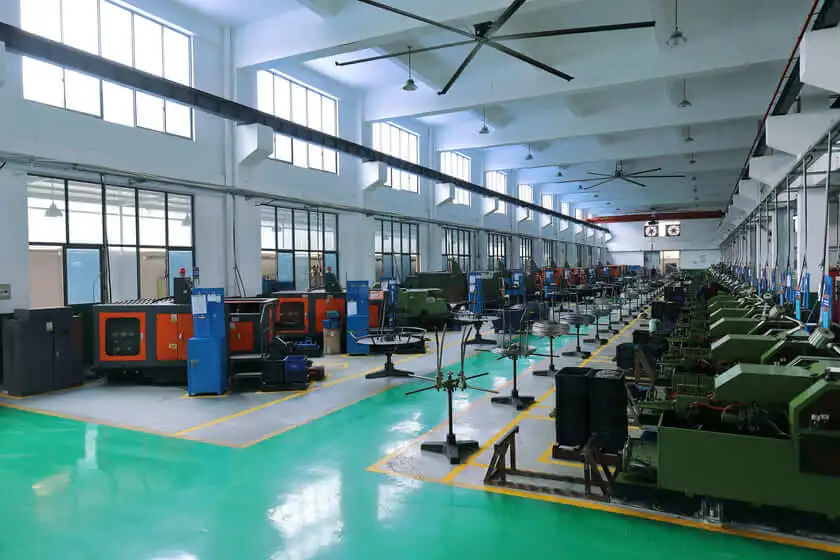
Pop Rivet Manufacturer - Pop Rivet Cold Heading Machines

Full range of products coverage: From closed type, waterproof type to structural type, it meets all the requirements of roof systems.

International Certification: The product has passed the ISO 14589 and ASTM B117 salt spray testing standards.

Professional Model Selection Support: Offers mechanical performance analysis, waterproof rating assessment, and material compatibility consultation.

Fast Delivery and Customized Services: Offers OEM customization, color spraying, and batch production.

Get in Touch with Rivmate

Would you like to know which type of Blind Rivet is the best choice for your roofing project? Rivmate offers professional selection advice and sample testing support for you.

📧 Product Inquiry: manufacture@world-rivet.com

🌐 Official Website: https://worldrivet.com/

Reference

Share:

More Posts

Get Rivets Quotes Now
Wholesale Blind Rivets from Rivet Manufacturer
Types of Pop Rivets: The Complete Guide to Pop Rivets

Table of Contents

Pop Rivets are widely used in sheet metal processing, home appliance assembly, automotive manufacturing, and aircraft structures. The correct selection of different types of Pop Rivets is crucial for improving assembly quality, reducing rework rates, and extending the service life of products. This article will comprehensively analyze the types of Pop Rivets and provide you with a practical and complete selection guide. Rivmate has long served various OEMs and industrial users, maintaining industry leadership in product development, material selection, and customer support. This guide will help you make more efficient and reliable selection decisions in actual projects.

What Are Pop Rivets and How Do They Work?

Custom Rivet Manufacturer in China - Custom Pop Rivets for your Project

A pop rivet, often referred to in Chinese as a draw rivet or blind rivet, is a fastener commonly used to join two or more material workpieces. Its notable feature is that it does not require access to the back of the workpiece during installation, making it highly suitable for confined spaces or single-sided operations. This characteristic has led to its widespread application in modern industrial assembly.

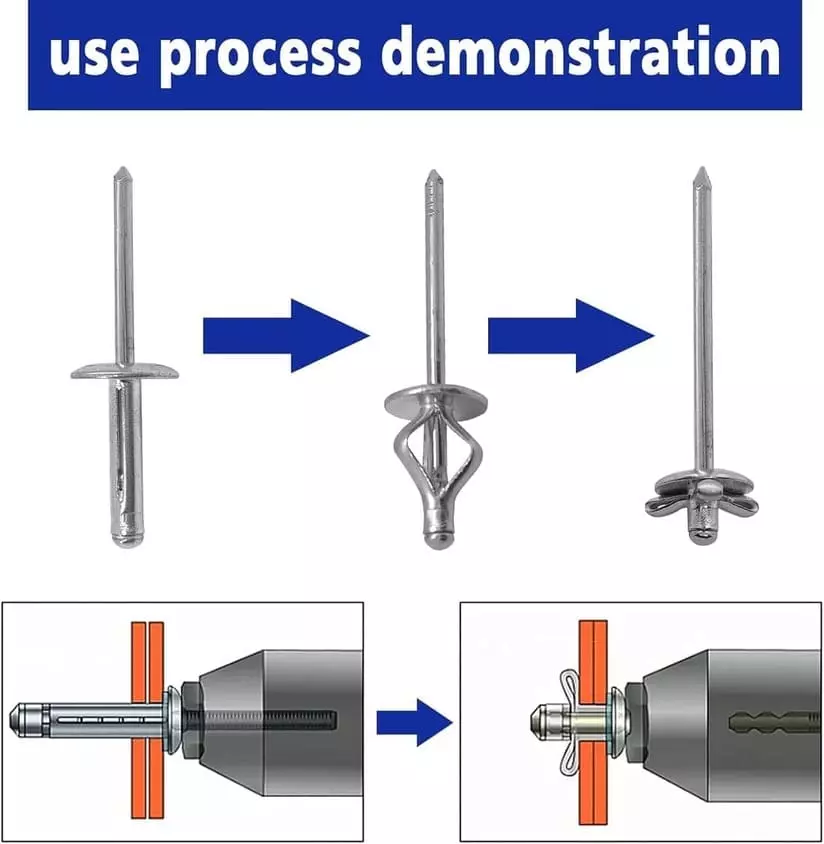
The basic structure of a blind rivet consists of a head (shell) and a mandrel (pull rod). During installation, a specialized riveting gun is used to pull the mandrel, causing the tail of the mandrel to expand the head and form a locking structure on the back of the material. Eventually, the mandrel breaks at a predetermined position, creating a secure connection point. The entire process does not require welding, threaded engagement, or nut support.

Compared with traditional screws, Pop Rivets offer greater vibration resistance and faster installation speed. Compared with welding, it does not require high-temperature operations or surface treatment, and is safer and more suitable for joining different materials. Especially when connecting thin-walled parts such as aluminum plates, stainless steel plates, plastic parts, and composite materials, Pop Rivets provide a reliable and efficient solution. According to market research in 2024, more than 65% of thin plate connection applications still prefer blind rivet structures.

Main Types of Pop Rivets

  • Material Compatibility: Suitable for most common metal materials such as aluminum, carbon steel, stainless steel, etc., and also compatible with certain hard plastics. It is recommended for low-load connections between homogeneous or heterogeneous metals.
  • Advantages: Simple structural design, low production cost. Installation speed is fast. It is the most widely used type of rivet on the market. Multiple sizes and material combinations are available, with strong adaptability.
  • Limitations: The core shaft tail is exposed after riveting, and the back is open, making it impossible to achieve waterproof sealing. It is not recommended for use in sealed or high-protective-grade equipment.
  • Typical Application Scenarios: Lightweight metal frames, ventilation ducts, appliance panels, signboards fixation, maintenance assembly.
Steel BodySteel Material Open End Blind Rivets
Sealed Type Blind Rivets
  • Material Compatibility: Preferentially adopts metal-to-metal connection, particularly suitable for aluminum and stainless steel combinations. It performs exceptionally well in environments with high waterproof and dustproof requirements.
  • Advantages: The tail end of the cap body is designed with a sealing mechanism, effectively preventing water, oil or gas from penetrating. After the core shaft breaks, it is completely enclosed within the rivet, enhancing the anti-shear and anti-vibration performance. Some models have air-tightness certification.
  • Limitations: The structure is complex and the unit price is high. There are certain requirements for the matching of installation tools, and the breaking force of the core shaft needs to be precisely controlled.
  • Typical Application Scenarios: Automotive chassis components, waterproof wiring boxes, outdoor electronic devices, ship equipment assembly, industrial electrical cabinets.

  • Material Compatibility: Suitable for various metal and plastic combinations for assembly, particularly suitable for flexible production environments with frequent thickness variations.
  • Advantages: One specification covers multiple clamping thicknesses, significantly reducing the number of inventory SKUs. The core shaft locking mechanism is stable and adaptable to installation tolerance fluctuations.
  • Limitations: Due to the wide compatibility range, the single-point clamping force is not as precise as that of dedicated specifications. Caution should be exercised when using it in parts with high structural strength requirements.
  • Typical Application Scenarios: Equipment after-sales maintenance, rapid assembly at service stations, multi-specification assembly lines of OEM manufacturers, and assembly stages of non-standard equipment.

Multi-grip Blind Rivets
Peel Type Blind Rivets
  • Material Compatibility: Recommended for soft materials such as plastic sheets, plywood, fiberglass boards, etc., and also suitable for thin metal component combinations.
  • Advantages: The core shaft splits into multiple “petals” during the pulling process, creating a wider back support surface to prevent the soft material from tearing. This can enhance connection stability and surface integrity.
  • Limitations: The shear and tensile strength is not high, making it unsuitable for load-bearing parts or connections between structural components. The petal structure may interfere with the space behind.
  • Typical Application Scenarios: Household items, soft plastic products, lightweight interiors, composite board assembly, thin-walled furniture connections.

  • Material Compatibility: Specifically suitable for wood, concrete, gypsum board, and other porous or low-density materials. Not recommended for metal sheets.
  • Advantages: The outer part of the cap has spiral or vertical grooves, which can achieve mechanical embedding fixation in soft or porous substrates, forming a stronger frictional bonding force.
  • Limitations: Pre-installed holes must match the material properties, and installation requires moderate force control. There is a high risk of surface damage, and it is not recommended for use in finished interior areas.
  • Typical Application Scenarios: Custom wooden furniture, assembling floor joists, building material fixation, woodwork structure construction, interior wall panel reinforcement.

Grooved Type Blind Rivets
Rivmate Hemlock Rivets
  • Material Compatibility: Suitable for high-load metal structures, such as thick steel plates, stainless steel brackets, and industrial aluminum profiles.
  • Advantages: Specifically designed for heavy-duty structures, it boasts extremely high shear and tensile strength. The core shaft locking mechanism ensures that the screws do not loosen, and it is often used as an alternative to welding or bolts. It has vibration resistance capabilities and is suitable for dynamic load environments.
  • Limitations: Requires the use of high-tension tools and standardized installation procedures. The accuracy of the processing hole positions must be strictly controlled.
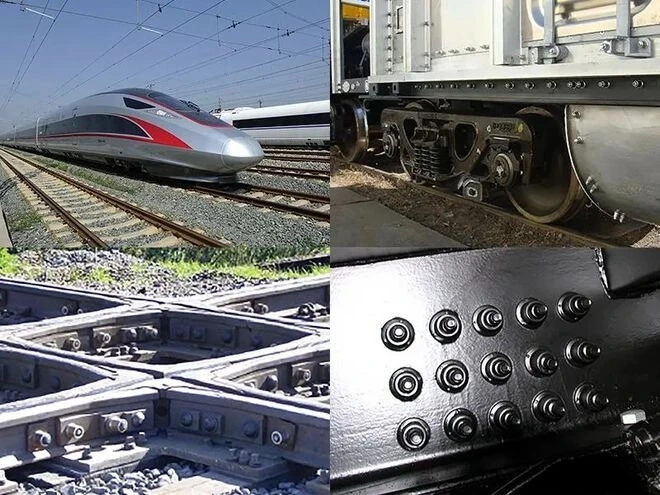
  • Typical Application Scenarios: Commercial vehicle frames, rail transit equipment, wind power structural components, bridge maintenance supports, and steel structure node connections.

  • Material Compatibility: Suitable for soft plastics, composite materials, foam-backed structures, and also for non-structural decorative parts.
  • Advantages: After the core shaft is pushed forward, the tail end expands into three sections, like an “umbrella” unfolding, significantly increasing the back surface area to protect the soft materials from indentation damage. Suitable for areas with high appearance requirements.
  • Limitations: The structure is complex and the cost is relatively high. The connection strength is moderate and not suitable for load-bearing nodes.
  • Typical Application Scenarios: Automotive interior panels, plastic casings, cable supports, medical equipment shells, lightweight decorative panels.

Trifirm Blind Rivets

Types and Properties of Materials

Custom Raw Material

When choosing Pop Rivets (pull rivets), the selection of the material not only affects the mechanical properties of the connection components, but also directly relates to the durability, environmental adaptability and overall cost control of the product. Pull rivets usually consist of two parts: the socket (cap body) and the core shaft. The material combination of these two parts must be coordinated to ensure a stable and reliable riveting process. The following are comparisons and application suggestions for several common materials:

  • Characteristics: Lightweight, with moderate strength and excellent corrosion resistance.
  • Advantages: Light in weight, suitable for structures that are sensitive to total weight. Resistant to oxidation, suitable for outdoor or humid environments.
  • Limitations: The strength is lower than that of steel, and the bearing capacity is limited.
  • Recommended Usage: Aviation aluminum plates, appliance housings, bicycle parts, vehicle body trim.

  • Features: High strength, good rigidity, low price.
  • Advantages: Strong against shear force, suitable for high-load structural connections. Good economic performance.
  • Limitations: Prone to rust, requires surface galvanization or coating treatment. Not recommended for corrosive environments.
  • Recommended Usage: Industrial machinery, steel structures, sheet metal cabinets, bracket supports.

  • Characteristics: Extremely strong corrosion resistance and mechanical strength.
  • Advantages: Suitable for harsh environments such as high humidity, high salt content, and high temperatures. No additional treatment is required on the surface, and the lifespan is long.
  • Limitations: High processing hardness, and installation requires high-tension tools. The cost is higher than that of aluminum and steel.
  • Recommended Usage: Ship assembly, outdoor equipment, stainless steel enclosures, railway transportation vehicles.

  • Properties: Excellent conductivity and corrosion resistance.
  • Advantages: Superior in electrical connection. Beautiful appearance with decorative effect.
  • Limitations: High price, moderate strength, not suitable for high structural loads.
  • Recommended Usage: Electrical grounding connection, architectural decoration, structural components for handicrafts.

5. Matching Mandrel and Shell Materials

  • Principle: The core shaft material must have sufficient hardness to complete the riveting action and break at the designated position. At the same time, it should avoid electrochemical corrosion with the cap body material.
  • Common combinations:
    • Aluminum shell + Steel core shaft: High cost-effectiveness, suitable for general assembly.
    • Aluminum shell + Aluminum core shaft: Completely corrosion-resistant, suitable for marine or humid hot environments.
    • Stainless steel shell + Stainless steel core shaft: High-strength corrosion-resistant combination, used in high-demand industrial settings.
    • Copper shell + Copper core shaft: For applications requiring conductive performance, to avoid potential electrical potential differences between different materials.

How to Choose the Right Pop Rivet

Each type of rivet has its designated grip range. The total thickness of the material must fall within this range; anything outside the range will result in the rivet not forming correctly.

Example: If the total thickness is 3.0mm, it is recommended to use a model with a grip range of 2.5–3.5mm.

2. Rivet Length

The total length of the rivet should be reserved with space considering the thickness of the material and the post-riveting forming height.

Generally, it is recommended that: the length of the rivet = total thickness of the material + expansion length of the core shaft.

3. Tensile and Shear Load Requirements

If the connecting piece is subjected to tensile or shear forces, it is necessary to select materials and structural type rivets with corresponding strength grades. For high-strength applications, stainless steel or structural type (such as Hemlok) rivets are recommended.

4. Environmental Conditions

For outdoor, humid and corrosive environments, stainless steel or all-aluminum rivets should be selected. In marine or chemical environments, to avoid electro-corrosion by foreign materials, an aluminum-aluminum or stainless steel-stainless steel combination can be used.

5. Material Compatibility

Avoid the combination of metals with different potentials to prevent electrochemical corrosion.

Although the combination of aluminum and steel is economical, it poses a higher risk in humid environments.

How to Install Pop Rivets Properly

In industrial assembly and maintenance, the installation quality of Pop Rivets (pull rivets) determines the strength and durability of the connection. Although the riveting operation seems simple, if the process is not strictly followed, problems such as loosening, detachment or uneven stress may occur. The following content will systematically explain the installation tools, standard steps and quality inspection methods for pull rivets, helping you achieve professional assembly results.

Manual Rivet Gun

  • Suitable for maintenance, sample trial assembly, and small batch operations.
  • Low cost and portable.
  • Applicable to aluminum or small-sized rivets.
  • The drawback is high operational intensity and low efficiency.

Electric or Pneumatic Rivet Gun

  • Suitable for batch production lines and workshop assembly.
  • Provides stable tension to ensure consistent core shaft breakage positions.
  • Increases efficiency by over 50%, reducing manual fatigue.
  • Regular maintenance of air pressure and tension settings is required to prevent poor riveting.

Auxiliary Tools

  • Drilling machine or punching tool: Ensure the hole diameter is precise (it is recommended to be 0.1mm larger than the diameter of the rivet).
  • Thickness gauge: Confirm the total thickness of the material to be riveted to avoid exceeding the clamping range.
  • Protective equipment: It is recommended to wear protective glasses and gloves to prevent injury from the core shaft flying out.

Q Rivets Installation
  1. Drilling the Hole
    Drill or punch holes on the connection piece, ensuring that the holes are vertical and clean without any burrs. Make sure the hole size matches the rivet – if it’s too loose, it will come loose; if it’s too tight, it will be difficult to insert.
  2. Insert the Rivet
    Insert the rivet cap body into the hole, ensuring that the cap edge is tightly against the surface of the workpiece. Ensure that the rivets are in a vertical position to avoid any skewing that might affect the expansion on the back side.
  3. Engage the Rivet Gun
    Insert the nozzle of the riveting gun into the head of the mandrel, and start the riveting process. The core shaft is pulled, and the tail of the cap begins to expand, gradually forming a clamping force. When the core shaft reaches the designed tensile force, it will automatically break and fall off.
  4. Check the joint formation status
    After the fracture, check whether the cap body is tightly attached to the surface and whether the expansion on the back is symmetrical. The fracture surface of the core shaft should be smooth and free of obvious residues or protrusions.

Industry Applications of Pop Rivets

applications of black anodized pop rivets

Pop Rivets have become the standard fastening solution in the global assembly industry due to their high efficiency, stability and structural flexibility.

Aerospace Industry

In aircraft structures, lightweighting and safety are the top priorities. Rivmate aluminum and stainless steel rivets are widely used in areas such as fuselage skins, cabin interiors, and cabin door frames. Aluminum Pop Rivets have an excellent strength-to-weight ratio, enabling secure connections while maintaining light weight.

Automotive Industry

The automotive industry is one of the largest users of blind riveting technology. In the fixation of body panels, chassis, heat insulation shields and interior components, Pop Rivets offer a fast, vibration-resistant and safe connection method. Compared with traditional welding, pull rivets do not require heat treatment or complex fixtures, avoiding metal deformation. They are particularly suitable for aluminum body structures. After corrosion resistance tests (salt spray test for 720 hours), the connection strength and surface integrity both meet the ISO 14589 standards.

Home Appliance & Electronics Assembly

Home appliance assembly emphasizes precision, aesthetics and high efficiency. Rivmate’s open-end aluminum rivets are widely used in products such as air conditioner shells, range hoods, and washing machines. The riveting process does not require welding or nuts, thus avoiding deformation and reducing labor costs.

Construction & Infrastructure

In building curtain walls, metal roofs and steel structure supports, Pop Rivets possess long-lasting weather resistance and strong seismic performance. The structural Hemlok series provided by Rivmate has been used in several large-scale construction projects, including high-rise curtain wall systems, photovoltaic support installations and outdoor advertising structures. Compared to bolt connections, the structural rivets can complete construction more quickly and reduce the risk of loosening.

Ready to Choose the Right Pop Rivet? Explore Rivmate Solutions Today

Among various fastening solutions, Pop Rivets have emerged as the core connection method in the manufacturing and maintenance industries due to their simple structure, efficient assembly, and strong adaptability. From open-type to structural-type, different types of rivets meet the diverse requirements ranging from lightweight assembly to high-strength structures. The correct type of rivet, material, and installation method determine the strength, safety, and lifespan of the final product.

Rivmate Product & Engineering Support

Rivmate not only offers a full range of industrial-grade Pop Rivets, but also provides customers with systematic support services from selection to application:

  • Technical Selection Guidance: Recommend appropriate models based on load, thickness, material and environmental conditions.
  • Samples and Performance Testing: Provide mechanical verification reports and clamping performance analysis.
  • Automation Solutions: Adapt to automatic riveting guns and batch production line equipment.
  • After-sales Support and Training: Offer standard process guidance to the factory assembly team.

All of our products comply with international standards such as ISO 15977, DIN 7337, ISO 14589, ensuring stable quality and consistent assembly.

Get in Touch with Rivmate

Rivmate - nashville fastener fair USA 2025

Whether you are a design engineer, a purchasing staff or a manufacturing manager, Rivmate can offer you professional and reliable fastening solutions.

📧 Product Inquiry: manufacture@world-rivet.com

🌐 Official Website: https://worldrivet.com/

reference

Share:

More Posts

Get Rivets Quotes Now

Wholesale Blind Rivets from Rivet Manufacturer

Peel Rivet: The Comprehensive Guide to Peel Type Blind Rivets

Table of Contents

How to achieve reliable mechanical connections on soft or brittle materials? Traditional blind rivets often cause material tearing or pull-through when used on plastics, woods or composite boards, which affects the connection strength and appearance. The emergence of Peel Rivet (split blind rivet) is precisely to solve this problem.

Peel Rivet, also known as Peel Type Blind Rivet, will “bloom” into multiple supporting flaps at the tail end during installation, enabling it to form a larger contact area and uniform force distribution on soft substrates. This design not only prevents substrate deformation but also significantly enhances tensile retention strength and fatigue life. This blog will deeply analyze the structural principle, application fields, selection criteria and installation techniques of Peel Rivet, helping you choose the most suitable riveting solution for lightweight materials.

What Are Peel Rivet?

Peel Blind Rivets Supplier in China - Rivmate Color Rivets

Peel Rivet (splitting blind rivet) is a mechanical fastener specifically designed for soft or brittle substrates. Its distinctive feature is that when the mandrel (core shaft) is pulled, the tail of the rivet will split along the preset groove direction and ‘bloom’ into a 3-4 leaf-veined structure. These leaf-like structures will unfold on the back of the material, forming a wide supporting surface, which effectively disperses the clamping force and prevents the substrate from being pulled through or undergoing local compression deformation.

From a structural perspective, the Peel Rivet is mainly composed of three parts: the head, the body, and the mandrel. The head is used to distribute surface pressure, the body provides the main connection strength, and the mandrel is responsible for guiding the splitting action during installation. Compared with traditional blind rivets, the Peel Rivet has more uniform force distribution and better adaptability, and is particularly suitable for non-metallic materials such as plastics, wood, and composite boards.

Its design and performance typically follow international standards such as ISO 15973, DIN 7337, and SAE J491, ensuring connection strength, molding consistency, and reliability. It is precisely this structural advantage that makes Peel Rivet one of the most stable solutions for assembly of soft materials.

How Does a Peel Rivet Work?

The core working principle of Peel Rivet lies in the “splitting expansion locking” mechanism. When the rivet is pulled by the installation tool, the mandrel (core shaft) generates axial tension inside the rivet body, causing the tail end to gradually split along the pre-fabricated groove. The tail metal then forms 3 to 4 leaf-like structures (Peel Legs), opening outward and covering the back of the material, thereby achieving “mechanical encapsulation locking”.

This structure offers significant advantages in soft materials. The wide supporting surface provided by the leaflets can effectively distribute stress, preventing the material from being pulled through or local collapse. Even on uneven surfaces, Peel Rivet can ensure a tight fit through adaptive deformation.

Why Choose a Peel Blind Rivet?

Peel Type Blind Rivets in China

The greatest advantage of Peel Rivet lies in its ability to achieve a secure connection without damaging the material. Unlike traditional rivets, Peel Rivet uses a “flap expansion” structure to create a uniform supporting surface at the tail end on the back of the material, significantly enhancing the connection stability.

Pull-Through Resistant:

When the “leaf-like” parts at the tail end are unfolded, they form a ring-shaped/multi-lobed supporting surface, converting the axial tensile force into compressive stress over a larger area and internal friction. On the low-strength back surfaces such as plastics, woods, and honeycomb panels, there will no longer be point load impacts, significantly reducing pull-through and edge peeling. For very thin or foam core panels, when combined with large flange caps or back gaskets, the anti-pull-through margin is even higher.

Even Load Distribution:

The leaf-shaped geometry provides multiple points of contact. Compared to the “local bulge” of standard rivets, Peel Rivet has a larger contact radius and a smoother stress gradient. The stress concentration coefficient at the joint is reduced, making it more tolerant of repeated loads and vibrations, and lowering the risk of early crack initiation. Plastic shells/decorative parts, thin aluminum panels, 3D-shaped parts, achieving both excellent appearance and longevity.

Suitable for soft and brittle substrates:

It can be safely applied to PVC, ABS, PC, FRP, thin wood boards, veneer composites, honeycomb sandwich, etc. The leaf flaps have a small-angle self-adjustment at the end of the molding process, which can fit slightly non-planar surfaces or coating surfaces, and does not require high alignment accuracy.

Blind Side Installation:

Single-sided assembly (Blind Side) is suitable for shell bodies, closed cavities, and positions that are difficult to access on the backside. It has lower requirements for the coaxiality of the hole positions and the back support; it is friendly to the assembly cycle and reduces the complexity of the tooling. It is compatible with pneumatic/electric riveting guns and torque/行程 monitoring systems, facilitating batch consistency control.

Cost-Effective Solution:

No need for threads, welding or adhesives. The installation efficiency is high and it is suitable for batch assembly production lines.

Applications of Peel Rivets

application of rivet nut

The design of Peel Rivet is aimed at providing a safer and more efficient fastening solution for soft, brittle, and lightweight structures. Its unique “petal unfolding” tail structure enables a stable connection without damaging the substrate. Here are the five most typical application scenarios:

① Wood and Furniture Assembly

Peel Rivet performs exceptionally well in wooden structures. The tail flaps can distribute pressure along the fiber direction, effectively preventing the wood grain from cracking.

  • Advantages: No need for threaded insertion; unaffected by wood density.
  • Typical Applications: Furniture frames, wooden trim pieces, display stands.

② Plastics & Composites

On materials such as plastic, FRP and PVC, traditional rivets or threaded connections are prone to thermal deformation or loosening. The multi-ribbed supporting structure of Peel Rivet can disperse the clamping force and prevent local indentation.

  • Advantage: No welding or heating required, and it does not alter the material properties.
  • Typical Applications: Plastic covers, composite plates, and instrument panel fixation.
  • Rivmate Recommendation: For plastics with a thickness less than 3mm, it is recommended to use aluminum or copper Peel Rivets to avoid stress concentration.

③ Automotive Interiors & Electronics

Peel Rivet is commonly used in the automotive and electronics industries for the assembly of lightweight non-structural components. Its small deformation force and stable locking characteristics make it highly suitable for thin plates or easily deformed parts.

  • Advantage: Can be installed on one side without damaging the decorative surface.
  • Typical Applications: Dashboard, audio frame, plastic bracket, electronic housing.
  • Industry Standards: Meets the strength and fatigue requirements for thin-walled fasteners as stipulated by ISO 14589.

④ Appliance & Equipment Enclosures

Peel Rivet is widely used in the combined structures of sheet metal and plastic. Its anti-loosening property and attractive appearance make it the preferred choice for products such as electrical enclosures, air conditioners, and washing machines.

  • Advantages: No need for threading, no welding, reducing manufacturing steps.
  • Typical applications: Motor bodies, panel supports, electronic control modules.

⑤ DIY & On-Site Repair

The Peel Rivet has a simple structure and requires minimal installation tools. It is particularly suitable for quick repairs and modifications in non-industrial environments.

  • Advantage: Manual riveting gun can be used, no power supply required.
  • Typical applications: Plastic shell repair, wooden box reinforcement, rapid equipment assembly.

Choosing the Right Material for Peel Rivets

Custom Raw Material

When working with different substrates and environments, choosing the right material for Peel Rivets is of utmost importance. The material not only affects the connection strength, but also directly determines the corrosion resistance, conductivity and long-term stability. Here are Rivmate’s professional recommendations for various Peel Rivet materials:

a. Aluminum Alloy

Features: Lightweight, excellent corrosion resistance, and no electrochemical reaction with soft materials such as plastics and wood.

Analysis of Advantages:

  • Suitable for light loads and flexible structures, avoiding material damage caused by hardness differences.
  • The aluminum alloy has excellent ductility, enabling a more uniform formation of the tail “blade” shape.

Recommended Applications: Plastic casings, wooden frames, appliance assembly, lightweight equipment casings.

b. Steel (Zinc-Plated)

Features: High strength, high cost-effectiveness, capable of withstanding large clamping force.

Analysis of Advantages:

  • The galvanized layer prevents oxidation and is suitable for short-term outdoor or industrial use.
  • The tail is “split” for stability and can be used for connecting composite boards to thin steel parts.

Recommended Applications: Sheet metal assembly, mechanical supports, composite panel structures.

c. Stainless Steel (304 / 316)

Features: Corrosion-resistant, resistant to salt fog, with high fatigue resistance, suitable for high humidity or extreme environments.

Analysis of Advantages:

  • Maintain stable performance in marine, outdoor and rail transit environments.
  • Have good compatibility with non-metallic materials such as FRP, PVC and carbon fiber.

Recommended Applications: Outdoor equipment, interior of rail vehicles, ship structures, electrical cabinet assembly.

d. Copper / Brass

Features: Excellent conductivity and decorative properties, along with good ductility.

Analysis of Advantages:

  • It is not only suitable for electrical connections, but is also commonly used in appearance components and instrument structures.
  • During riveting, it expands evenly and is unlikely to damage the delicate surfaces.

Recommended Applications: Electrical grounding, electronic enclosures, decorative panels, control modules.

How to Install a Peel Rivet?

Q Rivets Installation

When using Peel Rivet (split blind rivet), the accuracy of installation directly determines the quality and durability of the final connection. Since soft materials (such as plastic, wood, and composite panels) are extremely sensitive to stress distribution, during the operation, the tensioning force and expansion angle should be carefully controlled.

Step 1: Drilling the Hole

Recommended aperture size: Larger than the diameter of the rivet body by 0.1–0.2 mm to ensure that the tail can expand freely.

Key Points for Drilling:

  • Keep the drilling in a vertical direction to avoid skewing or burrs on the hole walls.
  • It is recommended to use a low-speed drill bit on wood or plastic to prevent melting or cracking.

Step 2: Insert the Rivet

Insert the Peel Rivet into the pre-drilled hole, ensuring that the flange part (Flange) is fully in contact with the surface. If the substrate is soft (such as PVC or foam board), you can add a large flange washer on the surface to enhance the supporting surface. Check if the rivet is inserted vertically to avoid eccentricity that causes uneven leaf flap expansion.

Step 3: Rivet Setting Process

Start the riveting gun and pull the mandrel. When the pulling force reaches the designed value, the tail of the rivet begins to “split” into a petal-like shape and unfolds.

Key Control Points:

  • Use the low-speed constant force control mode (this function is available in the Rivmate SmartGrip series) to prevent excessive expansion of the tail.
  • For plastic or wood materials, avoid high-speed impact riveting.
  • After the riveting is completed, the core shaft should automatically break and lock in the designed position.

Step 4: Backside Inspection

Turn the rivet over and observe the back side. Ensure that the leaf flaps are fully extended and evenly symmetrical. Check for the following issues:

  • The leaf blade fails to fully unfold → Insufficient pulling force;
  • Cracks appear in the material → Insufficient hole diameter or excessive riveting.

In normal condition, it should be in a “petal-like” shape with all four petals fully extended and tightly adhered without any gaps. If a higher level of protection is required, an anti-corrosion gasket or sealing gasket can be added to the back.

Step 5: Quality Verification

Perform a visual inspection + manual tensile test to ensure the connection is secure. For critical assembly parts (such as car interiors and appliance shells), a Rivmate Pull-Test Gauge can be used for spot testing of pull-off strength. Recommended reference standards:

  • ISO 14589 (Mechanical Properties of Blind Rivets)
  • ASTM F1470 (Test Methods for Riveting)

FAQ

Q1: What is a Peel Rivet used for?

The Peel Rivet is mainly used for the fixation of soft or brittle materials, such as plastics, wood, composite panels, FRP, PVC, etc. Its tail “opens up” during the riveting process to form a multi-lobed structure, which can disperse the force on the back of the material and prevent tearing. Typical Applications: Household appliance assembly, automotive interiors, electronic device casings, wooden structural components.

Q2: Can Peel Rivets be used in plastic or wood?

Yes, and it is one of the most recommended riveting methods. The structure of Peel Rivet is specifically designed for soft substrates and does not require pre-drilled threads or heating treatment. It can form a “fan-shaped” locking structure on the back, significantly reducing the risk of plastic cracking or wood splitting.

Rivmate Suggestion: For low-density materials (such as foam boards or soft plastics), it is recommended to use large flange washers in combination to further distribute the clamping force.

Although Peel Rivet is a lightweight structural fastener, its actual performance in soft materials is very stable. It enhances the tensile retention force through “multiple support”, and compared to ordinary blind rivets, it improves the connection stability by approximately 40% – 60%. For non-structural connections (such as interior components and lightweight enclosures), its strength is fully sufficient.

Q4: What’s the difference between Peel Rivet and Standard Blind Rivet?

Comparison ItemPeel RivetStandard Blind Rivet
Tail FormationSplits into 3–4 petals during settingForms a single expansion zone during setting
Load DistributionEvenly distributed, prevents pull-throughConcentrated stress, may damage soft materials
Suitable MaterialsPlastic, wood, composite panelsThin metal sheets
Installation ResultSmooth surface with full backside supportConcentrated clamping force, visible backside bulge

In short, the Peel Rivet is a blind rivet variant optimised for soft materials, offering significantly superior safety and crack resistance compared to standard types.

Q5: Do I need washers when using Peel Rivets?

In most cases, no additional washers are required as the “flowering structure” of the Peel Rivet already provides sufficient force distribution. However, in the following situations, it is recommended to add a backing washer on the back side:

  • The substrate thickness is less than 2 mm;
  • The material is very soft (such as foam board, EVA, soft plastic);
  • It needs to bear a long-term load or prevent the wear of the hole opening.

Choose Rivmate Peel Rivet Systems

Types of pop rivets - Rivmate Blind Rivet Supplier

Peel Rivet is a professional fastening solution specifically designed for soft and brittle materials. It achieves efficient locking through the “petal-shaped” expansion structure at the tail end without damaging the material.

Whether it is plastic, wood or composite board structure, Peel Rivet can achieve a perfect balance between lightweighting and structural safety. Compared with traditional rivets or screws, it performs better in terms of tensile separation resistance, crack resistance, and assembly consistency.

Rivmate offers a more stable and efficient fastening experience for the manufacturing and assembly industries through its meticulously designed Peel Rivet System, combined with intelligent riveting tools. By choosing the right materials and models, you can significantly enhance assembly quality and product lifespan.

Contact us immediately to explore the complete range of solutions for Peel Rivets for plastics, wood and composite materials. Make every connection feature lightweight strength, flexible support and verifiable engineering reliability.

Reference

Share:

More Posts

Get Rivets Quotes Now

Wholesale Blind Rivets from Rivet Manufacturer

Aluminum Rivet Nuts Wholesale Buying Guide

By RIVMATE /January 8,2024                     Tite: wholesale aluminum rivet nuts

RIVMATE Aluminum Rivet Nuts
Aluminum Rivet Nuts Wholesale

Aluminum rivet nuts are a widely used connecting fastener in a variety of industries, and their lightweight, corrosion-resistant nature makes them an integral part of many projects. Buying wholesale is a smart option for businesses and individuals who are looking to purchase aluminum rivet nuts in large quantities. This blog will provide you with a comprehensive guide to buying aluminum rivet nuts wholesale, designed to help you understand the benefits of wholesale buying, the do’s and don’ts, and the steps to a successful wholesale transaction.

Table of Contents

Features of Aluminum Rivet Nuts

Compared to carbon steel rivet nuts and stainless steel rivet nuts, aluminum rivet nut has many unique characteristics. These characteristics determine that aluminum rivet nut are the best choice for certain applications.

  • Lightweight: Aluminum is a lightweight metal, so aluminum rivet nut weigh less compared to rivet nuts made from other materials. That’s why aluminum rivet nuts are used very much in aerospace and automotive manufacturing industries.
  • Good Corrosion Resistance: Aluminum material itself is good at resisting corrosion. It can be used in wet, high humidity or corrosive environments. That’s why the use of aluminum rivet nuts for applications in outdoor equipment or marine environments is also very high. After all, aluminum rivet nuts can be very effective in preventing damage caused by corrosion.
  • Good electrical conductivity: aluminum as a material has very good electrical conductivity. In applications that require conductivity or grounding, they can provide a reliable electrical connection. Aluminum rivet nut is widely available in areas such as electronic devices, electrical engineering and communication equipment.
  • Easy to Machine: Aluminum is a relatively soft material that can be very easily shaped by machining methods such as milling, drilling and cutting. This allows aluminum rivet nut to be customized to fit a wide range of materials and applications.
  • Good Strength and Stability: Although aluminum rivet nut is very lightweight, they provide good strength and stability. Aluminum rivet nut provides a reliable threaded connection and can withstand moderate loads and stresses.

Applications for Aluminum Rivet Nut

Rivet nuts are one of the most commonly used riveted fasteners in the world. Aluminum rivet nut is even a larger category of rivet nuts. Here are some common application scenarios for aluminum rivet nut:

  • Automobile industry
  • Aerospace industry
  • Electronic Equipment
  • Communications equipment
  • Furniture and furnishings
  • ………

These are some of the common application areas for aluminum rivet nut. In actual use, they are also widely used in other industries and fields. Aluminum rivet nuts are ideal for many applications because of their unique characteristics.However, the strength of aluminum rivet nut is not as high as that of carbon steel rivet nuts, so it is still necessary to choose the right rivet nut for the application.

application of rivet nut

4 Benefits of Wholesale Buying Aluminum Rivet Nuts

Lower prices: reducing costs and increasing profit margins

Regardless of the aluminum rivet nut manufacturer and retrograde rivet nut purchaser, buying aluminum rivet nut in large quantities can be cost effective. For Aluminum Rivet Nut Manufacturers, they will consider you as a customer worth working with and will give you a lower price. You get a more competitive price, which can result in more financial savings than buying in small quantities.

Purchasers reduce overall economic costs by wholesaling aluminum rivet nuts in bulk. Then the profit margin is much larger. You will be able to be more competitive in your pricing of aluminum rivet nut, thus attracting more customers. This can further increase sales and profits for your business.

Catering to high volume orders

When your business expands, wholesale aluminum rivet nut in bulk can be equally good for you. When you have more and more customers, there are bound to be customers who will order a large quantity of aluminum rivet nuts at one time. If your stock of aluminum rivet nut is not able to meet the requirements of your customers, then you are likely to lose this order. So in order to cope with all kinds of possible situations, you should be well prepared in advances

Rivmate Aluminum Hex Rivet Nuts

Access to better services and support

Buying rivet nuts in bulk is a very important step if you want to establish a stable long-term cooperation with a reliable aluminum rivet nut manufacturer.
Aluminum rivet nut manufacturers can usually offer a wide selection of products. They can meet your aluminum rivet nut needs in different specifications, sizes and requirements. Whether you need a specific model or customized specifications, they can better meet your requirements.
Of course, if you work as a partner of an aluminum rivet nut manufacturer, you can get better technical support and expertise from them. This includes technical know-how, application advice and solutions. As long as the knowledge about Aluminum Rivet Nuts, they can provide you with valuable support and suggestions.

Customizability and variety options

For a rivet nut manufacturer, the cost of producing a custom rivet nut can be much greater than a standard part, so custom rivet nuts usually have a MOQ requirement. Generally it is 50,00 – 10,0000.(Different factories have different requirements)
This is the time when the benefits of buying rivet nuts in bulk come into play. You don’t have to worry about not reaching the MOQ, and you won’t lose your customers for this reason. The more quantities you need to purchase, the easier it will be for you to move forward with your project. This is the obvious truth.

Precautions Before Wholesale Aluminum Rivet Nuts

1.Determine size, specification, quantity, etc.

Before wholesaling aluminum rivet nuts, you need to know exactly the size and specifications of the aluminum rivet nuts you need for your project or production. This includes important parameters such as the diameter, pitch, and hole size of the nut.
The second important thing is to determine the quantity you need. Depending on the size of your project or production needs, determine the quantity of aluminum rivet nut required. You need to make sure that your inventory is adequate to avoid production delays and lost customers due to shortages!

2.Product Quality and Certification

You need to make sure that the aluminum rivet nut you get are of high quality! In addition to choosing a reliable rivet nut manufacturer, you need to be knowledgeable about their quality testing process, and you need to visit their manufacturing facility if necessary!
When dealing with Aluminum Rivet Nut, you can ask the Rivet Nuts suppliers for the relevant certification standards. Common industry standards and international standards are as follows:

  1. ISO 9001 Quality Management System Certification
  2. ISO 14001 Environmental Management System Certification
  3. IATF 16949:2016 Certification

I do highly recommend asking the supplier to provide samples or visit their production facilities before making a wholesale purchase. This will allow you to personally assess the quality of the product and learn about the supplier’s manufacturing process and quality control measures. By experiencing the product first hand, you can better judge the quality of the product and the capabilities of the supplier, and thus make an informed purchasing decision.

Steps to Wholesale Buying Aluminum Rivet Nut

  1. Identify Suppliers and Establish Contacts
  2. Provide Detailed Requirements and Specifications
  3. Request a Quote and Samples(If required)
  4. Negotiate Prices and Delivery Terms
  5. Conclusion of Contracts and Payments
  6. Schedule Deliveries and Track Order Status

Very good! Now you are a professional practitioner of buying aluminum rivet nut wholesale! All the steps of wholesale rivet nuts are listed in detail in this article, and you can follow these steps to complete a wholesale aluminum rivet nut process perfectly!

Conclusion

Buying rivet nuts in bulk can make your business easier! There is no need to doubt the truth of this, when you have a larger profit margin, the flexibility of your program becomes great, which will give you plenty of price support for your business!

While it may seem like a big one-time expense, it actually lowers your financial costs. You can use the money you save on things like marketing. Trust me, you’ll have more and more clients!

Frequently Asked Questions

How much do aluminum rivet nuts cost?

The price of Aluminum Rivet Nut depends on factors such as size, specification, quality and quantity purchased. Prices may vary from one supplier to another, so comparing and evaluating with multiple suppliers is recommended. Choosing a supplier that is reasonably priced and offers quality products ensures that you get the best value for your budget.

Availability of samples for testing

Samples are of course available for you to test and evaluate. Talk to your suppliers, explain your needs and ask them to provide samples. By testing the samples, you can evaluate their quality, fit and performance and make a more informed purchasing decision.

How are orders and deliveries handled?

It is important to discuss order processing and delivery details with your suppliers. Ensure that you and your supplier have a clear understanding of how orders will be processed, when and how they will be delivered. Discuss payment methods, logistics arrangements and possible return and exchange policies. Establish good communication and stay in touch with your suppliers to ensure that orders run smoothly and are delivered on time.

Wholesale Aluminum Rivet Nuts - Rivmate Can Help Your Project !

When you see this, it means you need a professional aluminum rivet nut manufacturer to help you! Don’t worry, Rivmate is the top aluminum rivet nut manufacturer in China! We can provide you with a large quantity of aluminum rivet nuts with consistent quality!

Various specifications, sizes and materials can be customized. No need to look for a second rivet nut supplier, Rivmate can solve all your rivet nut problems at once! Contact us today!

Submit Your Sourcing Request

Rivet Nut Kits: The Ultimate Guide to Rivet Nut Kits for Supermarket

By RIVMATE /January 23,2024                     Tite: Rivet Nut Kits for Supermarket

Rivet nut kits - Rivet Nut Solutions for Supermarket - DIY Rivet Nuts - Rivmate RIvet Nut Supply

As a supermarket buyer, you understand how important it is for your customers to improve efficiency. And when it comes to fast and reliable connections and fixings, rivet nut kits are a top choice for customers. This article will provide supermarket buyers with the ultimate guide to choosing and using rivet nut kits, helping you to understand the benefits of these kits and provide an efficient solution for your supermarket.

Table of Contents

What are Rivet Nut Kits ?

Rivet Nuts Chart in Rivnut kit

Rivet Nut Kits are kits containing rivet nuts and associated tools and accessories. It is designed to increase the user’s work efficiency and facilitate easier tightening of rivet nuts.Rivet nut kits typically include the following components:

  • Rivet Nuts in many sizes
  • Specialized installation tools
  • Accessories and Fittings
  • Portable storage boxes

Rivet nut kits enable customers to perform fastening jobs without specialized equipment or large quantities of spare parts by using a complete set of tools and accessories.Rivet Nut Kits greatly simplify the preparation of a project prior to fastening, enabling the user to complete the job more efficiently.

Importance of Rivet Nut Kits in Supermarkets

Rivet nut kits have become a popular choice among repair and DIY enthusiasts, craftsmen and general consumers because of their convenience, affordability and versatility. The aim of the supermarket is to provide customers with a comprehensive selection of products. There is no doubt that Rivet nut kits will provide the perfect solution for consumers with fastening needs. This will simultaneously increase the supermarket’s visibility and customer traffic.

Rivet nut kits have the following advantages:

  1. Convenience: Rivet nut kits offer a one-stop solution. Users do not need to buy different rivet nuts separately.
  2. Versatility: Rivet nut kits offer a wide range of sizes, materials, and specifications of rivet nuts that can meet the needs of different projects. Different combinations can also be customized according to your project.
  3. Emergency Repairs: Rivet nut kits help users respond quickly to home or vehicle repair emergencies, and these users typically purchase rivet nut kits from supermarkets.
  4. Low economic cost: rivet nut kits have a lower economic cost compared to purchasing individual rules. This is a great option for small repairs and some DIY projects.
  5. Portable Storage : Rivet nut kits boxes are generally portable. It helps the user to organize different sizes of rivet nut to prevent them from getting lost or damaged.
Rivet Nut Kits - Rivmate Rivet Nut Kits

How to Choose the Right Rivet Nut Kits for Supermarkets?

Rivet nut manufacturers and supermarkets face different customer groups. So the factors to consider are also different. The demand for Rivet nut kits in supermarkets depends on the customer base in their area, market trends remembering the fastening needs of local consumers. I will suggest the following points for supermarket buyers who have purchasing needs for rivet nut kits.

Market Research on Rivet Nuts Kits

Before choosing rivet nut kits for sale in supermarkets, a detailed study of the local consumer fastener market is required. Understand the demand for rivet nut and competition in the local market. From there, you can develop a purchasing strategy that is more in line with market demand. As a qualified purchasing decision maker, if there is no local demand for drivet nut, purchasing is unlikely to go for the purchase of drivet nut kits.

Find Reliable Rivet Nut Suppliers

As we all know, quality is the first priority for supermarkets to operate in the local business for a long time. So when choosing a rivet nut manufacturer, supermarkets need to examine the manufacturer’s quality control. You can ask the rivet nut manufacturer to provide relevant international quality certificates. In addition to this, you can also ask the rivet nut manufacturer for rivet nut samples for testing as a way to ensure the quality of the rivet nut. Good quality and durable rivet nut kit will ensure that consumers get a reliable connection during use and increase user satisfaction.

Packaging and Presentation

Design an attractive package that highlights the features and benefits of Rivet nut kits. Consumers are more likely to notice a clear and eye catching package design. But disappointingly, the vast majority of Rivet nut manufacturers do not offer customized packaging services. This undoubtedly adds significantly to the workload of supermarket buyers. After all, as a supermarket buyer, it is definitely expected that the supplier or manufacturer can provide one-stop service.

Rivet Nut kIts Rivamte Rivet Nut - Top Rivet Nut Kits Supplier in China

I can recommend you a professional rivet nut manufacturer.Rivmate is top rivet nut manufacturer in china.It can provide you with customized packaging and logo service as well as the best quality rivet nut in China. Contact them today !

Rivmate can customize the size of the box, the type of box, and the style of the outer packaging to meet the needs of your project. This can greatly reduce your workload in supermarket purchasing!

Economic Cost

If you want to be a popular supermarket, then you have to solve problems for consumers. Compared to selling rivet nut individually, rivet nut kits offer a complete set of fastening solutions that can significantly save consumers’ tool preparation time and increase their productivity.

So supermarkets need to consider both the consumer’s user experience and needs, as well as controlling the economic costs, which will bring more profits to the supermarket operation. This can be achieved in a number of ways.

Wholesale Rivet Nuts

There is a difference in unit price between buying rivet nuts in small quantities and buying them in large quantities. Normally, the unit price of rivet nuts you buy in bulk is much lower than buying them individually. So supermarket purchasers can make a good use plan and buy a month’s use at one time to get the lowest price at one time. Of course, if your supermarket has a very high demand for rivet nuts (up to 1,000,000 rivet nuts), you can directly negotiate the price with the rivet nuts suppliers, and the price may be more than you expect!

Buy from Rivet Nut Manufacturers

There are many ways to buy rivet nuts, such as retail stores, distributors, manufacturers, factories, and more. In order to reduce the economic cost of supermarkets, supermarket buyers should look for the manufacturer of rivet nuts, after all, the price of rivet nuts manufacturer is the most reasonable! Dealers, hardware stores tend to be higher than factory prices.

Import of Rivet Nuts from China

Many supermarket operators choose to import rivet nut from other countries in order to reduce the cost of running a supermarket. e.g. china. wholesale rivet nut prices at local rivet nut factories can be very high and are not suitable for cost reduction. There are several benefits of importing rivet nut from rivet nut factory in China.

  • Full range of rivet nut types
  • lower price
  • Solve all your purchasing problems at once. Customize rivet nut kits logo and packaging for your supermarket!

Key Components and Features of Rivet Nut Kits

Rivet nut kits usually consist of these parts: rivet nuts, Installation Tools, Storage Case. these basic components make up a complete rivet nut kits. each part has a different function and role, so what does each of them do?

Rivet Nuts: Strong threaded connection points are available. Rivet nuts are primarily installed in thin sheet materials to provide a reliable fixing point for bolts, screws or other threaded connectors.

Installation Tools: It is possible to install rivet nuts into the material. rivet nuts are inserted into pre-drilled holes and a matching tool is used to secure them into the material.

Storage Case: It serves to store and protect the components of the rivet nut kit. It can easily combine the components of the rivet nut kit for easy carrying, storage and management.

Rivet nut kits - Rivmate Rivnut kits - Rivet nut for supermarkets

How to Use Rivet Nut Kit Correctly?

Preparatory and Security Measures

  1. Determine the size and type of rivet nut required for the connection.
  2. Checks that all required tools and accessories are available and that they are in good working order.
  3. Clear the work area and ensure that there is no debris or obstructions around to provide a safe operating space.
  4. Read and understand the instructions and safety warnings for the use of the rivet nut kits to ensure correct use and operation.

Steps and Tips for Using Rivet Nut Kits

How Do Blind Rivet Nut Fasteners Work?

Below is a step-by-step guide to using rivet nut kit:

Preliminary:

  • Determine the size and typ of rivet nut required for the ceonnection.
  • Ensure that all required tools and accessories are available and check that they are in good working order.
  • Clean up the work area and make sure there is no debris or obstacles around.

Drilled Hole:

  • Using a suitable drill bit and drill rig, drill holes in the material, ensuring that the diameter and depth of the holes match the size of the rivet nut.
  • Ensure that the holes are accurately positioned to ensure that the rivet nuts are in the required position after installation.

Installation of rivet nuts:

  • Insert a properly sized drivet nut into the drilled hole, making sure it is flush with the bottom of the hole.
  • Using the mandrel of the drivet nut installation tool, insert it into the internal threads of the drivet nut and rotate the mandrel with the appropriate force to unfold and secure the drivet nut into the material.
  • Ensure that the drivet nut is securely installed and will provide a stable threaded joint.

Frequently Asked Questions

How to choose the right size rivet nut?

Selection of the appropriate size of rivet nut depends on the thickness of the material and the type of threading required. It is necessary to ensure that the rivet nut matches the diameter and depth of the hole and provides the required strength of the threaded connection.

What if the Rivet nut does not stay firmly in the material?

First you need to make sure that the size and depth of the drilled hole matches the rivet nut requirements. Then ensure that the drivet nut is correctly deployed using the appropriate mounting tools and appropriate force. Check that there are no material compression or deformation problems affecting the fastening performance of the drivet nut.

What if the Rivet nut won't turn or tighten?

Check the threads of the rivet nut for damage or looseness. Make sure to tighten with the correct size bolt or screw to ensure a proper thread fit

What if the installation tool doesn't operate correctly or doesn't work?

Check the working condition of the mounting tool and that the parts are in good condition. Ensure that the tool is compatible with the rivet nut and that it is used in accordance with the correct method of operation. If necessary, replace the tool or repair/replace damaged parts

What if the Rivet nut does not provide the required connection strength?

Check that the size and material of the rivet nut meet the requirements for the connection. Make sure that the installation tools are used correctly and that the correct procedure is followed. If necessary, select a higher strength rivet nut or change the mounting method.

Stainless Steel Rivet Nuts in Rivnut Kit - Rivmate Rivet Nuts
Stainless Steel Rivet Nuts in Rivet Nut Kits

Conclusion

Choosing rivet nut kit that suit the habits of local consumers is crucial; only by catering to the habits of consumers can supermarkets bring in good traffic and reputation.
So how to choose the right rivet nut kit? With the contents of this piece of article, I think you are already capable of choosing the right rivet nut supplier. You just need to focus on a few key factors, price, quality of the manufacturer’s rivet nut, customized service.

Looking for Rivet Nut Kits Supplier? Rivmate can provide you with a solution

Customized rivet nut kit directly from rivet nut manufacturer is the best choice. You can get drivet nut kits from Rivmate in a variety of combinations.Rivmate can provide professional customization services for your project with custom packaging and logos.

Wholesale import rivet nut kits from top rivet nut manufacturer in China.You will enjoy one-stop service and don’t need to worry about your order! Contact us now!

Submit Your Sourcing Request

Top 10 Pop Rivet Distributors in the World: Your Ultimate Guide

By RIVMATE /January 16,2024                     Tite: top 10 pop rivet distributors

Pop Rivet Distributor in China - Rivmate Rivet

Pop rivet is commonly used as a connecting fastener in manufacturing and construction industries. However, it is not easy to find reliable pop rivet distributors for your company’s business. In this article, we will introduce you to the top 10 pop rivet distributors around the world that will help you in your business.

Table of Contents

Importance and Application of Pop Rivet

Pop rivet is a fastener that connects sheet metal to sheet metal. The fastening is achieved by shrinkage deformation of the rivet tail.
Pop rivet is fast, reliable and economical. This makes pop rivet widely used in manufacturing and construction industries.

Manufacturing Industries:

  • Automotive manufacturing: connecting body structures, chassis components and interior parts. Rapid repair and maintenance of bodywork
  • Electronic and electrical equipment: connecting circuit boards, controls and, wire troughs and other components.
  • Furniture Manufacturing: Joining metal frames, chair seats and furniture components.


Construction Industry:

  • Metal Structures: Connecting metal structures such as steel beams and columns, roofs and walls.
  • Metal doors and windows: connecting aluminum alloy door and window frames.
  • Exterior decorations: fixing metal panels, composite panels and other decorative materials.
  • Roofing and shingles: Fixed roofing and shingling materials such as metal roofing sheets, roof tiles and roof coverings.

Key Factors in Pop Rivet Distirbutors Selection

There are some key factors that you don’t need to consider when choosing a pop rivet distributor. It is about the success of your program!

Pop Rivets Quality and Certification

The quality of Pop rivets determines the success of your business. That’s why you need to make sure that the pop rivets offered by your distributor are of high quality. You can verify this in a number of ways, and this includes choosing certified manufacturers and suppliers to ensure that the products meet quality standards and are able to deliver consistent performance.

  • Visit their factory
  • View quality certificates
  • Require pop rivet distributors to provide production videos, quality control programs, etc.
Pop Rivet Distributors in China
Quality Certificates & Factory & QA

Supply Chain Reliability and Responsiveness

When you are looking for pop rivet distributors, you might be concerned about the availability and responsiveness of the distributor. If your project has a high demand for pop rivet, but your distributor doesn’t have the means to supply enough pop rivet, this will most likely lead to the failure of your project. So when you are looking for reliable pop rivet distributors, you should pay special attention to the supply ability of pop rivet manufacturer.

Availability: The distributor should have a stable supply chain and be able to provide you with various types of Pop Rivet.

Responsiveness: Respond quickly to customer needs. Responds to quotes in a timely manner, provides quotes and resolves customer issues.

Customer Service and Technical Support

这是示例文本,单击 “编辑” 按钮更改此文本。

Price Competitiveness and Delivery Time

这是示例文本,单击 “编辑” 按钮更改此文本。

Top 10 Pop Rivet Distributors in the World

Suzhou Rivmate Import & Export Co., Ltd

Rivmate was founded in 2010, and since its inception, it has been a well-known destination for sourcing all types of Pop Rivet solutions.Rivmate firmly believes that superior product quality, and excellent customer service are critical to business success. The company’s goal is to provide the most professional answers to any Pop rivet project to make the customer’s project a success!

Rivmate holds several international quality certifications. More than 300 clients around the world have partnered with the company. Since the company’s inception, they have had an impeccable track record of delivering high quality pop rivet. It has been recognized as one of the best pop rivet brands in the world.

Company Advantage

  • Offer the best price
  • Professional customized pop rivet capability
  • 30,000 square feet of pop rivet factory
  • Refunds for problems within three years
  • Product Material Support

Main products and services

Industrial Rivet & Fastener Company

Industrial Rivet & Fastener Company

Industrial Rivet & Fastener Co. is dedicated to meeting the needs of our customers by providing solutions to industries around the world. They have been in business for over 100 years and have won multiple awards for providing incredible service.

To date, Industrial Rivet & Fastener Co. maintains one of the largest in-stock inventories in the industry, with products ranging from standard rivets to highly specialized rivets available in any head style, length, material and finish. Their extensive manufacturing network means a unique ability to design, manufacture and engineer customized and off-the-shelf products; starting production quickly.

Company Advantages:

  • Unique design
  • Manufacture of customized products
  • Excellent customer service

Products and Service:

  • Pop Rivet
  • Bolts
  • Soild Rivet
  • Rivet Nut
  • Tool

Hanson Rivet & Supply Co,.

Hanson Rivet & Supply Co,.

Hanson Rivet was founded in 1929. For many years, HANSON has been serving rivet users with friendly expertise. They have grown to become a major supplier of aerospace and commercial rivets, riveting tools and equipment to all types of manufacturers.
Hanson specializes in providing expert advice to their customers. Whether you need an emergency supply of rivets or repair parts for a riveting machine, their experienced personnel are ready to assist you.

Company Advantages:

  • many years of experience
  • Quick Service
  • moderately priced
  • Various products available


Products and Service:

  • Rivets
  • Threaded Inserts
  • Lockbolts
  • Washers
  • Tools

Rifsys Technologies

Rifsys Technologies

RIFSYS TECHNOLOGIES was founded in 2016 in Chatsworth, California, USA as a manufacturer of best-in-class, advanced fastening systems and products. Specializing in rivets and fasteners, the company offers a wide range of products that include solid rivets, blind rivets, and threaded inserts.
RIFSYS TECHNOLOGIES aims to provide safe and optimal connections in a variety of applications. Their products are used in a wide range of industries including automotive, aerospace, construction and electronics.

Company Advantages:

  • High quality products
  • Large stockpile

Products and Service:

  • Blind Rivets
  • Semi-Tubular Rivets
  • Solid Rivets
  • Bolts
  • Scrws
  • Nuts

Jay-Cee Sales & Rivets, Incorporated

Jay-Cee Sales & Rivets, Incorporated

Jay-Cee Sales was founded in 1948. Since its inception, it has been a supplier of rivets and specialty fasteners. They can supply rivets of any type, any metal and any size.
With over 9 million pounds in stock, Jay-Cee Sales can get you what you need very quickly.

Company Advantages:

  • vast experience
  • Many types of fasteners
  • It’s well known in America.

Products and Service:

  • Rivets
  • Rivet Nuts
  • Tools
  • Thread Repair Kits

Product Components Corporation

Product Components Corporation

Product Components Corp was founded in 1962 by Joseph Saks and operates out of Martinez, CA.Product Components can provide you with all types of plastic fasteners. Including customization of products. We can provide customers with fastener products including screws, nuts, bolts, knobs, washers, spacers, standoffs, balls and rivets. Their products are suitable for industrial applications in the electronics, automotive, medical, aircraft and food industries.

Company Advantages:

  • Customization capabilities
  • Offer small quantity orders
  • Specializing in plastic fasteners

Products and Service:

  • Threaded Studs
  • Nuts
  • Blind Rivets
  • Washers

STANLEY Engineered Fastening

stanley rivet nut - where to buy rivet nut

STANLEY Engineered Fastening is a global leader in precision fastening and assembly solutions. With a portfolio of world-renowned fastener brands including Avdel, Integra, Nelson, Optia, POP, and Tucker, STANLEY Engineered Fastening offers a portfolio of solutions for the world’s most diverse fastening and assembly products.
STANLEY was founded nearly 100 years ago, and they have always been committed to creating new technologies. More than just providing innovative products, they provide customers with the tools, information and engineering expertise they need quickly.
STANLEY is the world’s largest and most creative automotive manufacturer and air partner. They are constantly improving total system solutions designed to reduce weight, minimize complexity and ultimately increase customer value.

Company Advantages:

  • Engineering Support
  • Supply Services
  • Training Services
  • Repair and Maintenance Services

Products and Services:

  • Inserts
  • Lockbolts
  • Rivets
  • Studs
  • Plastic Components

Goebel GmbH

goebel

Founded in 1979, Goebel is an international family business managed by the second generation. They can offer manufacturing and distribution services. Today it is one of the leading suppliers of innovative fastener solutions.
They are ISO 9001:2015 certified and represented in 6 locations worldwide.They have expanded their warehouses globally in recent years and are able to ship products anywhere in the world with the fastest response times.

Company Advantages:

  • Customization capabilities
  • Technical advice/support
  • Fast, professional quotes

Products and Service:

  • Hand Tools
  • Metal Products
  • PPE Equipment
  • Blind Rivets
  • Screws

SFS Group Germany GmbH

Gesipa

GESIPA is a medium-sized company. Since 1955, GESIPA has been providing innovative technology and expertise to an international clientele. They are one of the most advanced suppliers in the market for pull riveting technology.
GESIPA’s companies are located all over the world and they have developed a unity of values in different cultures. They understand each other and trust each other, which facilitates the decision-making process.

Company Advantages:

  • Experienced technicians
  • Quick Support
  • High-quality products

Products and Services:

  • Pop Rivet
  • Rivet Nut
  •  Tool

Washen Fasteners Import & Export Co., Ltd

Washen fastener is a high-tech fastening manufacturer specializing in complete riveting solutions for the automotive industry and industrial applications. Over the years, they have been recognized by customers worldwide for their leading-edge technology, diverse product offerings and superior customer service.
They manufacture high-strength and high-quality riveted parts and tools. They can provide customers with customized products, product application design, assembly training and tool maintenance services.
Their high quality and reliability of splices make them an ideal partner for the global trade, automotive industry, and industrial applications.

Company Advantages:

  • Annual production capacity of 1.5 billion units
  • More than 150 employees

Products and Service:

  • Blind Rivets
  • Structural Rivets
  • Rivet Nuts
  •  Self Piercing Rivets

How to the Best Pop Rivet Distributors?

Different dealers deal with different groups of customers. Many companies are both manufacturing plants and dealers. Manufacturing plants usually have a MOQ, so it’s not a good idea to look for a pop rivet manufacturer when you don’t have a lot of demand for pop rivet for your project. Then how to choose the best pop rivet distributors? You can follow these tips to choose the best pop rivet distributor for your project.

Define your Needs

Before choosing the most suitable POP Rivet Distributor, you need to carefully consider your project or business needs. You need to determine the specifications, size, material, and quantity of POP rivets you need. Understand your application scenarios and technical requirements to ensure that the POP rivet distributor you choose will be able to fulfill these needs.

Comparison of Key Indicators

There are a few indicators that can be used to select the right pop rivet distributor for you.

  • Competitive pricing
  • Product range and stock availability
  • Technical support and after-sales service

Prices vary greatly between different pop rivet distributors. However, it is important to pay attention to the quality of the products offered by the pop rivet distributor and not to go for low prices, as this will not help in the success of your project. In addition, you need to make sure that the pop rivet distributor can fulfill your various product needs so that you can solve all your purchasing problems at once. By comparing these factors, you can better select the most suitable pop rivet distributor to fulfill your requirements and build a long-term relationship.

Consideration of Geographic Location and Transportation Capacity

To give you a very simple example, if your project needs pop rivet products within 7 days, then it is not suitable for you to wholesale pop rivet from places other than your city.So you need to consider the urgency of your project.Local wholesale pop rivet will normally be more expensive but because of urgency it is a no brainer. So if you want to import pop rivet at low price, then you should plan for your project well in advance and then contact pop rivet distributors in advance so that you can get high quality products with low price.
In addition to this, you also need to consider the pop rivet distributor’s international shipping capabilities. If you need to import pop rivet from other countries, you need to consider the pop rivet distributor’s international shipping capacity. They need to have a lot of experience in international shipping so that you can save yourself a lot of hassle.

Rivmate - Top Pop Rivet Distributor in China

Find it troublesome to distinguish pop rivet distributors on your own? Don’t worry, you can contact Rivmate directly and we will provide you with customized pop rivet solutions. let you come out of your worries and enjoy your shopping process.

Rivmate can provide you with pop rivet in various specifications, sizes, materials and types.As long as it is pop rivet, you can find it at Rivmate. Contact Rivamte today to get a pop rivet quote!

Submit Your Sourcing Request

How to Choose Blind Nuts for Sheet Metal?

By RIVMATE /January 15,2024                     Tite: blind nuts for sheet metal

applications of self clinching fastener

Table of Contents

Importance of Right Blind Nuts for Sheet Metal

For sheet metal, the right blind rivet nut is very important. Blind rivet nuts provide a reliable connection point for sheet metal. Whenever the sheet metal is connected to other components, it gets good feedback, stable and secure. You can solve the problem of connection by means of welding, etc., but it is not as aesthetically pleasing and cost effective as blind nuts.

Blind nuts have been proven in practice to bring a more stable connection and a more cost-effective approach to your sheet metal project. As a result, secure connections will lead to successful projects and more customers.

7 Things to Consider While Choosing Blind Nuts For Sheet Metal

1.Select Material Type

blind nuts for wheel metal - Rivmate Rivet Manufacturer

When you are choosing blind nuts for sheet metal, the first thing to consider is what material your sheet metal is made of. Blind nuts are chosen differently for different materials.Here are some common materials for sheet metal:

  • Steel
  • Aluminum
  • Stainless Steel
  • Other Metal Materials (Copper, Carbon Steel, Nickel Alloys ETC.)

Determining the material of the sheet metal is a very important step. Because the compatibility between metal materials is different, it is very important to choose blind nuts that are compatible with the metal of the sheet material. Only when the materials are compatible with each other can the reliability and durability of the links be ensured. Different metal materials have different mechanical properties and corrosion resistance, so choosing the right blind nuts can prevent problems caused by material mismatches. Problems such as corrosion, galvanic reactions or loose connections are avoided.

2.Calculation of Carrying Capacity

The load capacity of blind nuts is the maximum load or force that blind nuts can withstand. The size of the load carrying capacity depends on the specifications and material of the blind nuts. Factors to be considered are shown below:

  1. Load Requirements: First you need to determine the load requirements of the sheet metal for your project. This can be based on the expected loads, stresses or forces on the project. Determine the range of load carrying capacity required based on the application to the demand.
  2. Selecting the right specification: Select the right specification of blind nuts according to the load requirements of your project. blind nuts’ load carrying capacity parameters can be obtained from the product’s specification sheet or technical data sheet.
  3. System security factor: If your project requires a high level of security, you also need to consider the security factor of the system. (Factor of safety: actual load/blind nut capacity) In order to ensure the reliability and safety of the connection, it is recommended to choose blind nuts with a high factor of safety.

Max Tensile Force of M8 Blind Nuts

Material Max Tensile Force
M8 Steel 25000N
Aluminum 12300N
Stainless Steel 18000N
Carbon Steel 25000N
Copper 12300N

3.Thread Types of Blind Nuts

Threads are the connection points where sheet metal and other components or fittings are bolted together. There are many types of threads, but they are broadly categorized into three thread types: uniform, metric, and special.

  • Unified Thread: Unified threads are one of the most common types of threads. There are two main types of uniform threads: UNC (coarse thread) and UNF (fine thread).
  • Metric Thread: Metric threads are internationally recognized thread sizes, such as M series threads, G series threads.
  • Special threads: Some applications may require special thread types such as tapered, pipe or square threads.

Selecting the appropriate thread type for your specific application maximizes the chance of a good fit between blind nuts and other components.

4.Correct Installation

In general, there are three methods of installing blind nuts: manual installation, motorized installation and pneumatic installation. Different installation methods are suitable for different application scenarios.

  • Manual Installation: Manual installation is the most basic method of installing blind rivet nuts. It has the advantage of being simple, easy to maneuver, requires no additional power equipment, and is suitable for small-scale installation needs such as home, DIY projects. However, it is slower and may not be practical enough for high-volume or high-efficiency applications.
  • Motorized Installation: The process of a motorized installation is similar to a manual installation, but uses power tools to provide the power, making the installation faster and more efficient. It has the advantage of being fast and suitable for medium sized installation requirements, which can effectively improve the efficiency of the job and reduce the physical exertion of the operator. However, torque control is required when using power tools to avoid over-tightening or damaging blind rivet nuts.
  • pneumatic installation: Pneumatic installation typically involves connecting the pneumatic tool to a source of compressed air, which is powered by pneumatic force. The advantages of pneumatic installation are speed and efficiency for large-scale or continuous installation needs. The greater power of the pneumatic tool allows the installation of blind rivet nuts to be accomplished quickly. Pneumatic installation also provides consistent installation effort and torque control.
blind nuts for wheel metal

5.Special Performance

In practice, some application scenarios have special requirements for blind nuts. For example, ultra-high strength, corrosion resistance, heat resistance and so on. So before wholesale blind nuts, you need to have enough knowledge about the application scenario of your project.

  • Corrosion Resistance
  • High Temperature Resistance
  • Electrochemical Compatibility

As sheet metal may be exposed to humidity, acidic, alkaline or other corrosive media, blind rivet nuts should have good corrosion resistance. This can be achieved by selecting suitable materials or applying anti-corrosion coatings such as stainless steel blind rivet nuts or galvanized, nickel-plated, polymer-coated, etc.

6.Quality Certification

You should make sure that your blind nuts are of good quality. For the safety of your project and the satisfaction of your customers, blind nuts should comply with the standards and norms of the industry, and you need to choose a reliable supplier to ensure the quality and certification of the product.

There are several common quality certificates about blind nuts:

  1. ISO 9001
  2. IATF 19649:2016

7.Investing in Your Future

We offer high quality and affordable blind nuts for your sheet metal projects.It is an unavoidable fact that you may feel apprehensive about working with us for the first time. It is inevitable that you may be apprehensive about working with us for the first time, but by working with us, you will realize that our blind nuts are very affordable and of consistent quality. We can provide you with all types of rivet nuts, and you can save yourself the trouble and time of looking for other suppliers. Whether you need a standard rivet nut or a customized rivet nut, you can get it from Rivmate.

Unique Customer Service

If you are doing a project, you can get a lot of customer service support from us. I have listed some of them below.

  • Test Reports
  • video clip
  • Technical Support
  • Return and refund policy for product problems within two years
  • We’ll support you as you take on your clients.
  • ……..

Conclusion

You should be confident that investing a little time and money in the security of your program can bring great benefits and success to your sheet metal program. This guide introduces you to the preparations you should make when picking blind nuts for sheet metal. You can even take care of all of this completely on your own without the need to ask a professional engineer. You have to figure out the material of the sheet metal and the size of the required blind nuts for your project and keep the above points in mind. In fact, you can completely solve the technical problems before wholesale blind nuts now.

Rivmate Provides Best Blind Nuts For Sheet Metal

Rivmate is the market leading manufacturer of Blind Nuts. Our internationally certified manufacturing facility uses the finest quality raw materials and quality control processes to create the best blind nuts.

We have a large number of rivet nut and blind rivet, such as standard rivet nut, American standard blind rivet nut, British standard blind rivet nut, our blind nuts are outstanding in terms of price and quality, Rivmate has its own professional manufacturing factory and has been a professional team of technical engineers, Rivmate has its own professional manufacturing factory and has been a professional team of technical engineers. Rivmate has its own specialized manufacturing factory and a team of professional technical engineers all the time to ensure that each piece of blind rivet nut meets the international quality standards. We can offer competitive price and high grade quality for your project.

That’s not all we offer! We also offer custom blind nuts services and we can help you with custom logos and packaging. What are you waiting for? Contact us now!

Submit Your Sourcing Request

What is a Blind Rivet Used for? Applications of Blind Rivets

Table of Contents

Blind rivets are a common connecting fastener in the industrial sector and manufacturing. Then what is a blind rivet used for ? They play an important role in joining and reinforcing various material components. Whether it is in automotive manufacturing, aerospace industry, building structures or ship building, blind rivets play an important role.

In this blog, we’ll take an in-depth look at the uses and applications of blind rivets to help you understand why blind rivets are favored in many industries. We will look at how blind rivets work, their advantages and the scenarios in which they are used, and compare them to other fixing methods. Whether you are a professional engineer, manufacturer, or a blind rivet distributor, this article will provide you with valuable information and guidance to help you make informed decisions.

What are Blind Rivets?

The Blind Rivet, also known as the Pop Rivet, is a fastener designed for applications where access to the back of the material is not possible. Pop Rivets are very popular because they can join two or more pieces of material quickly and easily.

A pop rivet consists of two parts: the rivet body and the rivet stem. In the factory production process, the two parts of the blind rivet are produced separately and then assembled for use.

One of the greatest benefits of blind rivets is that there is no way to apply too much or too little pressure to the rivet. If selected properly, the rivet will work best in every installation.

What are Blind Rivets Work?

How to Install Pop Rivets? - Pull the Mandrel Until it Breaks

Blind rivets are a commonly used mechanical joining element that is connected by the breaking of the tail of the rivet body and the expansion of the shell. This type of connection is suitable for situations where operation can only be carried out from one side.

In the process of installing a blind rivet, the tool applies pressure and the tail of the rivet body deforms to form an expanding head, which will form a tight connection with the workpiece, thus firmly fixing the two workpieces together.

What are the Types of Blind Rivets ?

There are many types of blind rivets and they vary in strength and performance. Below I will give you a brief introduction to the various types of blind rivets:

Standard Blind Rivets have a rounded head, and when the mandrel is pulled, the tail of the rivet body deforms and expands, holding the material together in a stable manner. Standard blind rivets are the most widely used of the blind rivets. It is widely used in automotive, metal, construction, electrical appliances, furniture, containers, air conditioning and other industries.

Stainless Steel Open type blind pop rivet
Standard Blind Rivet
peel rivets
Peel Type Blind Rivet

The peel type blind rivet is a special type of blind rivet that uses the peel principle to make the connection. When the mandrel is dragged over, its tail becomes larger, leaving a tail with four petal shapes. This type of blind rivet is ideal for joining metal to softer materials, and its unique involvement does not damage the surface of the material. peel rivet works well in the construction industry for plasterboard, paint and insulation, and can be used in scenarios such as trailers, plastic parts, upholstery and more.

Sealed rivets are ideal for use in waterproof applications. These blind rivets have a sealed rivet body with the mandrel head enclosed in the rivet body even after installation.

Sealed rivets effectively prevent liquids and gases from entering or leaving the assembly after installation. They are used in the metal, construction and automotive industries. They may also be found in containers, furniture, air conditioning and heating systems, and electronics.

Rivmate Aluminum Sealed Type Blind Pop Rivet
Sealed Type Blind Rivet
Rivmate Multi Grip Blind Pop Rivet From China
Multi-Grip Blind Rivet

The function of a multi-grip blind rivet is similar to that of a standard blind rivet. multi-grip blind rivets have multiple indentations in the body of the rivet, which widen and provide multiple grips when the mandrel is pulled. This design makes it suitable for joining plastic to plastic and metal to metal.

Structural Blind Rivets work slightly differently than standard blind rivets. When a structural blind rivet is installed, it locks a portion of the mandrel into the body of the rivet. This creates an extra layer of fastening, which can effectively increase the strength of the rivet joint, as well as enhance the internal strength of the material.

Types of pop rivets - Rivmate Blind Rivet Supplier
Structural Blind Rivet
grooved rivet
Grooved Type Blind Rivet

The grooved Blind Rivet is a blind rivet best suited for softer materials such as plastics and wood. The grooves in this type of blind rivet provide great holding power and are often used to attach metal to building materials such as concrete, brick and wood.
One difference between a grooved blind rivet and a traditional blind rivet is that it does not have to go through the surface of the material. When its mandrel is pulled out, the grooves in the rivet body grip the material by friction.

What is a Blind Rivet Used for?

Blind Rivets are widely used in many fields because of their stable and fast characteristics. They are suitable for applications that require reliable connections and high strength load bearing.So what is blind rivets used for?

Application of Blind Rivets for Automotive Industry

Applications of Interlcok Blind Rivets - Automotive

The automotive manufacturing process requires a variety of connecting fasteners, and blind rivets are among the very commonly used fasteners. Blind Rivets have a variety of specific applications in the automotive industry. I have listed some of the application scenarios.

  • Body Frame Connections:Sheet metal parts connecting the body structure
  • Door and luggage compartment connection:Ensure the opening and closing function of doors and luggage compartments and withstand opening and closing forces and vibrations
  • Engine cover connection: Prevents the engine cover from loosening or making noise while driving, ensuring the safety performance of the engine cover.
  • Chassis and Suspension Connections: Ensuring stability and safety of the chassis and suspension system
  • Connection of wheels and braking systems: The extractor rivets are able to withstand the forces of high speed rotation and braking, ensuring their stability and reliability.

Above I briefly listed some of the blind rivets in the automotive industry industry application scenarios, but the fact that the application of the scene far more than these. For example, blind rivets can be used to connect body parts, seats, airbag systems, exhaust systems and many other automotive components. If you are choosing blind rivets for your automotive project, you can contact our engineers.

Application of Blind Rivets for Solar Industry

blind rivets for soalr energy trackor

Solar energy, as one of the main components of new energy, has been vigorously developed all over the world. This has brought about a large number of applications of solar energy equipment. However, the solar energy equipment can not be fixed and installed without blind rivets. Below I have listed some of the application scenarios of blind rivets in the solar industry.

  • Solar Panel Mounting: Used for fixing solar panel brackets and support structures to ensure that the solar panels are securely fastened to the ground or roof during installation.
  • Solar Racking Connection: Solar racking is an important component to support solar panels, and the blind rivets are used to connect the metal components of the racking.
  • Cable Fixing: In a solar system, cables are needed to connect solar panels, inverters and other components. Blind rivets can fix the cable clamps and brackets.
  • Solar Inverter Mounting: Blind rivets are used to secure the inverter to the racking or support structure.

Blind Rivets are mainly used in the solar industry for solar panel mounting, racking connections, cable fixing and inverter installation. They provide reliable connections and stability to ensure proper functioning and safe performance of solar systems. The development of the solar industry has driven the widespread use of blind rivets in the renewable energy sector. If you want to know more about the application of blind rivets in the solar industry, you can visit our article “how to choose blind rivets for solar industry“.

Application of Blind Rivets for Boats Industry

Closed End Blind Rivets for Aluminum Boats

Shipbuilding also requires the use of a large number of blind rivets. However, the shipbuilding industry has special requirements for blind rivets. Here are some common application scenarios.

  • Steel Plate Connection: The structural members of a ship usually consist of multiple steel plates, and the blind rivets can firmly connect these plates together to provide a stable structure and ensure the overall strength of the ship’s hull.
  • Ship Frame Connection: Ship frames are the backbone of the hull, core-pulling rivets can connect the frame members with steel plates to provide strong structural support and stability.
  • Ship equipment installation: In shipbuilding, various equipment needs to be installed, such as piping, electrical equipment, deck equipment and so on. Blind rivets are used to secure equipment brackets and bases.
  • Ship deck connection: The deck is the platform on the ship, which needs to be firmly connected with the hull structure. Blind rivets connect the deck plates to the hull structure, providing a strong deck structure to withstand the forces and vibrations associated with ship operations and the marine environment.
  • Ship Interior Decoration: In the interior of a ship, there is a need to install a variety of decorative and interior components, such as wall panels, ceilings, and seats. Blind rivets are used to secure these decorative components.

Application of Blind Rivets for Construction Industry

What is a blind rivet used for?Application of Blind Rivets for Construction Industry

Blind rivets are one of the most commonly used connecting elements in the construction field and are widely used in the installation process of building structures and finishes. Blind rivets provide reliable connections and stability, ensuring the structural strength and safety of the building.

  • Metal Structural Connections: Whether it’s steel, aluminum or other metal structures, blind rivets can connect the components together.
  • Curtain Wall Installation: Curtain wall is a non-load-bearing decorative system for building facades, and blind rivets are used to secure curtain wall components, such as aluminum alloy profiles, glass and panels, to ensure the stability and safety of the curtain wall.
  • Window and door installation: Blind rivets are used to secure window and door frames and metal or wood components to ensure stability, sealing and safety.
  • Roof and Roof Frame Connections: Blind rivets can fasten roof panels, roof frame members and metal connectors together.
  • Wall connections: Blind rivets can connect wall members, steel plates, metal angle yards, etc. together to ensure the stability and load-bearing capacity of the wall.

Application of Blind Rivets for Furniture Industry

Blind Rivets for Furniture

Blind Rivets are mainly used in the furniture industry for frame connections, component fixing, and decorative piece installation. They provide reliable connections that ensure structural stability and durability of furniture. Here are some common applications.

  • Frame Joining: Whether it’s furniture such as chairs, sofas or beds, they all need strong frames to provide support and stability. Blind rivets can connect the wood or metal components of the frame.
  • Component fastening: In chairs, blind rivets provide a reliable connection between the seat and back; in cabinets, blind rivets secure drawer slides to ensure smooth opening and closing.
  • Installation of decorative parts: Furniture usually uses decorative parts to add beauty and attraction, such as decorative feet, armrests, metal decorations and so on. Blind rivets are used to fasten these decorative pieces to ensure that they are securely attached to the furniture.
  • Sheet metal connections: Sheet metal is often used in the manufacture of furniture, such as wood panels, man-made boards, etc.. Blind rivets can join these panels together to provide a stable structure, such as joining the seat and back panels of a chair.
  • Assembled Furniture: Blind rivets can be used to connect the assembled parts of furniture, such as connecting the wooden frame and support structure of furniture.

Secue Your Projects with Reilable Blind Rivets from Rivmate Rivet Systems

The Rivmate Rivet System has a wide selection of blind rivets to meet the needs of any application you may have. You can get a wide range of blind rivets made from high quality raw materials from our factory. The quality is strictly in accordance with international quality standards. Whether you are looking for blind rivets, rivet nuts or self clinch fasteners. We can provide you with a fastener solution system that will satisfy you.

Get in touch today and let our expert engineers provide you with the best blind rivet solution for your project.

📧 Product Inquiry: manufacture@world-rivet.com

🌐 Official Website: https://worldrivet.com/

Reference

Share:

More Posts

Get Rivets Quotes Now

Wholesale Blind Rivets from Rivet Manufacturer

Lockbolt vs Rivet: Comprehensive Comparison and Usage Guide of Lockbolt

Table of Contents

In the modern manufacturing and assembly industry, Lockbolt and Rivet are two of the most common permanent fasteners. Both can achieve a secure connection, but there are significant differences in structural strength, installation methods, maintenance cycles, and overall costs. This article will conduct a systematic comparison of Lockbolt vs Rivet from the perspective of Rivmate Engineering Fastening Experts.

Lockbolt vs Rivets

lockbolt vs rivet

Lockbolt rivets and common rivets differ in the way they are joined and the conditions in which they are used; Lockbolt rivets offer greater strength and reliability and are used in situations where high loads are required. The common rivet is a common and widely used connector for general joining needs. The choice of connection depends on the specific application requirements and material properties.

What is a lockbolt ?

Lockbolt is a high-strength, permanent mechanical fastener consisting of a Pin and a Collar. It achieves mechanical interlocking between metals by pressing the locking ring into the groove of the staple using hydraulic or pneumatic tools. This structure offers extremely high shear and tensile strength, and the connection will not loosen or fail due to fatigue. Compared to traditional rivets, Lockbolt is more stable in installation and has a strength approximately 30-40% higher. It is commonly used in high-load scenarios such as railways, aviation, bridges, and heavy machinery.

huck bolt
Lockbolt

How do Lockbolt Rivets Work ?

Rivmate Lockbolt Rivet Fastener | Magna Grip Lockbolts

During installation, insert the anchor bolts into the holes, then use a hydraulic tool to press the locking ring into the groove, achieving mechanical locking between the two. The locking ring undergoes plastic deformation under high pressure and bites into the anchor bolt for a secure fixation. After the excess tail is disconnected, a high-strength and permanent connection is formed.

This structure can prevent loosening, and its shear and tensile strength is approximately 30% higher than that of ordinary rivets. Therefore, Lockbolt is often used in high-vibration environments such as railways, aviation, and heavy equipment.

Standard Reference: NAS 1919 / ISO 16120

What is a rivet ?

Rivet is a mechanical fastener that achieves permanent connection by deforming or breaking the core shaft. It is typically composed of a Body and a Mandrel. During installation, the rivet is inserted into a pre-drilled hole, and the core shaft is broken using a rivet gun, causing the dome to expand and lock the workpiece. This connection method does not require threads, and it has the advantages of being lightweight, fast to install, and low in cost.

Rivets are widely used in fields such as automobiles, aviation, home appliances, metal structures and light industry manufacturing. Some structural rivets can withstand high shear and tensile loads.

Standard Reference: ISO 15983 / ASTM F1470

Structural Comparison: Lockbolt vs Rivet

Lockbolt Rivets Types
CategoryRivetLockbolt
Connection MethodBreaks mandrel or deforms the shank to form a permanent jointCollar is swaged into grooves on the pin to create a permanent mechanical lock
OperabilityCan be installed from one side (blind type)Requires access to both sides or a through-hole
Strength PerformanceModerate strength, suitable for thin sheet structuresHigh strength, ideal for heavy-duty structural applications
Vibration ResistanceGood, but may loosen over time under vibrationExcellent, collar lock prevents any loosening
MaintainabilityNon-removableNon-removable (but longer service life)
Common MaterialsAluminum, steel, stainless steelAlloy steel, stainless steel, titanium
Typical ApplicationsAutomotive, appliances, constructionRailways, aerospace, heavy machinery, bridges

Strength and Durability: Lockbolt vs Rivet Performance Comparison

① Shear and Tensile Strength

From the perspective of structural design, when the lock ring of Lockbolt is combined with the threaded groove, a mechanical lock will be formed on the entire joint surface. This structure can better distribute stress, avoid stress concentration, and enhance the overall connection strength.

The actual measurement data shows that, under the same specification and size, the shear strength of Lockbolt is approximately 25–40% higher than that of ordinary structural rivets. This is why Lockbolt is widely used in high-load environments such as railways, heavy machinery, and bridges.

② Vibration and Fatigue Resistance

Vibration is one of the most common failure causes in metal connections. Traditional rivets tend to experience slight displacement under long-term vibration, which can lead to loosening or cracking of the rivet body. However, Lockbolt achieves high vibration resistance through the permanent interlock between the collar and the groove of the thread. In long-term dynamic load environments, it can effectively prevent micro loosening and the formation of fatigue cracks. This makes Lockbolt the preferred fastener for high-vibration conditions such as railway carriages, engineering machinery chassis, and aviation structures.

③ Corrosion Resistance

The corrosion resistance mainly depends on the material of the fastener. Rivets usually use aluminum, stainless steel or galvanized steel, while Lockbolts typically employ high-strength alloy steel or stainless steel and can enhance the protection level through surface treatments such as galvanizing, nickel coating or Dacromet (a type of electroless nickel coating).

In the ASTM B117, the corrosion resistance lifespan of the coating on Lockbolt can exceed 1000 hours. Therefore, in outdoor, marine or industrial equipment environments with high corrosivity, Lockbolt has a significant advantage.

④ Sealing Capability

In terms of sealing requirements, rivets have a significant advantage. Especially the closed-end rivet, whose tail end is completely sealed, can achieve a waterproof and gas-proof sealing effect. In contrast, Lockbolt focuses more on structural strength and stability rather than anti-seepage performance.

Therefore, in the structural connection application, Lockbolt is recommended; while in waterproof and airtight scenarios (such as aluminum ships and vehicle body shells), Rivet is suggested.

Lockbolt vs Rivet: Applications Comparison

a. Applications of Lockbolt Rivet

Heavy Duty Lockbolts Fastener Rivets Application
  • High-load applications: Lockbolt rivet is used in applications that require high tensile or shear forces, such as aerospace, railroad, automotive, construction and marine applications.
  • Requires high strength connections: Because Lockbolt rivet provides high strength connections, it is often used in applications that require reliable and durable connections that can withstand severe service conditions.
  • Requirement of anti-loosening: The mechanical locking principle of Lockbolt rivet makes it anti-loosening and suitable for vibration and shock environments.
application of rivet nut
  • General connection needs: Rivet is used in a wide variety of industries including aerospace, automotive manufacturing, construction and electronics. They are primarily used for general joining needs and do not need to be subjected to extremely high loads or harsh working environments.
  • Quick Installation: Because Rivet is relatively easy to install, the process can be accomplished quickly using a rivet gun or hand riveting tool, making it suitable for scenarios where efficient installation is required.
  • Affordable: Compared to Lockbolt rivet, Rivet is generally less costly, making it suitable for projects with limited budgets.

Lockbolt vs. Rivet: Comparison of Installation and Maintenance

a. Installation Process Comparison

How to Install Tri Fold Rivets
  1. Pre-drilling
    The aperture is usually 0.1–0.2 mm larger than the diameter of the rivet body to ensure the forming space.
  2. Insert Rivet
    The rivet body is placed in the hole, and the cap is tightly attached to the surface of the workpiece.
  3. Setting
    Use a riveting gun or hydraulic equipment to break the core shaft, thereby forming a locking head at the tail end.
  4. Quality Inspection
    Confirm that the cap is flat and the tail is expanded evenly, without any looseness or cracks.

Installation Features:
  • The operation is simple and can be completed on one side (Blind Access).
  • The tool is lightweight and suitable for assembly line operations.
  • Once the rivets are installed, they cannot be removed.

Rivmate Professional Tip:

In applications with high sealing requirements (such as vehicle bodies and ship hulls), the closed-end structural rivet can be selected to enhance water resistance.

Lockbolt Installation Steps:

  1. Insert Pin
    The studs pass through the pre-drilled holes and the tail ends protrude from the connection surface.
  2. Apply Collar
    The locking ring slides into the bolt slot area, ready for locking.
  3. Swage the Collar
    Use specialized hydraulic tools to press the locking ring into the groove to achieve permanent locking.
  4. Pin Tail Break-Off
    The tool automatically cuts off the excess tail section, resulting in a neat appearance.

Installation Features:
  • The installation torque is higher, and a bilateral operation space is required.
  • It needs to be paired with hydraulic or pneumatic equipment.
  • After installation, the structural strength is extremely high and the anti-loosening performance is excellent.

Rivmate Professional Tip:

In high-load scenarios such as railway vehicles, heavy machinery, and bridges, the use of Lockbolt can significantly enhance the reliability and lifespan of the connections.

b. Maintenance and Service Life Comparison

Rivet:

  • Usually no regular maintenance is required.
  • Under long-term vibration or high stress, slight loosening may occur.
  • Once damaged, it needs to be drilled out and reinstalled.
  • The general service life is typically 10–15 years (depending on the environment and material).

Lockbolt:

  • Almost maintenance-free.
  • The locking rings are permanently interlocked and there is no risk of loosening.
  • Suitable for long-term high-load conditions (such as railway bridges, lifting equipment).
  • The service life can reach more than 25 years, which is longer than that of most riveted structures.

Cost and Efficiency Analysis: Lockbolt vs Rivet

Initial Cost

The single-piece cost of a Rivet is relatively low, and the required tools are simple and lightweight. The price of common aluminum or steel structural rivets is approximately 1/3 to 1/5 of that of a Lockbolt. Therefore, in situations that prioritize cost-effectiveness or require large-scale installation, such as automotive interiors, appliance assembly, and sheet metal connections, rivets are the ideal choice.

Lockbolt:Although its individual price is higher, it possesses greater structural strength and fatigue resistance. In heavy-load structures (such as railway vehicles, wind power equipment, or bridges), its high-strength locking mechanism can significantly extend the service life, thereby reducing the costs of later replacements and downtime.

The test data from Rivmate indicates:

In typical steel structure applications, the initial investment of Lockbolt is approximately 25-40% higher, but it can recover the cost within 3 years by reducing maintenance and downtime.

Life Cycle Cost

Although the rivets are relatively inexpensive initially, they may become loose, corroded or develop fatigue cracks in high-vibration or corrosive environments. Regular inspections and replacements are necessary. This implies that during the product’s lifespan, maintenance and downtime costs may be higher than anticipated.

The Lockbolt structure is robust and requires no maintenance. Under long-term high-stress conditions (such as in railway or bridge connections), the locking ring maintains almost no attenuation of force.

The fatigue test results of Rivmate show that: The Lockbolt maintains 98% of its clamping force after 1 million cycles of load, while the Rivet drops to 82–85%. From a life-cycle perspective, the total cost of ownership (TCO) of the Lockbolt is approximately 20–30% lower than that of the rivet.

FAQ

Q1. Is a lockbolt stronger than a rivet?

Yes, in terms of structural strength and fatigue resistance, Lockbolt typically has 25% – 40% higher strength than Rivet of the same size. This is mainly due to its unique collar swaging structure, which can achieve permanent mechanical interlocking on the thread groove, thereby evenly distributing stress and preventing loosening.

Lockbolt is particularly suitable for structures that can withstand shear loads and vibrations, such as railway vehicles, wind power equipment, lifting machinery, and bridge connections. Although rivets perform well in thin plates and lightweight structures, their clamping force gradually decreases under heavy loads and high vibration conditions. Therefore, Rivet emphasizes light weight and economy, while Lockbolt emphasizes structural strength and stability.

2. Can lockbolts replace welding?

In many cases, Lockbolt can be an ideal alternative to welding. Its connection strength is comparable to that of welded structures, but it is safer to install and has a more stable process. Unlike welding, Lockbolt does not cause a heat affected zone (HAZ) in the metal, thus avoiding material deformation or strength degradation.

Furthermore, the installation of Lockbolt does not require special welding skills and is not affected by humidity, temperature or metal coatings. In high-strength structures (such as railway bridges, steel beam connections or heavy machinery chassis), Lockbolt has been widely used as an alternative to traditional welding.

For areas subjected to impact loads or requiring complete sealing, Lockbolt can be used in conjunction with structural sealant or waterproof sealing solutions to achieve the best results.

3. Are lockbolts reusable?

No.

The Lockbolt is designed as a permanent fastener. During installation, the lock ring undergoes plastic deformation and is pressed into the threaded groove, forming an irreversible mechanical locking structure. To remove it, only specialized cutting tools or grinding methods can be used. Rivmate does not recommend reusing the removed lock bolts because the deformation of the lock ring after removal will affect the accuracy and strength of re-locking. If the structure requires later disassembly and assembly, it is recommended to choose high-strength bolts.

4. Which is more cost-effective for industrial assembly?

From a short-term cost perspective, Rivet is more economical. It has a lower unit price, fast installation speed, and low tool costs, making it suitable for large-scale lightweight assembly line production. However, when analyzed from the total cost of ownership perspective, Lockbolt actually has a greater cost advantage in long-term applications. Due to its maintenance-free feature and high durability, it can significantly reduce the costs of later maintenance and downtime.

In the heavy machinery assembly project, replacing Rivet with Lockbolt can reduce maintenance costs by approximately 35% and extend the structural lifespan by more than 50%.

Build Stronger Connections with Rivmate Lockbolt and Rivet Solutions

In modern industrial assembly and structural engineering, Lockbolt and Rivet each have their own unique value.

Lockbolt is stronger, more stable and more durable, making it an ideal choice for heavy-load structures and high-vibration conditions.

Rivet is lighter, more flexible and more efficient. It performs exceptionally well in lightweighting, single-side installation and mass production.

From automobile manufacturing to railway bridges, from wind turbine towers to steel structure assembly, choosing the right tightening solution determines the safety and life cycle cost of the product.

Rivmate Monobolt Rivet - Mono-Lock Blind Rivet

Rivmate, as a world-leading expert in fastening systems, has always relied on engineering data and industry standards to provide customers with solutions that are highly strong, highly reliable and highly economical.

Our products cover:

Whether you are designing a new product or upgrading an existing structure, Rivmate can help you achieve higher strength, higher efficiency and longer lifespan in assembly performance.

👉 Contact us immediately: Obtain professional fastening solutions tailored for various working conditions, engineering consultation, and sample trials. Let Rivmate’s expertise serve as the core guarantee for the safety of your structure and the efficiency of your production.

Reference

Share:

More Posts

Get Rivets Quotes Now

Wholesale Blind Rivets from Rivet Manufacturer

Submit Your Rivet Request

First order over $5,000 free riveting tools