Whatsapp: +86 18962304392

Email: manufacture@world-rivet.com

Closed End Rivets for Aluminum Boat: The Complete Guide

Table of Contents

In the manufacturing and maintenance of aluminum vessels, the selection of fasteners directly determines the sealing performance and lifespan of the hull. Ordinary open rivets will corrode, loosen, and even leak water due to prolonged exposure to seawater and salt fog, ultimately affecting the structural safety of the vessel. Closed End Rivets for Aluminum Boat can provide strong mechanical locking. At the same time, it prevents water and air from penetrating, offering long-term anti-corrosion protection for aluminum vessels.

What Are Closed End Rivets and Why They Matter for Aluminum Boats

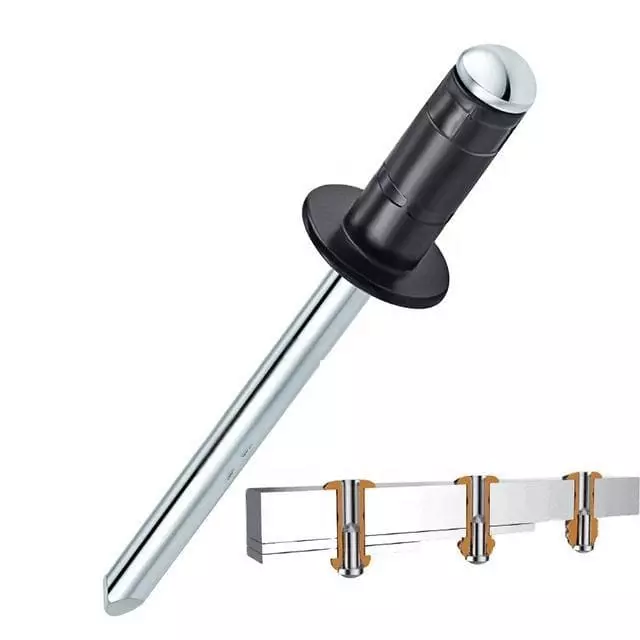
Closed End Rivets is a design of blind rivets with a completely sealed tail end. After installation, it can effectively prevent water, oil or gas from seeping into the tail end, thus achieving a 100% sealed connection.

a. Structure and Principles

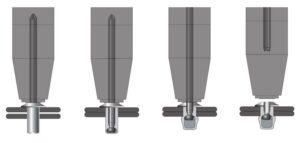
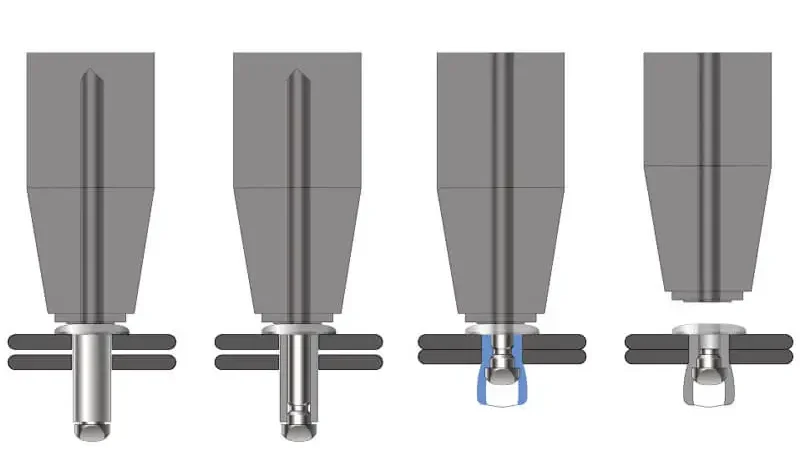
The closed-type rivet is composed of a rivet body and a mandrel. During installation, the mandrel is pulled, causing the tail of the rivet body to undergo plastic deformation and forming a tightly sealed cavity.

When the core shaft is broken, the closed end seals the tail hole, thereby preventing any liquid or gas from passing through. This structure ensures the air tightness and water resistance of the joint, and suitable for applications in areas that are constantly submerged in water or have high humidity.

Closed End Rivets for Aluminum Boat - Rivmate Rivet

The closed-type rivet is composed of a rivet body and a mandrel. During installation, the mandrel is pulled, causing the tail of the rivet body to undergo plastic deformation and forming a tightly sealed cavity.

When the core shaft is broken, the closed end seals the tail hole, thereby preventing any liquid or gas from passing through. This structure ensures the air tightness and water resistance of the joint, and is particularly suitable for applications in areas that are constantly submerged in water or have high humidity, such as the bottom of ships, cabin joints, and aluminum plate connections.

b. Performance Comparison and Advantages

Compared with traditional open-ended blind rivets, the closed-type rivets have the following significant advantages:

Closed End vs Open End Rivet
  • Waterproof, oilproof, and gasproof —— Ensures that the aluminum hull seams will not leak over a long period of time.
  • Strong corrosion resistance —— Suitable for marine and high-salt environment.
  • Prevents core shaft from falling off —— The core shaft is fully locked in the rivet, preventing internal rust or loosening.
  • Higher structural integrity —— Suitable for long-term fixation in high-vibration and high-humidity environments.

c. Relevant Standards and Industry Certifications

The performance of closed-type rivets generally complies with the following international standards:

  • ISO 15983 – Standard for blind rivet structure and mechanical properties.
  • ASTM F1470 – Specification for blind rivets and corrosion resistance tests.

In the manufacturing of marine equipment and aluminum hulls, the selection of closed-type rivets that meet these standards can significantly enhance the water resistance and long-term durability of the hull.

Why Use Closed End Rivets for Aluminum Boats?

6 Benefits of Closed End Rivets for Aluminum Boat

1. Watertight Sealing

The tail end of the closed-type rivets will form a completely sealed cavity during installation, effectively preventing water, oil or gas from seeping in from the back. This characteristic is particularly important in the hull bottom, aluminum plate joints and cabin seam areas, ensuring that the ship remains dry and sealed even when submerged for a long time. Moreover, the sealing structure can also prevent electrochemical reactions and avoid aluminum oxidation caused by water retention.

2. Corrosion Resistance

The marine environment has high salinity and high humidity, which accelerates metal corrosion. Closed-type rivets are usually made of aluminum alloy, stainless steel or Monel. These materials have excellent corrosion resistance in salt spray environments. In particular, 316 stainless steel closed-type rivets can maintain no-corrosion performance for over 1000 hours in the ASTM B117 salt spray test, making them ideal for use in marine and freshwater vessels. This durability ensures that the hull remains stable and reliable during long voyages and berthing.

3. Vibration & Shear Resistance

During the ship’s movement, it will experience continuous vibration and periodic impacts. If the connecting parts become loose, it will lead to structural cracks or even leakage.

During the installation process of the closed-type rivets, the core shaft is locked inside the rivet body, forming a high-strength mechanical locking structure. This design offers excellent shear and tensile strength, effectively resisting wave impacts and engine vibrations. Compared to ordinary open rivets, its structural integrity is stronger, significantly extending the service life of the hull.

4. Lightweight Strength

The closed-type aluminum rivets are not only lightweight but also have an excellent strength-to-weight ratio. They can provide reliable fastening performance without increasing the weight of the hull. This makes them an ideal choice for aluminum hulls, hatch covers, deck assembly, and lightweight fishing boats, among other structures.

Best Materials for Closed End Rivets in Marine Applications

In the assembly and maintenance of aluminum hulls, the choice of rivet material determines the anti-corrosion lifespan and structural stability of the vessel. Selecting the appropriate closed-end rivets for aluminum boat can enhance the waterproof performance and prevent electrochemical corrosion and structural fatigue.
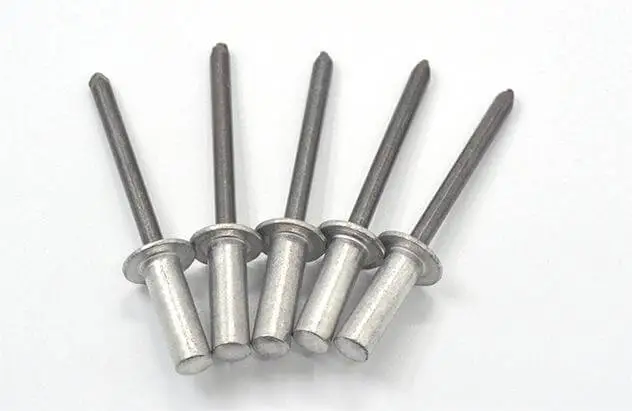
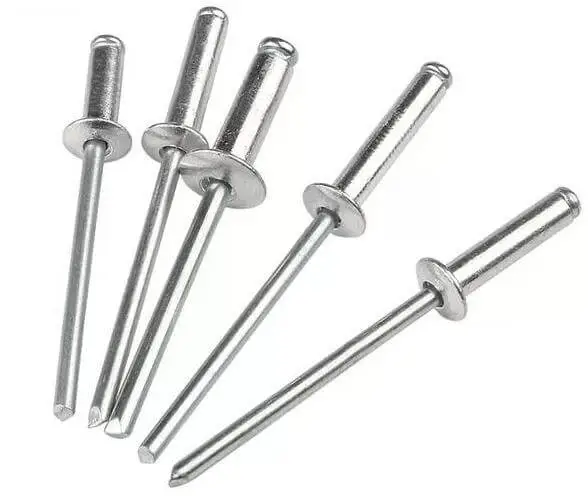
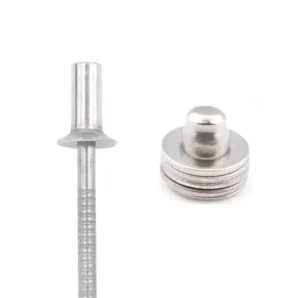
Rivmate Aluminum Sealed Type Blind Pop Rivet

Aluminum rivets are one of the most commonly used fasteners on aluminum ships. They are lightweight and do not have an electrochemical reaction with the aluminum hull, thus avoiding corrosion issues. The closed-type aluminum rivets also maintain excellent waterproof sealing properties, making them particularly suitable for freshwater environments or small vessels.

In addition, aluminum has a high strength-to-weight ratio, which enables it to reduce the overall weight while ensuring structural safety. It is an ideal choice for lightweight vessels, fishing boats, etc. However, in a long-term saltwater environment, the anti-corrosion layer should be inspected regularly to prevent surface oxidation.

b. Stainless Steel Rivets

Stainless steel rivets are renowned for their high strength and excellent anti-corrosion properties. 304 stainless steel is suitable for general freshwater use, while 316 stainless steel, due to its molybdenum content, has a stronger resistance to chloride ion corrosion and is therefore highly suitable for marine environments.

However, during installation, special attention must be paid to the metal compatibility issue: Stainless steel should not come into direct contact with aluminum plates; otherwise, electrochemical corrosion may occur due to potential differences. In practical operations, EPDM / nylon gaskets can be added to the contact surfaces to block the electrical path.

c. Monel Rivets

Monel is a high-end marine alloy composed mainly of nickel and copper. It possesses extremely strong resistance to salt fog and acid-base corrosion, and is hardly corroded even in marine or port environments. Monel rivets are typically used in high-end yachts, military speedboats, and ships engaged in long-term maritime operations. They are costly, but have a lifespan of over 30 years, making them the preferred choice for applications requiring extremely high reliability. According to the ASTM B117 salt fog testing standard, Monel materials can remain free from significant corrosion for over 2000 hours.
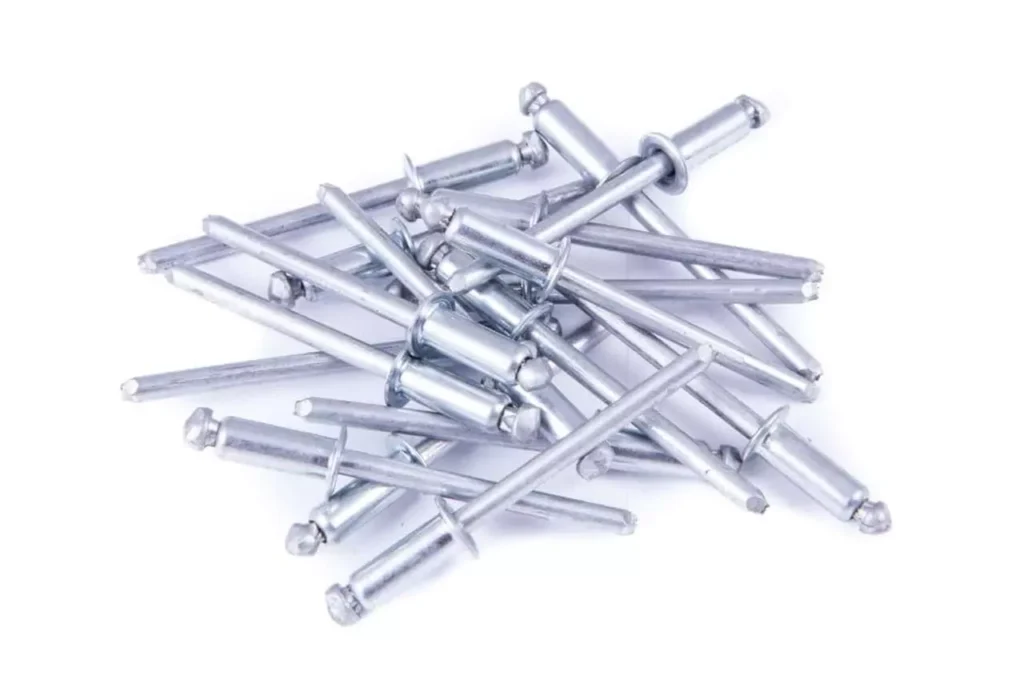
Monel Blind Rivets for Sale

How to Choose the Right Closed End Rivets for Aluminum Boats?

① Diameter vs Hole Size

The accuracy of the aperture directly affects the riveting strength and sealing effect. Generally, it is recommended that the hole size be 0.1–0.2 mm larger than the diameter of the rivet. If it is too small, it will cause installation difficulties or deformation; if it is too large, it will result in loosening and water leakage.

For example: When using 4.8 mm rivets, the ideal hole diameter should be 4.9 – 5.0 mm. For closed-type rivets, it is also necessary to ensure that the hole wall is smooth and free of burrs to prevent damage to the waterproof layer.
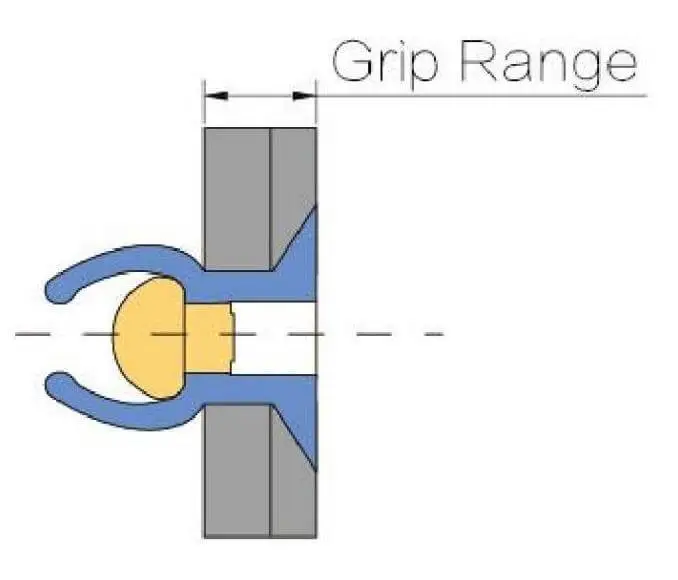
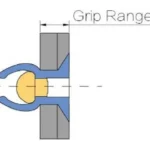
the grip range of blind rivet

Grip Range refers to the total thickness of the material that the rivet can firmly connect. When choosing, it is necessary to ensure that the Grip Range of the rivet covers the total thickness of two (or more) layers of material; otherwise, the rivet body will not expand sufficiently and the sealing performance will be affected.

Rivmate suggests:

  • If the total thickness of the material is 3.5 mm, the model with a Grip Range between 3 and 5 mm should be selected;
  • If the thickness varies significantly, the Multi-Grip Structural Rivets (Multi-Clamping Range Structural Rivets) can be used.

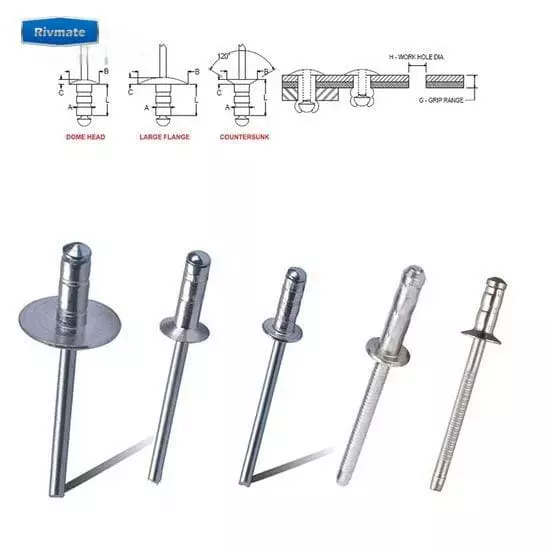
Dome Head

  • The surface is smooth and the installation is convenient;
  • It is suitable for the outer plates, decks, supports and other parts of the hull;
  • The round head can better distribute the stress and prevent local depression.

Countersunk Head

  • The head is level with the surface, suitable for smooth surfaces or areas with high decoration requirements;
  • It is commonly used for ship hull exteriors, cabin door edges, and interior decorative panels;
  • Before installation, it is necessary to chamfer the corners in advance to ensure that the rivet head fits perfectly.

④ Material Compatibility

In metal fastening, electrochemical corrosion (Galvanic Corrosion) is a common hazard. When two metals with different potentials come into contact and are exposed to an electrolyte (such as salt water), a small current is generated, causing corrosion. Therefore, the following principles should be followed:

  • Aluminum vs. Aluminum: Suitable for freshwater vessels, preventing electrochemical reactions.
  • Stainless Steel vs. Stainless Steel: Suitable for high salt spray or marine hulls.
  • If it is necessary to use them together, an anti-corrosion gasket (EPDM / nylon) should be added to isolate metal contact.

⑤ Recommended Models by Rivmate

Rivmate offers high-performance rivet solutions specifically designed for marine applications:

  • Rivmate Marine Closed-End Series – Specifically designed for marine vessel body sealing assembly, featuring 100% waterproof structure;
  • Rivmate Hybrid Rivets – Combination of aluminum and stainless steel core shaft, achieving both lightweight and high strength;
  • Rivmate 316 Stainless Rivets – Suitable for high-salt spray and marine environments, with a lifespan of over 25 years.

These products have all passed the ASTM B117 salt spray test and the ABYC H-1 ship structural fastening standard, demonstrating extremely high reliability in actual marine environments.

Maintain Aluminum Boats with Closed End Rivets
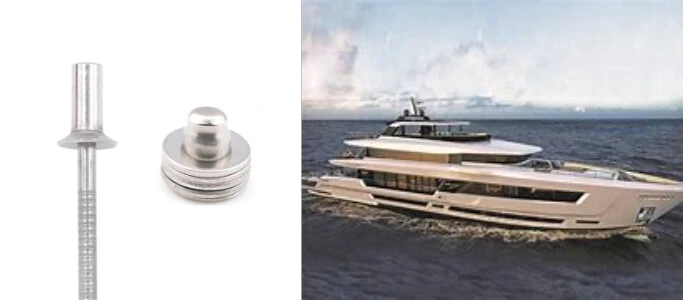
Closed End Blind Rivets for Aluminum Boats

The correct maintenance method not only extends the lifespan of the hull, but also enables the closed end rivets to achieve the best waterproof and corrosion-resistant performance.

Conduct a routine inspection of key connection points every six months

The riveted connection points are the core areas where the hull is subjected to force and where sealing occurs. It is recommended to conduct a routine inspection every six months, with a particular focus on the following areas:

  • The junction between the bottom of the ship and the cabin;
  • The connection points where the supports, decks and outer plates meet;
  • The protective cover for the propeller and the area where the fuel tank is fixed.

During the inspection, it is necessary to confirm whether the head of the rivet is flat, and whether there are any signs of loosening, cracks or oxidation. If any minor movement is detected, a Rivmate closed-type rivet of the same specification can be used for re-fastening.

Regularly clean the hull to prevent the accumulation of salt

Salinity is the main factor causing metal corrosion. After each voyage, it is recommended to use high-pressure freshwater rinsing to clean the surface and riveted areas of the vessel, and use a neutral cleaner to remove oil stains. Key cleaning areas include: the bottom of the vessel, the edges of hatches, drainage holes, and rivet joints.

Maintaining dryness can significantly delay the electrochemical corrosion process. For ships that are frequently used at sea, a thorough cleaning and maintenance can be carried out once a month.

If find that the rivets are loose or have rust spots, replace them immediately

Once any looseness, detachment of the cap, or rust spots are observed on the rivets, they must be replaced immediately. Especially for the open-type rivets, the internal cavity is prone to accumulate salt, accelerating corrosion. When replacing, it is recommended to use Closed End Rivets first to ensure that the new joint has complete sealing performance.

Rivmate suggests using rivets of the same material or of a higher grade (such as 316 stainless steel or Monel) to prevent electrochemical reactions caused by metal mismatch.

Use Rivmate 316 stainless steel closed-type rivets for reinforcement and maintenance

After long-term use, even if there are no obvious structural issues, regular protective reinforcement can be carried out. The 316 stainless steel closed-type rivets series of Rivmate is specifically designed for marine environments. It has passed the ASTM B117 salt spray test for 1000 hours and demonstrates outstanding corrosion resistance.

Reinforcement and maintenance can be carried out under the following circumstances:

  • There are minor water seepage issues in the weld areas of the hull;
  • There is slight deformation at the aluminum plate joints;
  • The bottom of the ship or the compartments need to have enhanced anti-vibration connections.

This type of preventive maintenance can extend the lifespan of the aluminum ship structure by 3 to 5 years and reduce the risk of major repairs in the future.

FAQ

Q1: What size closed end rivets should I use for aluminum boats?

The size of the rivets should be determined based on the total thickness of the ship’s hull plates (Grip Range). Generally speaking, the diameter of the hole should be 0.1–0.2 mm larger than the diameter of the rivet to ensure that the rivet can be formed smoothly without loosening. For example:

  • For the connection of aluminum plates with a thickness of 3–4 mm, the 4.8 mm (3/16″) closed-type rivets can be selected;
  • For thicker structural plates (such as the bottom of a ship or a support), it is recommended to use 6.4 mm (1/4″) structural closed rivets to achieve higher shear strength.

Rivmate recommends using the models with Multi-Grip to reduce inventory and installation errors.

Q2: Are stainless steel rivets safe for aluminum hulls?

Not completely safe. Although stainless steel closed-type rivets (such as type 316) have excellent anti-corrosion properties, Galvanic Corrosion may occur when in contact with aluminum. If stainless steel rivets must be used on an aluminum vessel, insulating gaskets (EPDM, nylon, or anti-corrosion coatings) should be installed between the contact surfaces.

Q3: How do I waterproof rivets on my aluminum boat?

The key to achieving waterproofing is to use Closed End Rivets and follow the correct installation procedures. Before installation, it is necessary to apply waterproof sealant (Marine Sealant) or corrosion inhibitor at the hole opening; after the rivets are installed, the closed cavity at the tail end will completely prevent water from penetrating, thus forming a permanent seal. Compared to ordinary open rivets, the closed design significantly improves waterproof performance and reduces the need for long-term maintenance.

Q4: Can closed end rivets replace welding on small boats?

In certain structures, closed-type rivets can indeed replace welding. For small aluminum boats (Jon Boats, fishing boats, lightweight hulls), the use of closed-type structural rivets can achieve a fastening effect with strength comparable to that of welding. The advantages include:

  • One-sided installation makes construction easier;
  • No need for high-temperature operation, which will not damage the aluminum structure;
  • Waterproof, shockproof and maintenance-free.

However, for the main structural parts that are subjected to high impact or stretching loads, it is still recommended to use them in conjunction with welding or reinforcement components.

Ensure Lasting Strength and Sealing with Rivmate Closed End Rivets

Custom Ship Rivets Solutions for Ship

Closed End Rivets for Aluminum Boat has been proven to be the most reliable and cost-effective waterproof fastening solution. It not only achieves a complete seal to prevent water and salt spray from entering, but also maintains excellent shear and tensile strength in high-vibration and high-humidity marine environments. Compared to welding and bolt connections, the closed-end rivet structure is lightweight, easy to install, requires no maintenance, and is particularly suitable for the structural assembly and long-term use of small and medium-sized vessels.

Rivmate has over ten years of experience in marine fastening technology, specializing in providing high-strength, corrosion-resistant marine riveting solutions for shipyards, maintenance technicians, and individual boat owners. Our products comply with the ASTM B117 salt spray test standard and the ABYC H-1 hull fastening specification, ensuring that each rivet can maintain stable performance in the most demanding marine environments.

👉 Click here to visit [Rivmate Marine Fastening Center]

Explore the complete Closed End Rivets for Aluminum Boats, installation tools and anti-corrosion solutions. Keep your aluminum boat waterproof, safe and reliable for every voyage in the future.

Reference
Share:

More Posts

Get Rivets Quotes Now

Wholesale Blind Rivets from Rivet Manufacturer
How to Choose Blind Rivets for Solar Industry

In the solar photovoltaic industry, blind rivets for solar industry have become key fasteners for connecting metal frames, borders, and installation components. Unlike general industrial environments, photovoltaic systems are exposed outdoors for long periods, facing multiple challenges such as high temperatures, humidity, wind loads, and long-term vibrations. The requirements for fasteners in the solar industry are far higher than those in general mechanical assemblies. This article will conduct an in-depth analysis from five dimensions: material selection, structural type, corrosion resistance, mechanical strength, and installation efficiency. It aims to help you understand how to choose the appropriate blind rivets for solar industry for different photovoltaic scenarios and provide professional suggestions and application solutions from Rivmate.

Table of Contents

Understanding Blind Rivets in Solar Applications

blind rivets for soalr energy trackor

In solar photovoltaic systems, blind rivets for the solar industry play an extremely crucial role in connection. Blind rivets are mechanical fasteners that can be installed from a single side. Their core structure consists of a rivet body and a mandrel. During installation, the mandrel is pulled, causing the tail of the rivet body to undergo plastic deformation, thereby forming a reliable mechanical lock between the workpieces. After the mandrel breaks, it remains inside the rivet body, further enhancing the connection strength and anti-vibration performance.

Blind rivets are widely used in various structural connection scenarios in photovoltaic systems.

  • Rapid assembly of support structures: Quick fixation between aluminum alloy profiles to ensure the overall stability of the structure.
  • Fixation of component frames: Used for the combination of aluminum frames and connecting parts to ensure that photovoltaic panels do not shift under long-term wind loads.
  • Installation of cable trays and windproof clamps: In photovoltaic power stations, blind rivets can achieve lightweight and maintenance-free fastening effects.

Compared with welding and bolted connections, blind rivets have significant advantages:

  • Single-sided installation: Particularly convenient in narrow or inaccessible structures.
  • Strong vibration resistance: The mechanical locking after riveting effectively resists stress changes caused by wind loads and thermal expansion and contraction.
  • Maintenance-free: No need for regular tightening or coating maintenance, suitable for photovoltaic systems with a lifespan of over 25 years.

In addition, blind rivets are not restricted by material types and can be used for connections between various metals such as aluminum, steel, and stainless steel, making them a standardized fastening solution in the manufacturing of photovoltaic racks and modules.

Key Requirements for Choosing Blind Rivets in the Solar Industry

In solar photovoltaic systems, blind rivets are not only fasteners but also an important guarantee for structural reliability. The selection of rivets must simultaneously meet multiple requirements such as durability, strength, weather resistance and installation efficiency. The following are the four key standards for rivets in the photovoltaic industry:

① Superior Corrosion Resistance

The design lifespan of photovoltaic systems is typically over 25 years, and they are exposed to complex environments such as high humidity, acid rain, and salt fog for an extended period. Ordinary aluminum rivets are prone to corrosion under these conditions, leading to loose connections or even failure.

Stainless Steel Open type blind pop rivet

Therefore, it is recommended to use stainless steel rivets (A2/A4 grades) or anodized aluminum rivets, as they can maintain a corrosion-resistant stability of over 1000 hours in the ASTM G85 and ISO 9227 salt spray tests.

This protective performance is particularly crucial for photovoltaic power stations located in coastal areas, deserts or high-salt environments.

② Thermal and UV Resistance

The photovoltaic power station usually operates in a working environment ranging from 70°C to 90°C during summer, and the surface of the components is exposed to intense ultraviolet radiation.

The rivets must have excellent thermal stability and must not loosen due to thermal expansion and contraction. Aluminum alloy and stainless steel rivets perform exceptionally well under thermal cycling conditions, maintaining stable clamping force. At the same time, surface treatment (such as anodization) can prevent ultraviolet aging and extend the service life.

③ Mechanical Strength and Grip Range

The photovoltaic support needs to withstand strong winds, snow loads and long-term vibrations, and has extremely high requirements for the mechanical properties of the fasteners. The rivets should have high shear strength and tensile strength to ensure the stability of the connection point over a long period. It is recommended to use Structural Blind Rivets, whose core shaft locking structure can significantly enhance the vibration resistance and prevent the photovoltaic panel from shifting or the support from losing stability due to loosening.

Furthermore, during the selection process, it is necessary to ensure that the length of the rivets matches the thickness of the material based on the Grip Range.

④ Installation Efficiency and Consistency

The construction of a photovoltaic power station usually involves tens of thousands of connection points. The efficiency of on-site construction directly affects the overall project duration and labor costs.

Using an air riveting gun or cordless electric riveting gun can significantly increase the installation speed and maintain consistent tension output. Compared with traditional manual tools, automated equipment can reduce operational errors and ensure consistent quality at each connection point, which is crucial for large-scale projects.

Best Materials for Blind Rivets in Solar Structures

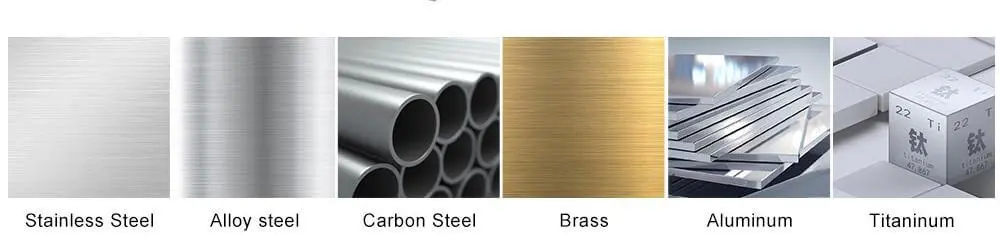
Custom Raw Material
Rivet Materials

In solar photovoltaic systems, the selection of the material for the rivets directly affects the lifespan and safety of the structure. As the system is exposed to high temperatures, humidity, sand and salt fog for an extended period, choosing the appropriate material is more crucial than selecting the structural form. The following is an analysis of the performance of several common rivet materials and their recommended applications.

a. Stainless Steel 304 / 316

Stainless steel is the most popular high-end rivet material in the photovoltaic support industry. Its greatest advantage lies in its excellent corrosion resistance and mechanical strength, which ensures stable connection even in environments with salt fog, acid rain and high humidity.

  • 304 stainless steel is suitable for regular outdoor applications;
  • 316 stainless steel contains molybdenum and can resist corrosion from chlorides, making it particularly suitable for coastal areas or photovoltaic power stations in high salt spray environments.

According to the ASTM B117 salt spray testing standard, 316 stainless steel can remain free of corrosion after 1000 hours of testing, making it the preferred choice for long-term outdoor structures.

how to choose blind rivets for soalr industry

b. Anodized Aluminum

Anodic oxidation aluminum rivets possess excellent anti-corrosion properties and lightweight advantages. They are lightweight, easy to install, and are particularly suitable for aluminum profile supports and frame components. Additionally, the anodizing process can form an oxide protective layer on the surface, enhancing resistance to ultraviolet rays and corrosion resistance.

These rivets are commonly used in photovoltaic projects that require moderate strength but are sensitive to cost, such as distributed rooftop power stations.

c. Zinc-Plated Steel

Galvanized steel rivets, due to their high strength and economic efficiency, have become a choice for certain low-cost projects. The galvanized coating can provide short-term corrosion protection, but it is prone to oxidation and peeling in high-salt spray or high-humidity environments.

This type of material is more suitable for indoor or non-coastal photovoltaic applications, and is not recommended for use in areas with high humidity, acidic conditions, or heavy dust.

d. Hybrid Rivets

The composite rivets usually adopt a combined design of aluminum rivet body + stainless steel core shaft. It combines the lightweight property of aluminum with the high strength of steel, making it a solution that balances performance and cost. This design effectively prevents the rivet body from corroding and provides sufficient shear strength, making it highly suitable for the assembly of photovoltaic rails, component fixation, and wind-resistant fixture installation.

Industry Standards Reference

To ensure the reliability and consistency of the materials, Rivmate recommends following the following international standards when making the selection:
  • IEC 61215 – Standard for mechanical load testing of photovoltaic modules, used to assess the impact of fasteners on the overall structure.
  • ASTM B117 – Standard for salt spray test, used to verify the anti-corrosion performance.

Types of Blind Rivets for Solar Applications

In the solar industry, blind rivets have a variety of applications. A solar panel cannot be stabilized without the use of blind rivets. I will list you some of the commonly used blind rivets in the solar industry.

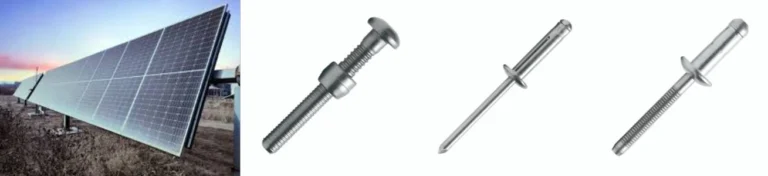
Blind Rivets for Solar Panel

Blind Rivets for Solar Panel

The installation of solar panels requires the selection of blind rivets of appropriate length, suitable material and weather resistance. The following types of blind rivets are often used for solar panel installation.Lockbolt Rivet, Bulbtite Rivet, Hemlok Rivet)

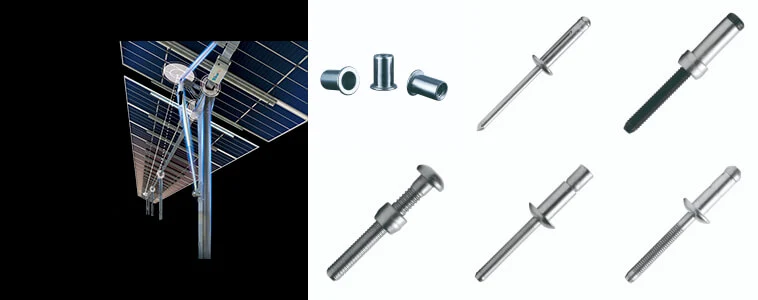
Blind Rivets for Solar Tracking Bracket

Blind Rivets for Solar Tracking Bracket

It takes a lot of strength to hold a solar tracking bracket in place, and many types of blind rivets are needed as well. Commonly used blind rivets are rivet nuts, bulbtite rivets, bom rivets, lockbolt rivet, monobolt rivet, hemlok rivet.

Best Practices for Installing Blind Rivets in Solar Mounting Systems

Advantages Reasons to Use Blind Rivets
lightweighting Blind rivets are lighter than welded and bolted connections, contributing to the portability and installation efficiency of solar panels.
Structural Strength Blind rivets provide reliable structural strength to securely fasten solar panels.
Preventing Material Damage The process of installing blind rivets poses a low risk of damage to the solar panel material and does not generate high temperatures or vibrations.
Quick and Easy Installation The installation process of blind rivets is relatively simple and fast, saving installation time and labor costs.
Reversibility and Repairability Blind rivets provide reversible connections for easy removal and replacement of solar panel or racking components.

FAQ

Q1: What are the best blind rivets for solar panel installation?

In solar photovoltaic installations, the best choice is structural or closed-end blind rivets. These types of rivets have high shear strength and excellent waterproof sealing properties, and can withstand wind loads, vibrations, and rain erosion.

Rivmate suggests using 316 stainless steel structural blind rivets in the photovoltaic support frames and component frameworks to ensure long-term stability and corrosion resistance.

Q2: Are stainless steel rivets necessary for solar structures?

Yes, it is recommended to use stainless steel rivets, especially in outdoor environments. Photovoltaic systems are usually exposed to high temperatures, humidity and ultraviolet rays, and ordinary aluminum or galvanized rivets are prone to rust.

Type 304 stainless steel is suitable for routine projects, while Type 316 stainless steel, due to its molybdenum content, offers superior corrosion resistance in high salt spray, marine or humid hot environments.

Q3: How to prevent rivet corrosion in solar mounting systems?

To prevent the corrosion of rivets, the key lies in selecting matching materials and providing adequate surface protection. First of all, use rivets that are compatible with the connected materials to avoid electrochemical corrosion (such as the contact between aluminum and steel). Secondly, in high-humidity environments, use anodized aluminum or stainless steel rivets, and add anti-corrosion gaskets (made of EPDM or nylon material). For large-scale photovoltaic power stations, regular salt spray tests and rechecks of the anti-corrosion coating should be conducted to ensure the reliability of the fastening points over the long term.

Q4: Can blind rivets replace bolts in solar supports?

In most photovoltaic installations, blind rivets can partially replace bolt connections, especially for structures with single-sided installation or limited space. Compared to bolts, blind rivets have advantages such as fast installation, resistance to vibration, and maintenance-free. They are highly suitable for fixing photovoltaic supports and frames. However, for areas that require removable or high dynamic loads (such as main structure connections), it is still recommended to retain bolts or use a mixed fastening method.

Power Your Solar Projects with Rivmate Blind Rivets

Rivmate Rivet Factory in Jiangsu, China

Selecting the appropriate blind rivets is crucial for ensuring the long-term stability and high reliability of the photovoltaic structure. High-strength and corrosion-resistant rivets not only can withstand extreme climates and wind loads but also significantly reduce the maintenance costs in the later stage.

For solar systems that have been exposed to the elements for more than 25 years, a reliable fastening solution means safer power generation, less downtime for maintenance, and higher return on investment.

Rivmate boasts extensive industry experience and specializes in the design and manufacture of high-performance fasteners for photovoltaic supports, component installation, and cable management systems. Our engineering team provides professional-grade products that comply with ASTM, ISO, and IEC standards to global customers, and offers optimized solutions for different climate conditions.

Whether you are a manufacturer of photovoltaic brackets, an EPC contractor, or a maintenance engineer, Rivmate can provide you with reliable and efficient riveting solutions.

👉 Visit [Rivmate Solar Fastening Center] to learn how we use structural blind rivets and intelligent electric riveting tools to help you achieve faster installation, longer lifespan, and higher reliability in your solar energy project.

Reference

Submit Your Sourcing Request

Please complete the form below and our customer support team will be in touch with you shortly. Inquiries submitted through this form will receive priority processing over emails.

Are Rivets Stronger Than Bolts ? How to Choose Rivets or Bolts ?

Table of Contents

Are rivets stronger than bolts ?Not sure how to choose the right fasteners for your project? This blog can solve your problem. I show you the benefits and applications of rivets and bolts. You can quickly solve your confusion with this article.

What is a Rivet ?

are rivets stronger than bolts? rivets vs bolrs

Blind rivets, also known as pop rivets, are a kind of rivets suitable for single-sided riveting. Its high reliability, connection strength, long life, easy to operate and use, can be used for aluminum alloy, structural steel and composite materials connection.

Blind Rivet consists of two parts, which are rivet body and nail core. In the production process, the rivet body is usually produced using wire cold heading, plate stamping or tube processing.

Blind rivets are suitable for use where the joint can only be riveted from one side. The rivet is placed into a pre-drilled hole and the core is pulled with a special riveting tool to deform and expand the rivet body to realize the fixing.

What is a Bolt ?

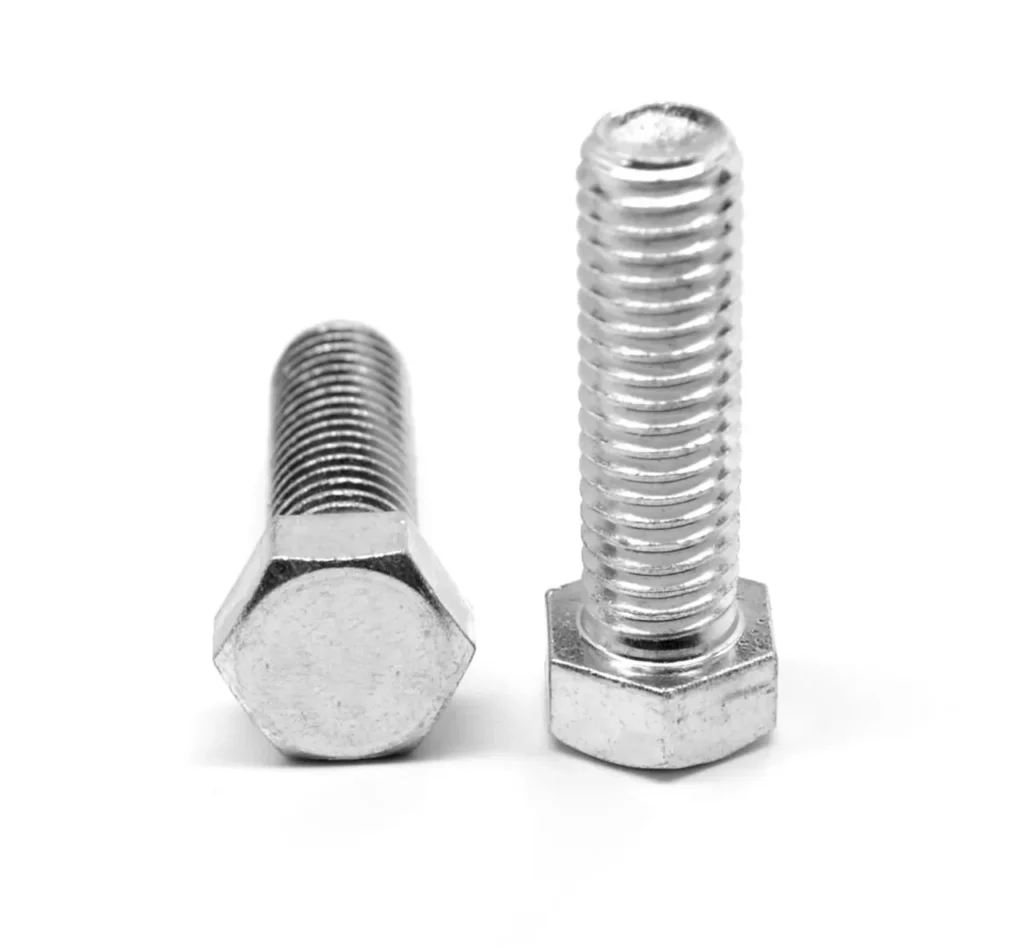
Bolt is a common fastener used to join two or more parts. It usually consists of a rod-like body with external threads, a head, and a nut.

The body of the bolt has external threads for securing the bolt to a part. The head of the bolt typically has a hexagonal shape to allow it to be turned using a wrench or wrench. A nut is a part with internal threads that is used to secure a bolt to another part by threading it to match the bolt’s external threads.

A bolt is used by threading the body of the bolt through the hole of the part to be joined, and then screwing the nut onto the body of the bolt so that the two parts are tightly joined together. By tightening the nut, the bolt creates a pre-pressure that makes the connection stronger and more stable. Bolts can also be disassembled and reused, giving them greater flexibility and convenience.

Threaded Bolts

Are Rivets Stronger Than Bolts ?

Rivets Bolts
Threading No threading required Requires threading of connected parts
Strength and Stability Provides high strength, permanent connection Higher strength and stability
Suitable for thin plates For thin plate connections and thin materials Suitable for a wide range of materials
Tools Specialized installation Tools Brick marking can be done with a hand-held tool
Installation Quick installation, no thread rotation required Requires threaded swivel mounting for slower speeds
Disassembly and Reuse Not easy to disassemble, need to cut the pins short to unattach. Cannot be reused. Installation can be accomplished using standard tools and is reusable
Usage Scenarios Unilateral mounting. Both sides mounted. Installation on both sides only

Rivet vs Bolt Strength Analysis

  • Shear Strength:
    Rivets perform exceptionally well in double-shear structures, with uniform force distribution and effective load dispersion. Particularly, structural rivets, with shear strength reaching 10–12 kN (for a diameter of 6.4mm), are often used in high-vibration areas such as bridges and vehicle frames. In contrast, bolts rely on the frictional force of the threads to transfer shear force, and their structural stability is slightly inferior.
  • Tensile Strength:
    Bolts have a distinct advantage in tensile loads. Their axial preload effectively prevents joint opening, making them suitable for heavy-duty and disassemblable structures. Rivets, lacking the thread preload, are not suitable for high tensile force applications.
  • Vibration and Fatigue Resistance
    Riveted connections without threaded notches have smaller stress concentrations and better fatigue resistance. In contrast, bolts tend to loosen under vibrating conditions and require additional anti-loosening measures (such as thread locking agents or spring washers).
  • Serviceability & Durability
    Rivets are permanent connections and almost maintenance-free. Bolts, on the other hand, can be repeatedly disassembled and assembled, which is convenient for inspection and replacement, but it also means that the connection may weaken due to frequent disassembly and assembly.

Rivet vs Bolt Material Comparison

Custom Raw Material

In the field of engineering fastening, the material and manufacturing process directly determine the strength, durability and applicable environment of fasteners. Rivets and bolts of the same material have significant differences in mechanical properties and corrosion resistance. Therefore, correct material selection is crucial for structural safety.

① Comparison of Material Composition

  • Rivets are typically made of:
    • Aluminum Alloy: Lightweight and corrosion-resistant, suitable for automotive and aviation lightweight structures.
    • Carbon / Alloy Steel: High strength, commonly used in bridges and mechanical equipment.
    • Stainless Steel 304 / 316: Resistant to salt spray and fatigue, ideal for outdoor or high-humidity environments.
    • Monel / Nickel Alloy: Extremely corrosion-resistant, used in marine and aviation structures.
  • Bolts are often made of:
    • High-strength Alloy Steel (Grade 8.8 / 10.9 / 12.9): Possessing excellent tensile strength.
    • Carbon Steel: An economical option, widely used in building and mechanical connections.
    • Stainless Steel: Suitable for assemblies requiring long-term corrosion resistance.

② Differences in Processing and Connection Principles

  • Rivet connection achieves permanent fastening by means of “plastic deformation locking”. When cold or hot riveting, the rivet expands in the hole and fills the gap, forming a tight bond. This connection method has no stress concentration points at the threads and has excellent fatigue resistance.
  • Bolt connection achieves clamping through “pre-tightening force + friction”. The pre-tightening torque provides an initial pressure, but the threads can cause stress concentration and loosening risks. Therefore, in high-vibration environments, anti-loosening washers or thread locking compound are usually required.

③ Rivmate Technical Data

Rivmate test data shows:

  • The shear strength of the standard 6.4mm structural blind rivet can reach 12.5 kN, which is approximately 80% of the strength of an M8 high-strength bolt.
  • The weight of an aluminum alloy rivet is only one-third that of a steel bolt of the same size, offering a significant advantage in lightweight assembly.

Industrial Applications: Where Rivets and Bolts Excel

Rivets and bolts play different roles in various industrial fields. The choice of which fastening method to use depends on load characteristics, maintenance requirements and environmental conditions. Research by Rivmate shows that rivets excel in permanent connections and lightweight structures, while bolts have more advantages in maintainable and high-preload structures.

Aerospace

In aircraft manufacturing, rivets play an absolute leading role. The structures used in aviation are mostly made of aluminum alloys and titanium alloys. Welding may cause thermal deformation, while rivets can form high-strength connections at room temperature.

  • Advantages: Lightweight, high vibration resistance, and long fatigue life.
  • Representative Applications: Aircraft fuselage skin, wing frame, and cabin panels.

Aerospace rivets (such as those made of Monel and titanium alloys) can maintain stable structural performance throughout a service life of over 25 years.

Automotive Manufacturing

Rivets and bolts are used in parallel in the lightweighting of vehicle bodies and the assembly of electric vehicles.

  • Rivets Predominant: Suitable for aluminum alloy body, doors, and battery pack structures, facilitating automated installation.
  • Bolts Predominant: Applied to chassis, suspension, and powertrain systems, facilitating maintenance and replacement.

The Rivmate Structural Blind Rivet has a shear strength of 11kN at the vehicle body connection points and can replace spot welding structures.

Construction & Infrastructure

Large structures such as bridges and steel trusses often use high-strength bolts (Grade 10.9/12.9), which are easy to disassemble for maintenance and inspection.

  • Rivet Application: In the early days of steel bridges, hot riveting was commonly used. Nowadays, it is only employed in certain structural repairs or decorative connections.
  • Bolt Application: High pre-tension and friction-type connections ensure structural stability. If maintenance-free and better vibration resistance are pursued, Rivmate Structural Rivet can be considered as an alternative solution.

Rivet vs Bolt: Advantages and Disadvantages

What Size Drill Bit for 18 Rivet

In the field of structural fastening, rivets and bolts each have their own advantages. The choice of which method to use should be determined based on factors such as load type, vibration conditions, maintenance cycle, and structural accessibility. The following is a professional comparison summarized by Rivmate:

  1. Excellent vibration resistance: The riveted structure forms a tight bond through plastic deformation, unlike bolts which may loosen due to vibration.
  2. Permanent connection: Suitable for structures that cannot or do not need to be disassembled later, such as aircraft skins, bridge nodes, vehicle frames, etc.
  3. Good fatigue resistance: The stress is evenly distributed, especially in the double shear structure, effectively reducing local stress concentration.
  4. Lightweight advantage: The weight of aluminum alloy and stainless steel rivets is only 30%–50% of that of the same specification bolts, which is particularly important in automobiles and aviation.

  1. It cannot be disassembled. If repair is needed, it must be drilled apart.
  2. The installation process is complex and requires special riveting equipment and molds.
  3. Pre-tightening force cannot be applied and it is not suitable for high-tension structures.

Advantages of Bolts

  1. Removable and Reusable: Facilitates maintenance, replacement and regular inspection.
  2. High Tensile Strength: The pre-tightened threads can effectively withstand axial loads, suitable for heavy-duty applications such as bridges, machinery and construction.
  3. Easy Installation: High degree of standardization, universal specifications worldwide, facilitating replacement and on-site operations.

Disadvantages of Bolts

  1. Prone to Loosening: Requires anti-loosening measures (such as locking washers, thread sealants) in a long-term vibrating environment.
  2. Significant Stress Concentration: The root of the thread is a typical fatigue source point, which is prone to cause crack propagation.
  3. Heavier Weight: The overall structure weighs approximately 20% – 30% more than the riveted solution.

Rivmate Engineering Insights: Choosing the Right Fastening System

Rivet Gun Failure Prevention Recommendations and Daily Maintenance

In industrial assembly and structural design, choosing the right fastening system determines the reliability of the structure, maintenance cycle and cost control. Rivmate, as a professional fastening technology supplier, based on thousands of engineering verifications, has summarized the following suggestions:

If the structure is subjected to long-term loads and high-vibration environments

It is recommended to use the Rivmate Structural Rivet Series. These rivets feature a locking core design, enabling permanent mechanical locking even under extreme conditions.

  • Application Scenarios: Automotive body frames, wind turbine towers, rail vehicles, bridge joints.
  • Technical Characteristics: Shear strength ≥ 12kN, vibration loosening resistance performance is 30% better than high-strength bolts.

If the connection needs to be frequently disassembled and assembled or requires pre-tightening control

Choose Rivmate Bolt Fastening Solutions (bolt fastening system). Rivmate’s high-strength locking bolt system offers precise torque control and reusability, making it suitable for maintainable structures.

  • Application scenarios: Construction machinery, heavy-duty equipment, and building steel structures.
  • Technical features: Adjustable preload force, tensile strength up to 10.9/12.9 grade standards.
  • Additional options: Optional coating anti-corrosion treatment and torque locking technology to extend service life.

Rivmate's systematic fastening solution

Rivmate offers a full range of fasteners from aviation-grade high-strength rivets to industrial lock bolt systems, along with hydraulic, electric and automated installation tools to achieve efficient and safe assembly. Rivmate Technology Commitment: Each product is certified by ISO 9001 / IATF 16949 and verified by ASTM / ISO / DIN standard mechanical performance tests.

FAQ

Q1: Are rivets stronger than bolts in shear?

Yes, in most double-shear structures, rivets typically exhibit superior shear strength compared to bolts. This is because rivets achieve full-contact locking through plastic deformation, enabling uniform stress distribution, whereas bolts primarily rely on friction and localised clamping forces to bear loads. For instance, the Rivmate 6.4mm structural rivet achieves a shear strength of 12.5 kN, equivalent to 80% of an M8 high-strength bolt.

Q2: Can rivets replace bolts in structural applications?

In certain instances, yes. For permanent, vibration-resistant, or difficult-to-maintain structures—such as those in aviation, automotive bodies, or bridge joints—rivets are the superior choice. However, for connections requiring periodic maintenance or disassembly, bolts remain more suitable. Rivmate recommends employing rivets in static loads and high-vibration environments, while utilising bolts in maintainable structures. Combining both achieves optimal performance.

Q3: Why are airplanes riveted instead of bolted?

Aerospace structures demand lightweight construction and fatigue resistance. Rivets are lightweight, require no threaded structures, and do not induce stress concentrations or fatigue crack propagation. Furthermore, rivets form reliable connections between dissimilar materials—such as aluminium alloys and titanium alloys—without thermal influence. Consequently, over 90% of aircraft skins and frames utilise riveting techniques.

Q4: Which is better for vibration — rivet or bolt?

Rivets are demonstrably superior to bolts. Bolts may loosen or experience a reduction in preload under prolonged vibration, whereas the mechanical locking properties of rivets ensure a permanently secure fastening. This is the primary reason rivets are extensively employed in railway rolling stock, automotive chassis, and wind turbine structures.

Yes. Once installed, rivets form a permanent, non-removable connection. Should maintenance or replacement be required, disassembly must be achieved through drilling or mechanical cutting. Consequently, Rivmate engineers recommend evaluating future maintenance requirements during the design phase to determine whether to employ riveting or a detachable fastening method.

Discover Rivmate Structural Rivet & Bolt Solutions

Rivmate - russia(Moscow) International Fastener exhibition 2025

In the field of structural fastening, Rivets are not always superior to Bolts. However, they do perform better in terms of shear resistance, vibration resistance and fatigue resistance. In contrast, bolts still have the advantage in scenarios that require high tensile loads, ease of maintenance and repeatable assembly. Therefore, the best solution needs to be reasonably selected and combined based on working conditions, load forms and usage cycles.

Contact us immediately to learn about Rivmate’s high-strength structural rivets and fastening solutions. Obtain the technical data sheet, selection recommendations and performance test report. Make each fastening operation achieve a perfect balance of structural reliability, manufacturing accuracy and operational safety.

Reference

Share:

More Posts

Get Rivets Quotes Now

Wholesale Blind Rivets from Rivet Manufacturer

Where to Buy Rivet Nuts? Guide for Finding Reilable RIvet Nuts Suppliers and Manufacturers

When you need to buy rivet nuts, you may be confused as to how to buy high quality rivet nuts. So, where to buy rivet nuts? There is a difference between purchasing a small amount and a large amount of rivet nuts. It is also crucial to know how to find a reliable supplier. In this article, you will get a comprehensive guide that can help you choose the right supplier and fulfill your wholesale needs.

Table of Contents

Rivmate Countersunk Rivet Nut - Rivnuts

Where to Wholesale Rivet Nuts?

There is no way that the average hardware retailer can offer large quantities of rivet nuts. So if you want to wholesale rivet nuts, you need to find professional rivet nut manufacturers and suppliers. Then ensuring product quality and supply chain reliability is the key to choosing the right rivet nut supplier.

Below I will provide you with some suggestions to help you choose the right rivet nut supplier:

  • Quality and certification standards for rivet nuts: There is a need to ensure that suppliers provide rivet nuts that meet international quality standards and certification requirements. This places requirements on the supplier’s production process, quality control measures and product certifications such as ISO, DIN and other international standards or relevant industry certifications.
  • Good reputation and experience of the supplier: choosing a supplier with good reputation and rich experience in production can reduce risk You get a more reliable product. You can check the supplier’s history, market reputation and customer reviews
  • Price and product selection: price is also very important when making a large quantity rivet nut order. Buying rivet nuts wholesale requires a large sum of money, so you need to compare prices between different suppliers to get the most competitive price. But price is only part of the equation, you have to go with the quality of the rivet nuts. Ensure the quality of the rivet nut while keeping the economic cost as low as possible. In order to solve your rivet nut sourcing needs at once, you should look for suppliers with a wide range of sizes, materials and who meet special customization requirements.
  • Deliverability and after-sales service: Deliverability is also something to consider. Ensure that your supplier is able to deliver the rivet nut on time. A comfortable after-sales service always retains customers. So if a manufacturer’s after-sales service is excellent, then feel free to work with them!

Rivet Nut Wholesaler Recommendation

Rivmate Rivet Nut: Rivmate Rivet Nut is a rivet nut manufacturer in China. We can offer you all services about Rivet Nut, including customized design, drawing, production, testing, packing, technical support, material support, after-sales service and so on.

Stanley Engineered Fastening : Stanley is the leading brand of riveted fasteners. It has always pursued innovation in riveted fasteners. We can provide you with high quality riveted fasteners, but the price is relatively high.

Rivet Nut USA: Rivet Nut USA is a U.S. based manufacturer and supplier of rivet nuts. Fast delivery is available within the United States. Other countries will have to wait for express delivery time. If you are an American, you can choose to buy from Rivet Nut USA. Of course the cost is still a bit more expensive than importing from China.

Where to Buy Rivet Nuts Online?

If you’re a DIYer, or if your project doesn’t require a lot of rivet nuts. There are also many avenues for your purchasing needs. (In order to ensure the consistency of the quality of the rivet nuts produced, rivet nut manufacturers have a minimum order quantity requirement. Generally it is 50000pcs – 100000pcs.)

  1. Local Hardware Stores: Your local hardware store can provide you with all types and sizes of nuts, including rivet nuts. You can visit your neighborhood hardware store to find the rivet nuts you need and purchase the required quantity as per the requirement. This is a reliable channel to get small quantities of rivet nuts quickly.
  2. Online shopping platform: With the development of technology, many online shopping platforms have been born, such as Amazon, eBay, Alibaba and so on. They offer a wide range of hardware accessories for sale. You can search for and purchase your desired rivet nut on these platforms. Ensure that you read the product descriptions, dimensions and other specifications carefully to ensure that you purchase a product that meets your requirements. However, online platforms have a disadvantage over local hardware stores; you need to wait for some time before you can get your rivet nuts. So if you are in dire need of rivet nuts for your project, this method is not quite suitable for you.
  3. Google for rivet nut distributors: there are some rivet nut suppliers who also sell small quantities of rivet nuts. They generally do not have their own manufacturing plants. They will go to a rivet nut manufacturer and buy rivet nuts in bulk and then sell them on their website. Their model is very similar to online shopping platforms, but the prices are a little lower.


Whichever channel you choose, you should ensure that the rivet nuts you buy meet your quality requirements and confirm the delivery time and payment method with the supplier. Also, you may consider consulting your friends, colleagues or industry insiders for more advice and recommendations on buying small quantities of rivet nuts.

Recommended Suppliers for Buying Rivet Nuts Online

Amazon : Amazon can offer you a wide selection of rivet nuts. Including various materials, sizes, and types. You can find out what users say about rivet nuts, which will give you a basis for your order. But it is difficult for Amazon to provide you with customized rivet nuts.

Rivetwise : Rivetwise can provide you with excellent products and excellent service.Rivetwise’s prices for rivet nuts are a little lower than Amazon’s prices for rivet nuts. So there are still many people who will get their desired rivet nuts from this shopping platform.

Wurth: The main market for wuerth is in Europe. They can offer a wide range of rivet nut fasteners for the European market. wuerth has several office locations in Europe and can provide technical support quickly. Their after sales service is also excellent and widely recognized by customers in Europe. Cooperation and integrity are the basis of wuerth’s business operations.

Where to Buy Rivet Nuts Locally ?

If you are in urgent need of rivet nuts, then a local rivet nut brick and mortar store is the best choice. Of course, if you are more of a shopper, then getting out and about is good too.

  1. Locate nearby Rivet Nut suppliers: use a search engine or yellow page directory to find nearby Rivet Nut hardware stores.
  2. View store reviews and word of mouth

Conclusion

Buying small quantities of rivet nuts requires different considerations than wholesale rivet nuts. But choosing a reliable supplier is crucial. When you need to buy small quantities of rivet nuts, you can source them from your local hardware store or from online buying platforms. Try to choose some well-known online platforms for purchasing, they will provide you with good after-sales service. However, both online purchasing and purchasing from your local hardware store have their own advantages, so choose the most suitable purchasing method according to your needs.

Wholesale rivet nuts would require a lot of consideration. For example, the rivet nut manufacturer’s customization ability, production capacity, delivery ability, after-sales ability, quality certification and product quality.

We recommend that you conduct thorough research and comparisons before purchasing rivet nuts as a way to choose the most appropriate purchase.

Rivmate can Solve your Rivet Nut Sourcing Needs

Rivmate as a top rivet nut manufacturer in China. We can provide you with rivet nuts in various specifications, sizes, shapes and materials. Whether your project requires standard rivet nuts or customized rivet nuts, Rivmate can meet your needs well.

Rivmate has its own rivet nut factory and is ISO 9001 quality certified. We provide you with consistent quality rivet nuts. With a capacity of over 10 million rivet nuts a month, you can rest assured that your high volume rivet nut orders are in good hands with Rivmate. Contact us for professional services for your rivet nut project!

Stainless Steel Rivet Nuts Wholesaler in China

Submit Your Sourcing Request

Please complete the form below and our customer support team will be in touch with you shortly. Inquiries submitted through this form will receive priority processing over emails.

Wholesale Bulk Stainless Steel Rivet Nut - Ultimate Guide to Buying Rivet Nuts

Stainless steel rivet nut is a frequently used fastening connector. It is widely used in various industrial and manufacturing applications. This article is the ultimate guide on Stainless Steel Rivet Nut. It will introduce you to the advantages of Stainless Steel Rivet Nut, material properties, different types and sizes to choose from, as well as a guide to buying and using them. Helping you to be able to properly purchase the best stainless steel rivet nut for your project.

Table of Contents

Rivmate is the top stainless steel rivet nut manufacturer in China. We can provide you with stainless steel rivet nuts in various sizes and shapes. Welcome to contact us for more information or get a quote!

Rivmate Stainless Steel Rivet Nuts

Stainless steel rivet nut is an important position in fasteners. They are widely used in automotive, aerospace, machinery and equipment, and furniture manufacturing. They utilize a special core-pulling design that creates a strong connection point by pressing into the material. Stainless steel rivet nuts provide a solid connection that can withstand high tensile strength. Ideal for applications that require robustness and reliability. Stainless steel rivet nuts are easier to install and remove than traditional bolts and nuts, while providing greater assembly efficiency.

Advantages of Stainless Steel Rivet Nut

Stainless steel is ideal for manufacturing stainless steel rivet nuts. Stainless steel offers a wide range of specialized properties and functions. Its features ensure that whether in harsh environments, high temperatures or humid conditions, stainless steel rivet nuts remain reliable and ensure a solid connection.

Some of the benefits of stainless steel rivet nuts include:

  • Excellent corrosion resistance
  • High strength, stainless steel rivet nut with stable quality
  • Resistant to high-temperature oxidation and fire
  • No need for surface treatment, easy to use and maintain
  • Excellent thermal expansion and insulation properties
  • Stainless steel rivet nuts have an aesthetic appearance

Because stainless steel rivet nuts have excellent corrosion resistance, molding, compatibility and strong heat resistance, it has gained a wide range of applications in heavy industry, light industry, household goods, automobile manufacturing and building decoration industries.

Types of Stainless Steel Rivet Nuts

There are many types of stainless steel rivet nuts, including female rivet nuts and male rivet nuts. Female rivet nuts are suitable for installation on the inside of the material, while male rivet nuts are suitable for installation on the surface of the material.Rivmate can supply a wide range of stainless steel rivet nuts with different diameters, lengths and core lengths. They can be adapted to suit different materials and application requirements. Choosing the right type and size of rivet nut is critical to ensuring the quality and stability of the connection.

Stainless steel rivet nuts can be broadly classified into the following categories: Hex Rivet Nuts, Round Rivet Nuts, Countersunk Rivet Nuts, Thread Rivet Nuts, Blind Rivet Nuts.

These types of stainless steel rivet nuts can be used for everyday industrial needs and projects. Of course, Rivmate also offers a customized rivet nut service for your project.

Stainless Steel Rivet Nuts Wholesaler in China

Stainless Steel Hex Rivet Nuts

Hexagonal rivet nut is one of the more commonly used rivet nuts, head type has a countersunk head hexagonal rivet nut, round head hexagonal rivet nut, flat head hexagonal rivet nut, small countersunk head hexagonal rivet nut and so on. 

Hexagonal rivet nut mounting holes are hexagonal holes, hexagonal rivet nut hexagonal design can effectively prevent the installation of the nut rotation, to strengthen the riveting effect of rivet nuts. Mainly used in non-structural bearing bolt connection, such as railroad buses, ships and other interior parts of the connection, the advantages of its light weight, without the fixed pallet nut, the back of the substrate without operating space can still be used.

Stainless Steel Round Rivet Nuts

Round rivet nuts are a special type of rivet nut, also known as round embedded nuts or circular embedded nuts. They have a cylindrical shape and internal threads.

Round rivet nuts are primarily used in applications where a hole needs to be formed in the surface of the material. They can be used on a variety of materials such as metal, plastic, wood, and more. During installation, round rivet nuts are embedded in the material to form a hole that can be threaded for bolts or screws.

One of the advantages of round rivet nuts is that they can be used on rough surfaces or where special installation requirements are needed. Due to their cylindrical design, round rivet nuts provide greater contact area and stability during installation. This makes them suitable for connections that need to withstand high tensile forces or torque.

Stainless Steel Countersunk Rivet Nuts

The Countersunk Rivet Nut has a surface that is flush with the top of the nut and is typically used in applications that require a bolt or screw to be embedded in the surface.

The unique design of the Countersunk rivet nut allows it to be aligned with the material surface after installation, reducing the amount of bumps on the material surface. This provides a smoother appearance, reduces drag and prevents thread exposure.

Stainless Steel Thread Rivet Nuts

Threaded Rivet Nut is internally threaded and is typically used where it is necessary to form a threaded connection inside the material that can be bolted or screwed. It creates a strong threaded connection point inside the material for mounting and securing other parts.

Specifications of Stainless Steel Rivet Nut

Rivmate as the top stainless steel rivet nut manufacturer in China. We can provide you with standard stainless steel rivet nuts in various specifications. Whether you are a business owner or doing a rivet nut project, we can provide you with customized rivet nut solutions.

Thread Hole Size(0 ~ +0.1) D DK
M3 5.00 4.90 7.00
M4 6.00 5.90 8.50-9.00
M5 7.00 6.90 10.00
M6 9.00 8.90 12.30
M8 11.00 10.90 15.00-15.50
M10 13.00 12.90 17.00
M12 16.00 15.90 23.00
M12(16H) 16.00 15.90 23.00

Wholesale Stainless Steel Rivet Nuts from China

Selecting the correct type and size of Stainless Steel Rivet Nut is the key to quality assurance. Before wholesale stainless steel rivet nuts you should know your application requirements. And consult specialized suppliers and manufacturers for professional advice.

When wholesaling stainless steel rivet nuts, you need to consider the following factors:

Material: stainless steel is a commonly used material with corrosion resistance and durability. When choosing stainless steel rivet nuts, you can select the appropriate grade of stainless steel, such as 304 stainless steel or 316 stainless steel, according to the specific application environment and requirements.

Specifications and sizes: Select the appropriate rivet nut specifications and sizes based on the desired thread size and connection requirements. Common specifications include thread size, diameter, length, etc.

Quality and certification: Ensure that the selected stainless steel rivet nuts meet the quality standards and certification requirements, such as ISO, DIN and other international standards or relevant industry certifications.

Supplier reputation and service: Select reputable and experienced suppliers for wholesale. Consider the supplier’s product quality control, delivery time, after-sales service and other factors.

Conclusion

Stainless steel rivet nuts are an important connecting fastener. It has the advantages of solid connection, corrosion resistance and durability. The right type and size can provide a reassuringly secure connection for your project. Working with a reliable stainless steel rivet nut manufacturer gives you access to high-quality products. Specialized manufacturers can provide you with expert rivet nut solutions, allowing you to address all your rivet nut application needs at once.

Contact Rivmate Fasteners today for Wholesale Stainless Steel Rivet Nuts!

Rivmate offers a large range of high quality and affordable rivet nuts to rivet nut distributors worldwide. We support our customers with product technical support and material resources. Our premier customer service and ISO 9001 quality certification make us the manufacturer of choice for rivet nut distributors worldwide. We are happy to provide any advice and service you may need regarding Rivet Nuts, Blind Rivets, Press Rivets. Contact China Rivet Nut manufacturer experts today! We can help you select the correct rivet nut for your unique application.

Submit Your Sourcing Request

Please complete the form below and our customer support team will be in touch with you shortly. Inquiries submitted through this form will receive priority processing over emails.

How to Measure Blind Rivets?

Table of Contents

Blind rivets are a very convenient and fast fastener for connectors. In order to ensure that blind rivets are connected accurately, it is important to measure their dimensions and parameters correctly. Do you know how to measure blind rivets? This article will provide you with a comprehensive guide that will teach you how to measure blind rivets accurately. Ensure that your project has the most secure connections possible.

Preparation Before Measuring Blind Rivets

Before measuring blind rivets, you need to prepare the following tools and materials:

  • Calipers: for measuring the length and diameter of the blind rivets.
  • Thread gauge: for measuring the type of threads of the blind rivet.
  • Mold or Measuring Tool: Used to measure the shape of the head of the blind rivet.

How to Measure Blind Rivets?

how to measure large flange blind pop rivets

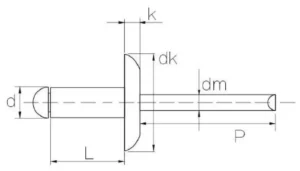
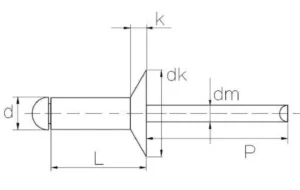
Blind Rivets are generally categorized into three head types – Dome Head, CSK Head, and Large Flange Head. There are some differences in measurements between different head sizes.

Dome Head and Large Flange Head

d : Diameter

L : body length

dk : rivet head dimeter

k : rivet head thickness

dm : mandrel diameter

p : mandrel reveal

how to measure blind rivets

CSK Head (Countersunk Head)

d : Diameter

L : body length

dk : rivet head dimeter

k : rivet head thickness

dm : mandrel diameter

p : mandrel reveal

After understanding the parameters of blind rivets, let’s learn more about how to measure blind rivets.

How are the Diameters of a Rivet Measured? (d)

The diameter of the blind rivet is an important parameter that affects the strength of the connection and the selection of the right size. It plays an important role in the strength and robustness of the connection, the effectiveness of the core extraction, material suitability and installation requirements.

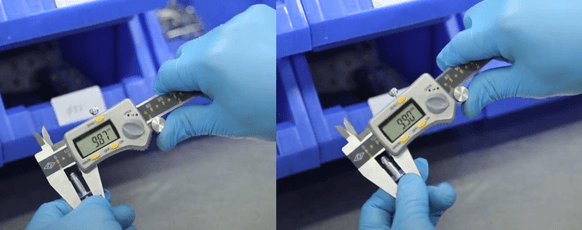
When measuring the diameter of a blind rivet, the topmost part of the rivet should be measured, not the mandrel or head width.
The diameter of the blind rivet should be measured several times and averaged. This will help to calculate the correct size of the blind rivet.
Please note that the diameter of blind rivets is usually measured in millimeters (mm).

how are the diameters of a rivet measured

How to Measure Rivet Length ? (L)

Selection of the appropriate blind rivet length ensures the range of connections, penetration capability, core pulling effect and safety of the installation, resulting in a high quality connection. The length of the Blind Rivet varies depending on the use and requirements.

When measuring the length, you need to keep the surface of the blind rivet clean and perpendicular to the measuring tool. You need to select the appropriate Blind Rivet length. A blind rivet that is too long may fail to install or cause damage to the material being installed or to objects behind the hole.

How to Measure Rivet Length ?

How to Measure Rivet Head Diameter ?

The rivet head of a blind rivet provides support and retention, transfer of load, reinforcement of the connection, and cosmetic protection during the joining process. Choosing the right rivet head ensures a quality, reliable and durable connection.

There are three general head shapes for blind rivets: countersunk head, round head and large flange head. In most cases, round head blind rivets will fulfill the requirements of the application. Large flange head blind rivets are used where greater support and load carrying capacity is required. And countersunk head blind rivets are suitable for applications that require a flat, bump-free joint surface. When selecting a head type, it is important to consider the requirements of the connection, the nature of the material, and the desired support and appearance.

How are the Diameters of a Rivet Measured?

Differences in Blind Rivet Threads

Stainless Steel Pop Rivet - Rivmate Sealed Type Blind Rivet

Blind Rivets have different threads depending on the application. The internal threads of a blind rivet are usually located at the bottom of the rivet. It can accept threaded bolts or nuts for a stronger connection. Internally threaded blind rivets are typically used in applications that require a removable connection.

The external threads are usually located on the top of the rivet. Capable of accepting nuts or other threaded connectors for a stronger connection. Externally threaded blind rivets are typically used in applications where additional holding force is required during the joining process or where they need to be used in conjunction with other threaded connectors.

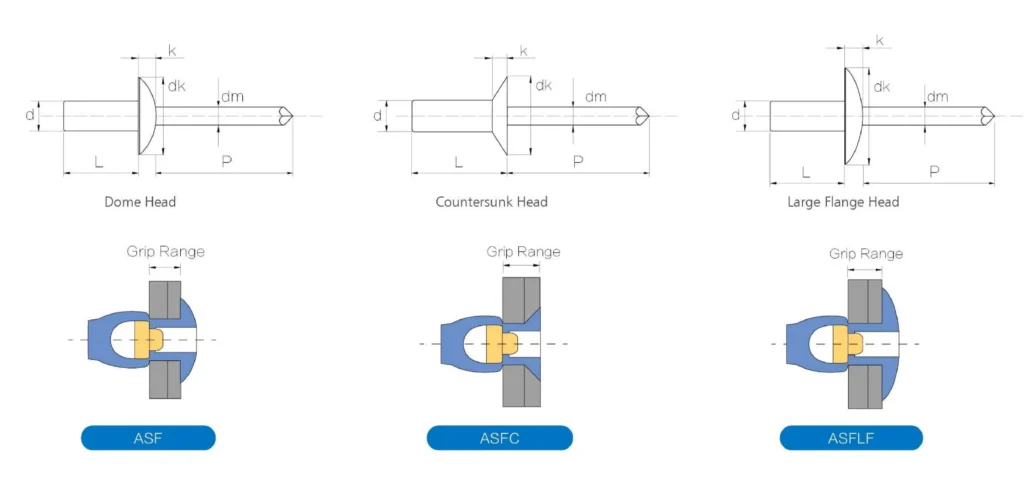
Grip Range of Blind Rivets

the grip range of blind rivet

The grip range of a blind rivet is the range of thicknesses of plates or connections it can join. It indicates the distance between the minimum and maximum thickness of the material that a blind rivet can grip.
The grip range is an important parameter. If the grip range of a blind rivet exceeds the thickness range of the material to be joined, the connection may fail or not achieve the required strength and reliability.

Typically, the length of the blind rivet and the core length (the length of the blind rivet sticking out of the sheet) affects the range of its grip range.
When selecting a blind rivet, it is necessary to determine the appropriate grip range of the blind rivet based on the thickness of the material to be joined.

How do I Know My Rivet Size ?

Blind Rivets are typically sized by diameter, length and core length. When approaching the blind rivet business, you will often see numbers such as 1/8″, 1/4″, etc., which represent the diameter of the blind rivet. Take a 1/8″ (0.125 inch) blind rivet as an example to explain how to determine the size of a blind rivet:

Diameter: The diameter of a blind rivet is usually expressed in inches or millimeters. 1/8″ blind rivets, indicates a diameter of 1/8″ or 3.175 mm.

The conversion of inches to millimeters can be done very simply by following the formula. (mm = in/0.039370)

A complete description of a rivet requires knowing its rivet body length in addition to its diameter. A 3.0 x 6.0 is used as an example for illustration.3.0 means the diameter of the blind rivet is 3.0mm, or 7/61″ inch. 6.0 means Body Length is 6.0-7.0mm length.

With the above information, you will have a complete representation of the size of the rivets.

Rivet Hole Size Chart

To achieve a tight joint, in addition to the rivet size selection being important, the rivet hole is also critical. After determining the rivet size, the hole size must be marked for drilling. Generally, the diameter of the rivet needs to be slightly smaller than the diameter of the hole. This allows the rivet to be inserted without any obstacles, maximizing the gap filling and achieving a tight connection.

Rivet Size and Drill Size

Rivet Diameter Hole Diameter Size
Min Max
2.4(3/32") 2.5 2.6
3.0(7/61") 3.1 3.2
3.2(1/8") 3.3 3.4
4.0(5/32") 4.1 4.2
4.8(3/16") 4.9 5.0
5.0(6/32") 5.1 5.2
6.0(15/64") 6.1 6.2
6.4(1/4") 6.5 6.6

FAQs

How to Measure Rivet Length?

The length of the rivet refers to the total length from the bottom of the rivet head to the tail end of the rivet body, excluding the part of the core shaft pull rod. When selecting the type, it should be calculated based on the total thickness of the two layers of materials (Grip Thickness):

Recommended formula: Length of rivet ≈ Total thickness of material + 1.5 × Diameter of rivet. Ensure that the length of the rivet is sufficient to achieve expansion locking, but do not make it too long to avoid affecting the appearance.

Grip Range refers to the range of material thickness that the rivets can firmly grip. It is usually indicated in the product specifications (for example: 3.0–5.0 mm). If the thickness of the connecting material exceeds this range, the rivets cannot fully expand and lock securely; conversely, if the thickness is too thin, the rivets will be pulled out and the connection will be unstable.

Rivmate suggests: The material thickness should be as close as possible to the middle value within the Grip Range to achieve the best riveting strength.

What Hole Size Should I Drill?

The aperture should be slightly larger than the diameter of the rivet body to allow insertion without any obvious gap. Generally, it is recommended that the aperture size be equal to the rivet diameter plus 0.1–0.2 mm. For example: 4.8 mm rivet → The recommended aperture size is 4.9–5.0 mm.

Which Head Style Should I Use?

Blind rivets can be selected with different head types depending on their application:

  • Dome Head: The most versatile option, suitable for metal plate connections.
  • Countersunk Head: Suitable for smooth surfaces, such as car exteriors.
  • Large Flange: Used for soft materials or in situations where pressure dispersion is required.

The choice of hairstyle not only affects appearance, but also relates to the distribution of force and the tensile strength.

How to Ensure Accurate Measurement?

Before measurement, please ensure:

  • Use a vernier caliper or digital caliper to measure the diameter and length;
  • Remove burrs at the edge of the holes to prevent dimensional errors;
  • Check the flatness of the rivet head to ensure consistent measurement points.

In mass production, the Rivet Gauge provided by Rivmate can be used for quick inspection to ensure consistency and assembly efficiency.

Choose Rivmate Blind Rivet Solutions

Rivmate Rivet Factory in Jiangsu, China

Accurate measurement of Blind Rivets is not only the first step in selection, but also a crucial step to ensure the structural stability and product reliability. By precisely determining the diameter, length, grip range, and hole diameter, you can significantly improve the assembly accuracy and avoid problems such as loosening, cracking, or insufficient strength.

Contact us to obtain the blind rivet measurement guide, specification comparison table and professional selection suggestions. Rivmate will provide you with high-precision, standardized fastening solutions, ensuring that every riveting is more stable, stronger and more efficient.

Reference

Share:

More Posts

Get Rivets Quotes Now

Wholesale Blind Rivets from Rivet Manufacturer

Custom Rivet Manufacturer – Top Custom Logo Blind Rivets Supplier in China

The market for blind rivets is getting bigger and bigger for the vast majority of our applications. But some industries and environments may face special challenges. For example, high temperatures, corrosion, etc. Custom Blind Rivets can be selected with the right materials and coatings for these environmental requirements. This ensures that the Blind Rivet can provide long term performance and durability in harsh conditions.

Table of Contents

Custom Blind Rivets can be designed and manufactured to meet specific needs and requirements. Different industries require different specifications, sizes, materials and characteristics of rivets. By finding a reliable custom rivet manufacturer, you can ensure that the rivets are a good match for the required application, providing optimum performance and quality.

A large quantity of rivets

The Importance of Choosing the Right Custom Rivet Manufacturer for Business Success

A proper custom rivet manufacturer can provide your business with high quality and reliable rivet products. Quality issues with rivets can lead to connection failure, product damage, and other safety hazards. It can have a significant impact on your business. So when choosing a manufacturer of blind rivets you should look into whether he has strict quality control measures, standards and certificates that are in line with industry accreditations.

  • Expertise in customization: Custom rivet manufacturers have the ability to provide design and manufacturing for different needs. The manufacturer’s technical team generally has in-depth engineering knowledge and experience to provide customized solutions for your business. They can give expert advice on material selection and process control.
  • Production capacity and lead time: The production capacity and lead time of a custom rivet manufacturer is critical to the success of your business. If you take on a project, it’s urgent to choose a manufacturer with large-scale production capabilities. A reliable custom rivet manufacturer has enough production capacity to meet your customer’s requirements and deliver the product on time.
  • Lower cost-effectiveness: the prices offered by the manufacturer are much lower than the prices you can get from your local hardware store or shopping platform, which can effectively reduce the cost of your business. Manufacturers’ efficient production processes and resource management can reduce production costs and pass these advantages on to customers.
Rivmate Aluminum Sealed Type Blind Pop Rivet

Identify the Needs of the Business

Before choosing the right custom rivet manufacturer, you need to determine the specific needs of your business. The following points can be used to determine the needs of your business.

Identification of application areas and industries: Identify the application areas and industries in which your business operates. Different industries have different requirements for rivets. You need to understand the demand characteristics of your industry, which helps to clarify your business needs.

Material and application requirements of the connection: You need to have a clear understanding of the type of material and special application requirements of the connection. You need to take into account the material properties of the connection, its thickness, shape and the required strength.

Specification and size requirements: Determine the required diameter, length, head shape, thread type and other parameters. Make sure these parameters meet the requirements of your application.

Quantity Requirements: As a custom rivets manufacturer, there is generally a minimum order quantity requirement in order to be able to offer a lower cost. This helps you to minimize the economic cost of your project, as well as evaluate the manufacturer’s production capacity and delivery time.

Quality requirements and certification standards: you need to determine whether the rivet manufacturer has certifications such as quality certifications, international quality standards and other certifications. This is very important for you to get customized rivets with reliable quality.

Rivmate is a custom logo rivet manufacturer with quality certifications like ISO 9001,ISO14001,IATF 16949:2016. You can get standard rivets, structural rivets, customized rivets from Rivmate that will make your business successful.

Find Reliable Custom Blind Rivet Manufacturer

After you have identified the products you need, it is important to find a reliable manufacturer. Establishing a relationship with a reliable supplier is generally divided into the following steps: searching for a supplier; finding out about the supplier’s production capacity, quality certificates and accreditations; obtaining samples for testing; visiting the factory and equipment; delivery time and after-sales support.

Top Custom Rivet Manufacturer in China

  1. Conduct market research: search for blind rivet manufacturers in Google search. Generally use the terms “blind rivet manufacturer”, “”pop rivet manufacturer”,” custom rivet manufacturer”. Generally you can choose the reliable manufacturer from the search results to cooperate. It is also possible to contact manufacturers through recommendations and suggestions from peers.
  2. Custom Rivet Manufacturer

  3. After finding a manufacturer, you need to evaluate the manufacturer. For example, check their corporate website to understand their business scope, production capacity and technical capability. You need to focus on their expertise and experience in customized blind rivets.
  4. Quality control and certification: You need to make sure that the custom blind rivet manufacturer has strict quality control measures and certification. You need to check their quality management system and related certifications such as ISO 9001, IATF 16949 and other quality management system certifications. This ensures that their products meet high quality standards.
  5. Obtain samples for testing: After confirming product specifications, materials, and other information with the manufacturer. The manufacturer will usually send you samples for testing. You can evaluate the manufacturer’s product quality and compliance through the samples’ appearance, dimensions, material quality and performance.
  6. Factory and Facility Visit: If you have a plan to come to China, you can visit your China custom rivet manufacturer’s factory and facility. Observing their production environment, process flow and quality control measures, you can assess their manufacturing capability and reliability.
  7. Delivery times and after-sales support: You will need to discuss delivery times and after-sales support with the manufacturer. Ensure that you get your product on time and get technical support from the manufacturer, Rivmate can provide you with complete technical support including video footage, technical data footage, etc. Rivmate can also provide you with two years of after-sales service. In the event of a problem with your shipment, Rivmate will initiate an after-sales program to reimburse you for the defective product.

Communicating with Custom Blind Rivet Manufacturers

In communicating with a manufacturer of blind rivets. You need to find out if the manufacturer can offer customization, sample testing and lead times. You need to negotiate the right price, contract terms and warranty matters with the blind rivet manufacturer based on your target price. In this way, you can ensure that the legal rights of both parties are protected and complete a good purchasing experience.

Maintenance and cooperation with Custom Blind Rivet Manufacturers

After completing the first transaction with a customized blind rivet manufacturer. If you appreciate that the transaction process was very smooth and pleasant, you may consider establishing a long-term and stable relationship with the manufacturer. When you come across a project, you can directly ask for quotations from the manufacturer you work with, shortening your project closing cycle.

When you have established a long-term and stable cooperation with a reliable customized rivets manufacturer. You can seek technical support and material support from the manufacturer. For example, you can ask the manufacturer for product testing videos and production videos, which you can use to get your project. You can use these materials to take your project, which can effectively save your project economic cost.

Rivmate can Provide you with Reliable Custom Rivets Solutions!

Blind Rivets Manufacturer in China

Rivmate is top custom blind rivet manufacturer in china. You can get a large selection of high quality but competitively priced blind rivets, structural rivets and custom rivets at Rivmate. 

Whether you are looking to wholesale standard blind rivets, structural blind rivets, rivet nuts, clinch fastener, pneumatic riveting tools, Rivmate has the perfect solution for you.

We stock the following regular products: open type blind rivet, peel type blind rivet, sealed type blind rivet, Uni-grip blind rivet, Multi-grip blind rivet, now-lock blind rivet, mono-lock blind rivet, hem rivet, tri fold rivet, bulb tite blind rivet, waterproof rivet, lock bolt rivet, bom rivet, rivet nut, clinch nut, clinch stud, blind threaded standoffs, waterproof clinch nut.

Submit Your Sourcing Request

Please complete the form below and our customer support team will be in touch with you shortly. Inquiries submitted through this form will receive priority processing over emails.

How do Rivet Nuts Work ?

In order to solve the shortcomings of thin metal plate, thin tube welding nut easy to melt, tapping the internal thread easy to slip, BF Goodrich invented the rivet nut in 1930.

Because of their practicality, rivet nuts are now widely used in a variety of sheet metal connections, including automotive, machine building, and aerospace. So do you know how do rivet nuts work?

Below I will cover several aspects of how rivet nuts work and why they provide a strong connection.

Table of Contents

Hex Rivet Nut - Rivmate Fastener

What is a Rivet Nut?

A rivet nut is a special type of threaded fastener. It is a device that acts to form a threaded hole and provide a threaded connection in a thin plate, pipe or other thin material.

The rivet nut is similar in appearance to a nut, but the rivet nut is threaded on the inside. It has a flat bottom and an open top with grooves and indentations on the bottom that increase the resistance to rotation forces with the material.

Rivet nut can be made in different fabrication materials such as steel, aluminum, stainless steel, copper, carbon steel, etc. depending on your project needs. They come in a variety of different sizes and thread specifications, which you can customize from the rivet nut manufacturer according to your specific needs.

How do Rivet Nuts Work ?

The essence of the rivet nut is to make a tight connection by expansion. It is not possible to use bolts or screws when making fastening connections in thin plates. Therefore, a rivet nut is required to provide a connection point for bolts or screws.

The rivet nut is threaded by applying pressure to deform the rivet nut horizontally.The youtube video below shows you in detail how do rivet nuts work.

The rivet nut application consists of the following components: the rivet nut, the rivet nut tool, the substrate on which the rivet nut is to be installed, the bolt or screw. The rivet nut connects the parts by tightly joining the bolts together through the mechanics of the threads inside it. The rivet nut is pulled using a screw on a rivet gun, which compresses the rivet nut longitudinally and creates a raised deformation at the top, thus clamping the riveted joint.

What are the Benefits of Rivet Nuts?

Rivet nuts provide a fast, reliable and cost-effective solution for connecting sheet metal parts to each other. Rivet nuts have many advantages over nuts and bolts.

Seven Advantages of Rivet Nuts:

  • Strong and reliable threaded connections provide a durable and dependable anchor point for bolts or other threaded fasteners.
  • Ability to distribute the load over a large surface area. Prevents material deformation or damage compared to conventional nuts.
  • Rivet nuts can be assembled significantly faster than methods such as welding or crimping. It can effectively reduce production time and cost.
  • Rivet nuts create a flat, low-extension appearance on the surface of the material. Improves the overall aesthetics of the finished product.

How to Choose the Right Rivet Nut for Your Project?

Do you want to understand in more detail how do rivet nuts work? Box back to How do rivet nuts provide a secure connection for your project? Below I will explain in detail how each step of the rivet nut works in six areas.

Choose Right Rivet Nuts

How to choose the right rivet nut for your project?You need to consider many perspectives, such as the required application and material, the appropriate type of rivet nut and specifications.

Material Type: The first thing to consider before wholesaling rivet nuts is which type of rivet nut to use. Different materials of rivet nuts are used in different scenarios. Such as aluminum, stainless steel, carbon steel, copper, plastic, composite materials and so on. You need to make sure that the rivet nut and the material to be riveted are compatible so that there is a stable threaded connection.

Suitable Outer Diameter and Length: Before wholesaling rivet nuts, you need to have a clear idea of the diameter and length of the rivet nuts you need. Make sure that the specification of the rivet nut matches the size of the hole. The rivet nut should not be much larger or smaller than the diameter of the hole if it is to function correctly, ensuring that the threaded portion should be fully embedded in the material.

Rivet nut manufacturers also confirm product information based on this.

Rivet Nut Types: There are many types of rivet nuts to solve a variety of different application scenarios. From the material point of view, including stainless steel rivet nuts, carbon steel rivet nuts, aluminum rivet nuts, copper rivet nuts and so on. In terms of appearance, there are hex rivet nut, round rivet nut, open end rivet nut, closed end rivet nut, countersunk rivet nut and so on.

Rivmate Flat Head Full Hex Body Rivet Nut - how do rivet nut works

Provide Suitable Holes for Rivet Nuts

In order to ensure the tightness of the rivet nut connection, in general, the holes in the plate should be 1mm more than the outer diameter of the rivet nut. that is to say, when the outer diameter of the rivet nut is 4.7mm, the open hole should be 4.8mm. according to a large number of practice has shown that the tightness of this is the best.

The following table shows the relationship between the outside diameter of the rivet nut and the corresponding hole.

Rivet Nut Outer Diameter Diameter of Hole
4.9 5
5.9 6
6.9 7
8.9 9
10.9 11
12.9 13
11.9 12
14.9 15
15.9 16

Correct Insertion of The Rivet Nut

Insert the rivet nut into the drilled hole, you need to make sure that the head of the rivet nut is flush with the surface of the material. The riveting is then accomplished by means of a riveting tool so that the threaded portion of the rivet nut is fully seated in the hole.

Installation of Rivet Nuts

There are many tools for installing rivet nuts, but they are broadly categorized into three types: hand rivet nut tools, electric rivet nut tools and pneumatic rivet nut tools.

Installation of rivet nuts can be accomplished regardless of the installation tool used. Installing rivet nuts is a simple process that can be accomplished in a few easy steps.

  1. Screw the rivet nut onto the mandrel of the tool.
  2. Place the rivet nut into the pre-drilled hole. Start the tool and pull the rivet nut.
  3. The rivet nut is deformed and tightly attached to the material.
  4. Reverse the tool out of the center of the rivet nut


How Do Blind Rivet Nut Fasteners Work?

Where to Buy Rivet Nuts

There are many ways to buy rivet nuts. These include buying in small quantities, buying in bulk and customizing rivet nuts. If you are looking to purchase rivet nuts in small quantities, it is fastest and most convenient to purchase them directly from your local hardware store. If you are looking to buy rivet nuts in bulk or customized rivet nuts for your project, then you can seek the help of a rivet nut manufacturer.

Why Wholesale Bulk Rivet Nuts from Rivet Nut Manufacturers

If you want to purchase Rivet Nuts in bulk, then Rivet Nut Manufacturer is your best choice. There are many benefits of wholesaling large quantity of rivet nuts from rivet nut manufacturers. I will present them all for you below.

A more complete range of rivet nuts

If your project needs to purchase more than 100,000 or even hundreds of thousands of rivet nuts, and the demand for different specifications. Offline hardware stores may be able to meet your needs, but they are much more expensive than rivet nut manufacturers.

You can get all products about Rivet Nuts from the manufacturers of Rivet Nuts at once. Whether it is from M3-M16, or the installation tools for rivet nuts, or if you have requirements for the material, you can get a good solution.

lower price

You know, hardware stores that take a lot of goods at once from rivet nut manufacturers. The price of the rivet nuts you buy from the hardware store is high. But rivet nut manufacturers usually have a starting order requirement, so if your purchasing needs reach 50,000, 100,000 pieces. You can get a lower price by going directly to the rivet nut manufacturer.

Customized Rivet Nut Solutions

Whether you’re working on a project, or for your own use, your specific needs can be difficult to fulfill at a hardware store. If you have a customized need for a rivet nut, ask a professional rivet nut manufacturer. They can do a great job of meeting your special requirements for rivet nuts.

Submit Your Sourcing Request

Please complete the form below and our customer support team will be in touch with you shortly. Inquiries submitted through this form will receive priority processing over emails.

Blind Rivet VS Pop Rivet - The Differences You Need to Know

Table of Contents

In the field of industrial fastening, “Blind Rivet vs Pop Rivet” is a concept that is often confused. “Blind Rivet” is a technical definition, referring to a mechanical fastener that can be operated on one side and achieves locking through the stretching of a core shaft; while “Pop Rivet” originated as a trademark name registered by the British Tucker Company and later became the general term for this type of rivet. This article will comprehensively analyze the differences between “Blind Rivet vs Pop Rivet” and help you make the right decisions in your projects.

What Is a Blind Rivet?

Blind Rivet is a type of permanent mechanical fastener that can be installed from only one side. This design enables it to achieve a secure connection even when the backside of the workpiece cannot be accessed, and thus is widely used in industries such as automobiles, aviation, construction, and electronics.

Structurally, the blind rivet consists of two parts: the rivet body and the mandrel. During installation, the mandrel is pulled, causing the tail of the rivet body to expand and firmly clamping the connecting material. When the mandrel breaks, a part of it remains inside the rivet body, forming a reliable mechanical lock.

The greatest advantage of blind rivets lies in their Blind Side Installation. The installer does not need to touch the back of the connection piece. By using a dedicated rivet gun, the riveting can be completed within seconds. This feature makes them particularly useful in enclosed structures, narrow spaces, or automated production lines.

What Are Zinc Plated Blind Rivets
Blind Rivet

In terms of performance standards, industrial Blind Rivets typically comply with the following international specifications:

  • ISO 14589 – Standard for mechanical performance testing;
  • ISO 15973 – Requirements for the strength of structural rivets;
  • DIN 7337 – General dimensions and installation standards for blind rivets.

Custom Multi grip pop rivets from China
Pop Rivet

Pop Rivet (a type of blind rivet) was a trademarked name introduced by the British company George Tucker Eyelet Company in the 1930s. It initially referred to a riveting system they invented that could be installed from only one side. The company was later acquired by the well-known fastener brand Avdel, and “POP®” gradually became the common name for blind rivets.

In other words, all Pop Rivets are also considered as Blind Rivets, but not all Blind Rivets are Pop Rivets.

The term “Pop Rivet” is more of a general industrial term, referring to all blind rivets that achieve locking by breaking through the core shaft.

In practical applications, Pop Rivet is renowned for its simple structure, low cost, and quick installation. It is highly suitable for use in sheet metal processing, light industrial equipment, electronic enclosures, and DIY repair scenarios. Users only need to use a manual or electric riveting gun to complete reliable mechanical connections in just a few seconds.

Blind Rivet vs Pop Rivet: Key Differences

Comparison ItemBlind RivetPop Rivet
DefinitionA type of fastener designed for single-side (blind-side) installation, used for industrial-grade permanent joining.A branded term derived from the trademark “POP®”, commonly used to refer to blind rivets.
Application ScenariosIndustrial assembly, structural fastening, automotive manufacturing, construction applications.DIY projects, repair work, and general sheet metal assembly.
Standardization LevelRegulated under ISO / DIN / SAE international standards.Primarily a commercial term, not a standardized classification.
Strength RatingIncludes high-strength structural, sealed, and multi-grip variants.Typically used for light to medium-duty applications.
Installation ToolsCompatible with manual, pneumatic, and cordless rivet guns.Commonly installed using manual rivet guns.
Typical IndustriesAutomotive, aerospace, railway, energy equipment, and heavy industry.Light manufacturing, household appliances, and maintenance sectors.

From a technical perspective, “Pop Rivet” is actually the commercial name for “Blind Rivet“. “Pop” was originally just a brand name, but due to its high popularity, it has now become a commonly used term in the industry.

In industrial manufacturing, “Blind Rivet” is a more standardized and comprehensive term. It not only includes ordinary open-type rivets, but also extends to series such as “structural type, waterproof sealed type, multi-clamping range type“, which can meet the usage requirements of high-strength scenarios in fields like automobiles, construction, and rail transportation.

Blind Rivet & Pop Rivet Types & Performance

Types of Blind Rivets

In modern manufacturing, Blind Rivets and Pop Rivets are not merely a single connection method; rather, they have evolved into various technical solutions based on structural requirements and working conditions. Different types of rivets possess distinct mechanical properties, sealing capabilities, and assembly characteristics. Choosing the appropriate type is crucial for ensuring structural safety and improving production efficiency.

TypeKey FeaturesApplications
Open-End RivetLowest cost, highly versatile, and fast installation. The mandrel partially remains after break-off, suitable for non-sealed joints.Interior panels, lightweight sheet metal structures, home appliances assembly.
Closed-End RivetSealed tail design providing waterproof and dustproof performance. Prevents corrosion and liquid ingress.Automotive chassis, outdoor equipment, electronic enclosures.
Structural RivetLocking mandrel design ensures high tensile and shear strength with excellent vibration resistance.Bridges, construction machinery, railway vehicles, heavy-duty structures.
Multi-Grip RivetDesigned to accommodate multiple material thicknesses, reducing inventory and part variation.Modular assembly, automotive production lines, quick repair applications.

① In cases where structural strength is prioritized (such as in vehicle frames and mechanical equipment), Structural Rivet should be used.

② If the connection piece has requirements for sealing or waterproofing, the Closed-End Rivet is the preferred choice.

③ For automated assembly lines or rapid production, the Multi-Grip Rivet is recommended, as it simplifies the management of parts.

applications of black anodized pop rivets
Applications of Blind & Pop Rivets

In the automotive industry, blind rivets are used for assembly of the vehicle body frame, chassis, doors and battery pack shells. Compared to welding, riveting does not cause heat affected zone (HAZ), thus avoiding material deformation. Especially in the structure of electric vehicles, sealed-end (Closed-End) or structural (Structural) rivets can provide high shear strength and waterproof performance.

In the construction and bridge industries, rivets are widely used in steel structure assembly, curtain wall support, and metal roofing systems. The sealed / waterproof rivets can achieve a sealing effect that prevents rain, dust, and corrosion, thereby reducing long-term maintenance costs.

Rivmate 316 stainless steel waterproof rivets have passed the ASTM B117 1000-hour salt spray test certification and are suitable for coastal construction projects.

③ Electronics & Enclosures

In electronic manufacturing, blind rivets are used to connect metal casings, heat sinks and mounting brackets. Their installation is quick, has low vibration and no thermal impact, making them highly suitable for automated production lines. Additionally, copper or aluminum rivets can ensure conductivity and meet the requirements for electrical grounding.

The marine environment demands extremely high corrosion resistance and waterproofing performance. Sealed stainless steel or Monel rivets can effectively prevent salt fog corrosion and leakage problems. They are commonly used in ship body assembly, deck structures, guardrails, and outdoor metal equipment. The Rivmate Marine Series sealed rivets perform exceptionally well in high-humidity environments and have stable 25-year corrosion resistance.

Rivmate Expert Guide to Choosing the Right Rivet

Monel Blind Rivets - Buy High Quality Monel Rivets from Rivmate

In different assembly scenarios, the selection of the appropriate type of rivets directly affects the structural strength, durability and assembly efficiency of the product.

Light-Duty Assembly

If the project prioritizes lightweight design and cost reduction, such as in the cases of sheet metal, household appliances, and electronic enclosures, it is recommended to use Rivmate Open-End Pop Rivets. These rivets are easy to install and have strong versatility, making them suitable for mass production and on-site repairs.

High-Strength & Corrosion Resistance Applications

For applications involving vehicle body structure, chassis, bridges or coastal environments, Rivmate Structural Rivets or Closed-End Rivets are recommended. Structural rivets offer high shear strength and vibration resistance, while closed-end rivets prevent water vapor and salt fog from penetrating, effectively extending the lifespan of the connections.

Automated or Mass Production

On modern production lines that require high production speed and consistent quality, it is recommended to use Rivmate Cordless / Pneumatic Riveting Tools in conjunction with a high-speed feeding system. This combination can increase assembly efficiency by 40% and ensure that each connection point achieves the same locking force.

Rivmate Cordless Rivet Gun is compatible with 4.0 – 6.4mm rivets and is widely used in automotive assembly lines and the structural assembly of new energy battery packs.

FAQ

Q1: Are Blind Rivets and Pop Rivets the same thing?

Yes, but there is a conceptual difference. Pop Rivet was originally the registered brand name of George Tucker Eyelet Company in the UK, and now it has become the general term for Blind Rivet.

All Pop Rivets are Blind Rivets, but not all Blind Rivets are called Pop Rivets.

Q2: Which is stronger — Blind Rivet or Pop Rivet?

The two have exactly the same structural performance, and the key factor lies in the type and material. If the Structural Blind Rivet is used, its shear strength can reach 12–14kN, which is much higher than that of the general-purpose Pop Rivet.

Q3: Can I use Pop Rivets for automotive or structural applications?

Sure, but you need to choose the correct model. The regular Pop Rivet is mostly used for light assembly, while for automotive or structural scenarios, it is recommended to use closed-end or structural rivets to ensure anti-vibration and anti-corrosion performance.

The Rivmate Automotive Blind Rivet Series has been certified to meet the ISO 14589 and SAE J491 standards, and can be applied to the structures of vehicle bodies, chassis and battery packs.

Q4: What tools are used for installing Blind Rivets?

Installation is typically carried out using manual, pneumatic or cordless electric riveting guns. For industrial production, Rivmate recommends using HydroLock hydraulic riveting system or Cordless Power Rivet Tools, which can ensure consistent and efficient pull riveting.

Q5: Does Rivmate provide certified industrial rivets?

Sure. All industrial-grade rivets from Rivmate comply with the ISO/DIN/ASTM international standards, and come with material traceability and performance test reports. Our products are widely used in automotive manufacturing, railways, ships, construction, and the new energy sector.

Upgrade Your Assembly with Rivmate Blind Rivet Solutions

Rivmate Rivet Factory in Jiangsu, China

Blind Rivet and Pop Rivet have no fundamental differences in principle. Both are efficient mechanical fasteners that can be operated from one side. The difference lies in their naming and application levels: Pop Rivet is a commercial term, while Blind Rivet is an industrial standard term.

In the modern manufacturing field, Rivmate has achieved a comprehensive upgrade in the strength, corrosion resistance, sealing performance and installation efficiency of the Blind Rivet system through precise design and material optimization.

Visit the Rivmate Engineering Fastening Center to learn about Rivmate’s entire series of Blind Rivet and Pop Rivet systems.

Reference

Share:

More Posts

Get Rivets Quotes Now

Wholesale Blind Rivets from Rivet Manufacturer

How To Choose Blind Rivets for Automotive Manufacturing ?

Table of Contents

Automotive blind rivets have become a crucial fastening technology for achieving lightweight and high reliability. While welding offers high strength, it is only suitable for the same type of metal; while bolt connections are heavy and prone to loosening or fatigue failure under long-term vibration. In contrast, blind rivets offer advantages such as one-sided installation, high strength, maintenance-free, and automation, and are thus becoming the mainstream choice in automotive assembly. This article will comprehensively analyze how to select the most suitable automotive blind rivets.

What is an Automotive Blind Rivet?

a. Definition:

Automotive Blind Rivet (an automotive blind rivet) is a single-sided operation permanent mechanical fastener specifically designed for automotive manufacturing and structural assembly.

Unlike traditional bolts or welding, blind rivets can achieve high-strength connections in areas where only one side is accessible, and they are highly suitable for complex structures such as vehicle bodies, chassis, and electric vehicle battery packs.

Countersunk Blind Rivets
How do Open End Blind Rivets Work

The blind rivet is composed of a rivet body and a mandrel. During installation, the mandrel is pulled by the riveting gun, causing the tail to undergo plastic deformation and forming an expansion locking structure on the back. At the same time, the mandrel breaks and locks itself in the rivet body.

This structure ensures that the joint after riveting has high tensile strength, good vibration resistance and consistency, and does not require any subsequent maintenance.

c. Technical Features and Advantages:

  • No need for bilateral contact: Particularly suitable for the enclosed structures of vehicles (such as doors, columns, and inner cavities of the frame).
  • Compatible with different materials (Aluminum + Steel): The blind rivets can easily achieve the mixed connection that is difficult to be realized through welding.
  • High assembly efficiency: Supports automated production lines and can be integrated with robot systems.
  • Light weight and high strength: Helps achieve the goal of body lightweighting.

Why Use Blind Rivets in Automotive Industry?

Applications of Interlcok Blind Rivets - Automotive

In modern automotive manufacturing, Blind Rivet has become a key technology replacing traditional welding and bolt connections. As the automotive industry transitions towards lightweighting, electrification and intelligent manufacturing, the blind riveting system, with its unique structural advantages and assembly efficiency, has become the preferred fastening solution for body engineers and manufacturing experts.

① Lightweight Manufacturing

With the widespread application of aluminum alloys and composite materials in vehicle bodies and battery packs, traditional welding methods have revealed significant limitations. Welding not only causes the thermal affected zone (HAZ) to occur, resulting in a decrease in material strength, but also easily leads to fatigue cracks in the aluminum structure.

In contrast, blind rivets do not require heating and can stably connect various materials such as “Aluminum + Steel” and “Aluminum + Composite”. They are an ideal choice for lightweight structures.

② Single-Side Installation Advantage

There are numerous enclosed cavities and narrow spaces in the structure of automobiles, such as the door panels, pillars, and longitudinal beams. The blind rivets can be easily installed from one side, achieving a strong connection. This significantly simplifies the assembly process, making it particularly suitable for robots or automated riveting equipment, thereby enhancing the overall production efficiency.

③ Vibration & Loosening Resistance

During the driving process, vehicles will endure continuous vibrations and dynamic loads. The blind rivets, with their core shaft locking structure, can effectively resist loosening and fatigue damage. In high-vibration areas such as the chassis, suspension, and power system, structural blind rivets perform particularly well.

④ Automation Compatibility

With the advancement of intelligent automotive manufacturing, automated assembly lines have become the mainstream. The blind riveting system can be seamlessly integrated with robot arms and numerical control systems to achieve rapid and high-precision batch riveting. Compared to traditional welding, it can increase the assembly cycle time by 25–40%, while reducing operational risks and energy consumption.

⑤ Multi-material Joining Capability

Modern vehicles widely adopt a mixed structure of aluminum, steel, magnesium alloys and plastic composite materials. Blind rivets can achieve reliable connections between different material thicknesses and hardnesses without changing the process parameters. This flexibility makes it the preferred solution for electric vehicles, battery packs and lightweight body structures.

Types of Automotive Blind Rivets and Their Applications

Different types of blind rivets have distinct characteristics in terms of performance, structural design and application scenarios. Engineers should make reasonable selections based on the material, force requirements and usage environment.

Types of Blind Rivets
TypeFeaturesTypical Applications
Open-End RivetGeneral-purpose, cost-effectiveInterior components, lightweight parts
Closed-End RivetWaterproof and corrosion-resistantChassis, door sills, door sealing areas
Structural RivetHigh tensile and shear strengthBody frame, longitudinal beams, suspension systems
Multi-Grip RivetAccommodates various thicknesses, reduces inventoryModular assembly production lines
Hemlock / Monobolt RivetLocked mandrel, vibration-resistantEV battery pack frames, vehicle frame connections

Open-End Rivet

This is the most common type of blind rivets, featuring a simple structure, easy installation and low cost. It is suitable for light assembly scenarios such as interior components, door panels, and air conditioning pipe brackets. Although its strength is limited, it performs stably in areas that do not bear high vibration or heavy loads.

Advantages: Cost-effective and easy for mass assembly.

Disadvantage: It lacks waterproof and dustproof features. It is not recommended for use on the chassis or exterior parts.

Closed-End Rivet

This type is sealed at the tail, which can achieve a waterproof, dustproof and anti-corrosion sealing effect. It is widely used in areas such as car chassis, door sills, and door frames, and is especially suitable for structural environments that require water resistance and salt spray resistance.

Advantages: Possess excellent sealing performance and corrosion resistance.

Industry Application: It is commonly used in key areas such as car chassis, underbody panels, EV battery housing, etc.

Structural Rivet

This type of rivet structure is more robust, with the core shaft permanently locked in the rivet body, creating a high-strength mechanical lock. Its tensile and shear strengths are higher than those of standard blind rivets by 30% – 50%. It is widely used in high-stress areas such as the body-in-white structure, crossbeams, suspension brackets, and bumper frames.

Advantage: Extremely strong seismic resistance, suitable for long-term dynamic load conditions.

Multi-Grip Rivet

This type of rivets can cover different thickness ranges, reducing the variety of inventory and enhancing the flexibility of assembly. It is particularly common in automotive modular production lines and is suitable for connecting different combinations of component thicknesses.

Advantage: One type of rivet can replace multiple specifications, thereby reducing management costs.

Application: Dashboard frame, bracket, modular structure of car door.

Hemlock / Monobolt Rivet

This type of rivet core shaft is locked with the rivet body and has extremely high vibration resistance and anti-loosening performance. It is particularly suitable for the battery pack frame, chassis reinforcement components and safety structures of new energy vehicles.

Technical Advantages:

  • After the core shaft is locked, it undergoes uniform radial expansion;
  • It has high fatigue resistance;
  • It is suitable for assembly of closed cavities and high-precision structures.

Best Materials for Automotive Blind Rivets

Custom Raw Material
MaterialKey CharacteristicsRecommended ApplicationsRivmate Expert Tips
Aluminum AlloyLightweight, corrosion-resistant, excellent thermal conductivity; prevents galvanic corrosion.Door panels, engine hoods, roof frames, aluminum body structures.Ideal for lightweight vehicle designs.
Steel (Zinc-Plated)High strength, impact-resistant, cost-effective; zinc coating provides rust protection.Chassis components, suspension systems, mechanical supports, reinforcement beams.High cost-performance ratio; use Structural Rivets for enhanced joint strength.
Stainless Steel (304 / 316)Superior corrosion and fatigue resistance; performs well in salt spray and high-humidity environments.Coastal vehicles, anti-corrosion chassis parts, exhaust systems, EV underbody panels.Best for extreme environmental conditions.
Copper / BrassExcellent electrical conductivity, corrosion resistance, and ductility.Grounding connections, headlamp brackets, sensors, and control modules.Recommended for electrical and electronic system assemblies.

Key Applications of Blind Rivets in Automotive Manufacturing

a. Body-in-White Structure

The body-in-white (BIW) is the framework part of the entire vehicle, with extremely high requirements for strength and precision. Structural blind rivets are widely used to replace the traditional spot welding process. They can achieve reliable connections for various materials such as aluminum + steel and aluminum + composite materials.

  • No need for high-temperature operation, avoiding welding deformation.
  • The riveting strength is high, reaching 8–12kN.
  • Suitable for automated assembly lines and seamlessly integrated with robot systems.

b. Chassis and Frame System

The chassis system is subjected to vibrations and impacts, and therefore has extremely high requirements for the shear strength and anti-loosening performance of fasteners. High-strength structural rivets are commonly used in the sub-frame, suspension brackets, longitudinal beam splicing, and torsion-resistant connection points.

  • Excellent vibration resistance performance, preventing loosening.
  • Stable performance over long-term use, no maintenance required.
  • Rivmate test data shows that the fatigue life of structural rivets is 35% higher than that of bolts.

c. Electric Vehicle Battery Packs

The battery system of electric vehicles has extremely high requirements for air tightness, water resistance and corrosion prevention. The closed-end rivet is an ideal choice for connecting the battery casing, the base plate and the cooling system.

  • Provides IP67 level waterproof and air-tight performance.
  • Resists electrochemical corrosion and is suitable for aluminum battery casings.
  • Compatible with automated assembly to ensure consistent assembly.

d. Interior & Door Assembly

In the interior decoration and door assembly of automobiles, blind rivets are used to connect the metal frame, plastic support, and decorative panel. The lightweight open-end rivet is widely adopted due to its low cost and ease of operation.

  • Lightweight design effectively reduces the overall vehicle weight.
  • No need for threading processing, and the assembly speed is fast.
  • Compatible with automatic feeding systems, enhancing the production cycle.

FAQs

What are automotive blind rivets used for?

Blind rivets for automobiles are mainly used for permanent connections in the body, chassis, battery pack and interior systems. Compared with bolts or welding, blind rivets have advantages such as lightweight, single-side installation, vibration resistance, and corrosion resistance. They can connect aluminum, steel, plastic or composite materials without damaging the surface coating, and are highly suitable for modern vehicle assembly.

Can blind rivets replace welding in car bodies?

In most cases, structural blind rivets can replace the traditional spot welding process. They do not require high temperatures and avoid material thermal deformation, making them particularly suitable for aluminum + steel composite structures. Rivmate test data shows that the shear strength of structural blind rivets can reach 8–12kN, fully meeting the requirements for body-in-white (BIW) structural connections.

What material rivet is best for aluminum cars?

For aluminum vehicles, aluminum or stainless steel closed blind rivets are the best choice. Aluminum rivets can prevent electrochemical corrosion and maintain lightweight; while 316 stainless steel rivets are suitable for high-humidity or salt spray environments, such as in coastal areas.

How do you ensure rivet joints don’t loosen under vibration?

During the driving process, vehicles are constantly subjected to vibrations and impacts, and proper locking is crucial. Rivmate recommends using Lock-Core Structural Rivet or Monobolt Series, whose core shaft will be mechanically locked after being broken, thus maintaining a constant clamping force.

The actual measurement results show that this type of rivet shows no signs of loosening after 10⁶ cycles of vibration.

Are Rivmate blind rivets certified for automotive use?

Yes. The entire range of Rivmate automotive-grade blind rivets has passed the following certifications and tests:

Optimize Automotive Structures with Rivmate Blind Rivets

Rivmate Rivet Factory in Jiangsu, China

Blind Rivets has become one of the most reliable and cost-effective structural connection methods in modern automotive manufacturing. Whether it is the body structure, the electric vehicle battery pack, or the chassis and interior system, blind rivets can perform exceptionally well in terms of lightweighting, vibration resistance, corrosion prevention, and automated assembly.

For manufacturing enterprises that pursue high-intensity production and high assembly consistency, the Rivmate Automotive Blind Rivet System offers the best solution that combines engineering performance with long-term stability.

Contact the professional team of Rivmate immediately to have them customize a dedicated fastening system solution for the key assembly parts such as the body, chassis, and battery pack for you.

reference

Share:

More Posts

Get Rivets Quotes Now

Wholesale Blind Rivets from Rivet Manufacturer

Submit Your Rivet Request

First order over $5,000 free riveting tools